

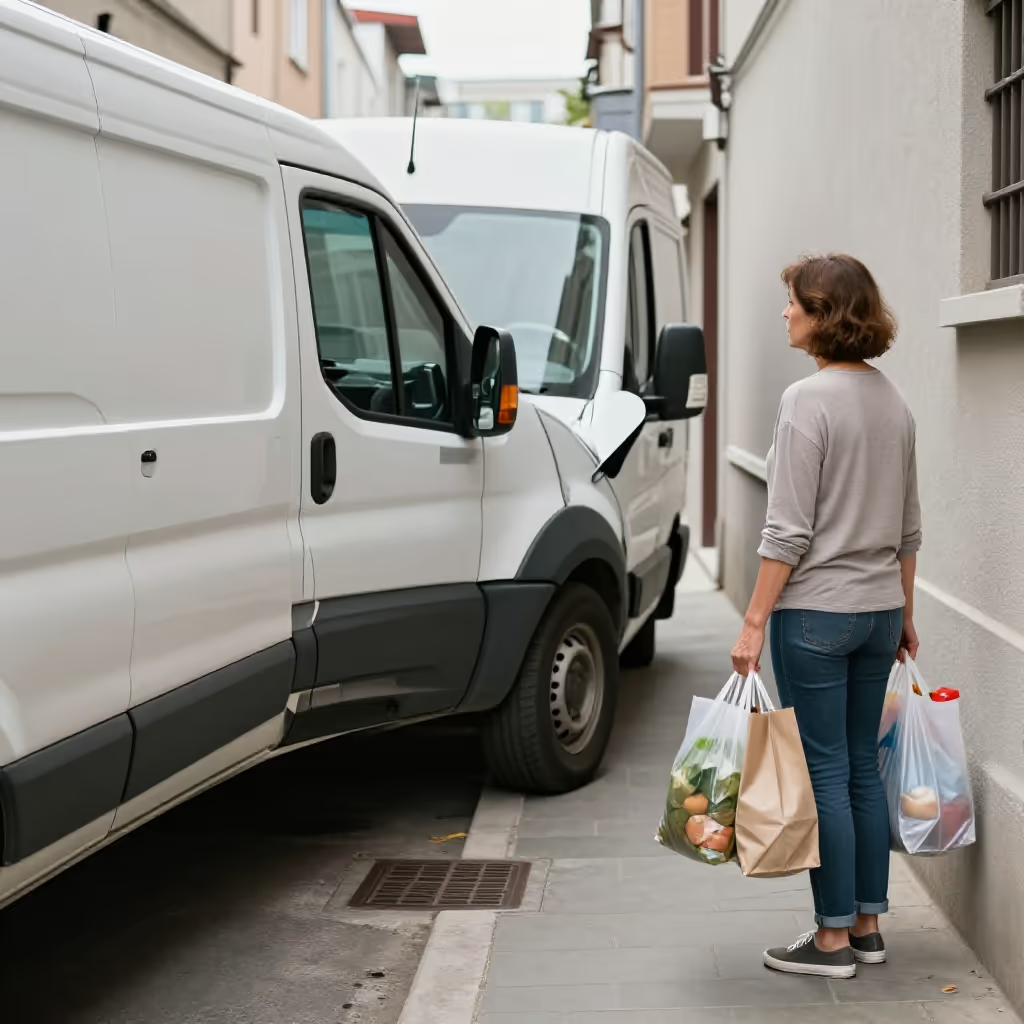
versperren
to block
To block a path, an access point, or a view so that one can no longer go through, get in, or see through.
EXAMPLE
Ein umgefallener Baum versperrt die Straße.
A fallen tree is blocking the road.
to block / to lock
Loading your saved state.
to block
To block a path, an access point, or a view so that one can no longer go through, get in, or see through.
Ein umgefallener Baum versperrt die Straße.
A fallen tree is blocking the road.
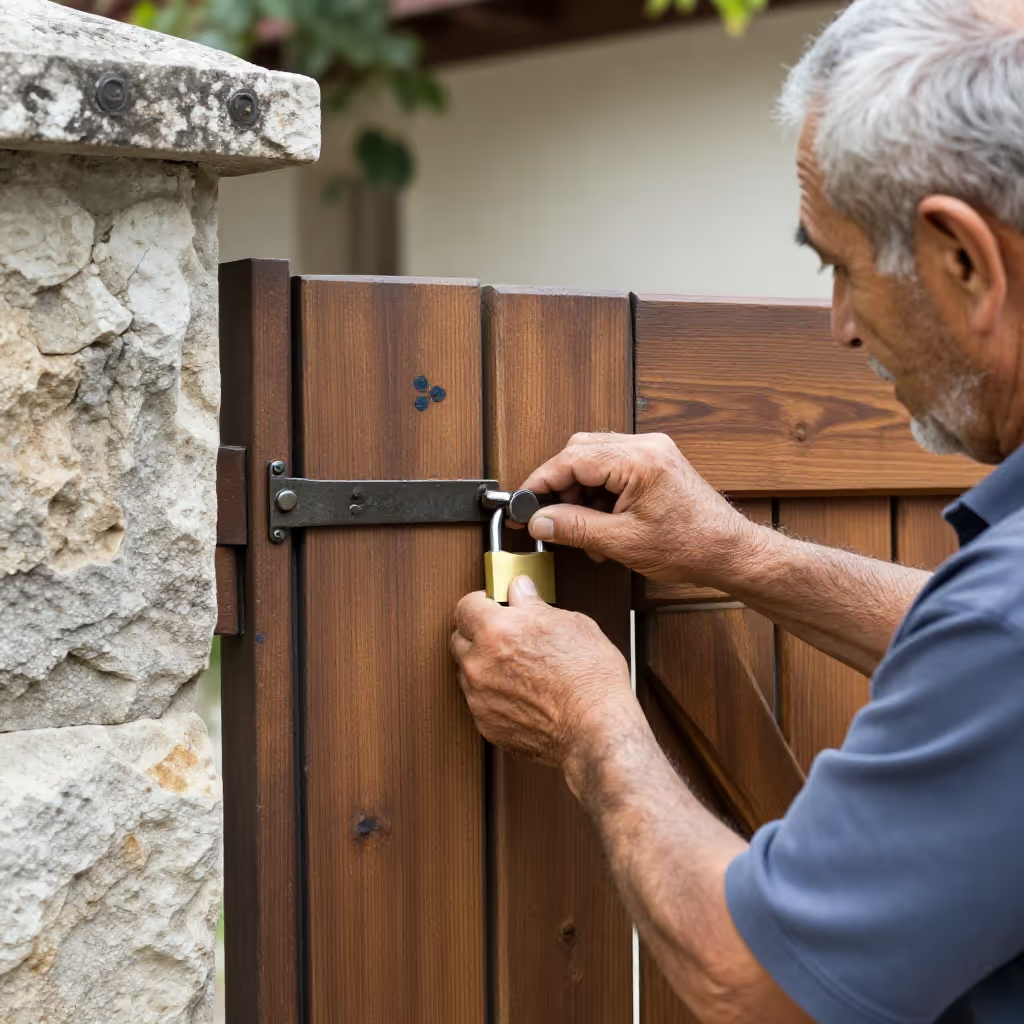
to lock
To secure a door, gate, or similar object with a lock or bolt so that it cannot be opened.
Vergiss nicht, die Haustür sorgfältig zu versperren, bevor du gehst.
Don't forget to carefully lock the front door before you leave.
'versperren' (to block / to lock) is an inseparable verb. The prefix 'ver-' remains firmly attached to the verb stem in all tenses and sentence constructions and is never separated.
Er hat mir den Weg versperrt.
He blocked my way.
'versperren' (to block / to lock) is often used with three elements: who or what blocks something (subject), for whom something is blocked (dative), and what is blocked (accusative).
Der große Schrank versperrt uns die Sicht auf den Garten.
The large cabinet blocks our view of the garden.
The object of the sentence makes the meaning clear. If a path or a view is blocked, the first meaning is intended. If a door or lock is secured, the second meaning is intended.
Ein Unfall versperrt die Autobahn.
An accident is blocking the highway.
In the meaning of 'eine Tür abschließen' (to lock a door), 'versperren' (to lock) is used especially often in Austria and parts of southern Germany. There, it is an everyday word for this action.
Bitte versperr die Tür, wenn du als Letzter gehst.
Please lock the door if you're the last one to leave.
to lock / to complete
Both words can refer to securing a door with a key or bolt. „Abschließen“ is the usual term for this in standard German in general, while „versperren“ is used especially regionally, above all in Austria. For wording that is broadly understood, „abschließen“ is usually the better choice.
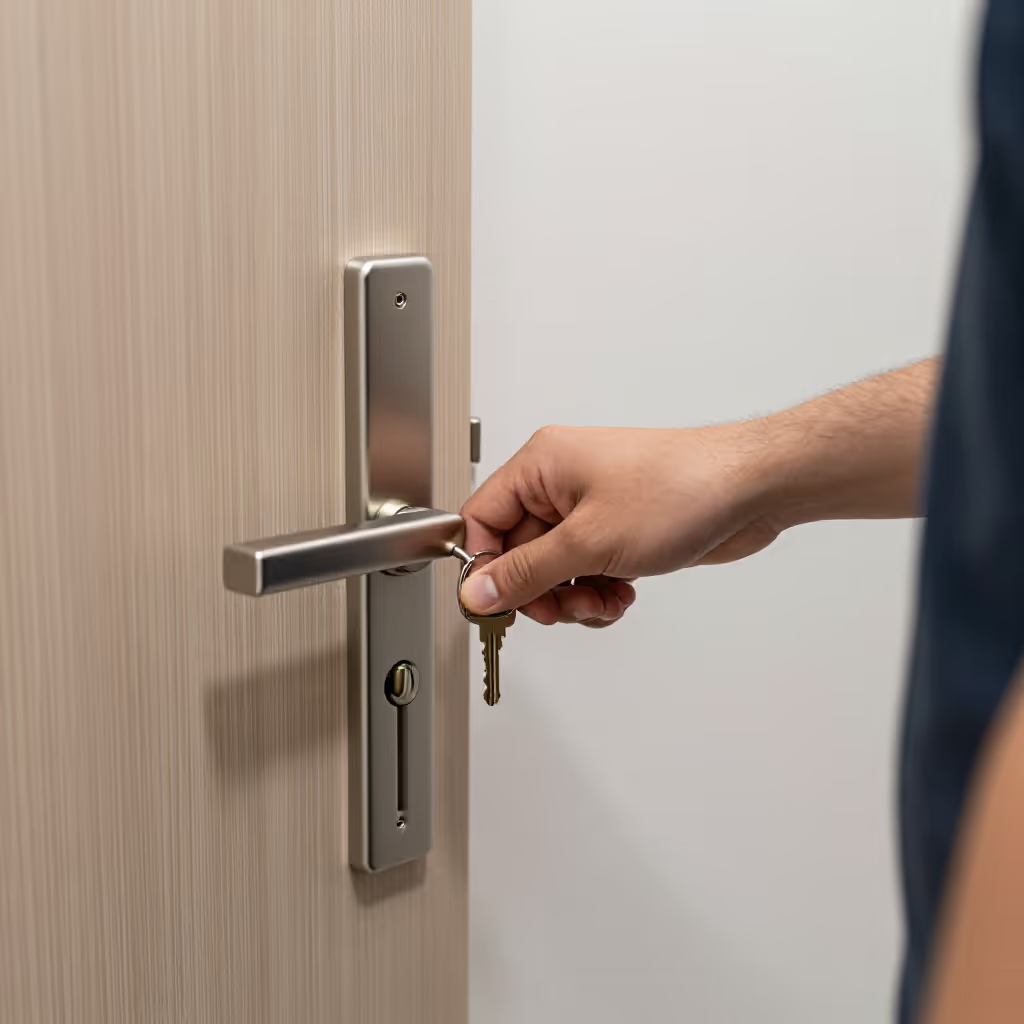
Bevor sie ging, versperrte Anna in Österreich die Wohnungstür mit dem Schlüssel.
Before she left, Anna locked the apartment door with the key in Austria.
Bevor sie ging, schloss Anna die Wohnungstür mit dem Schlüssel ab.
Before she left, Anna locked the apartment door with the key.