

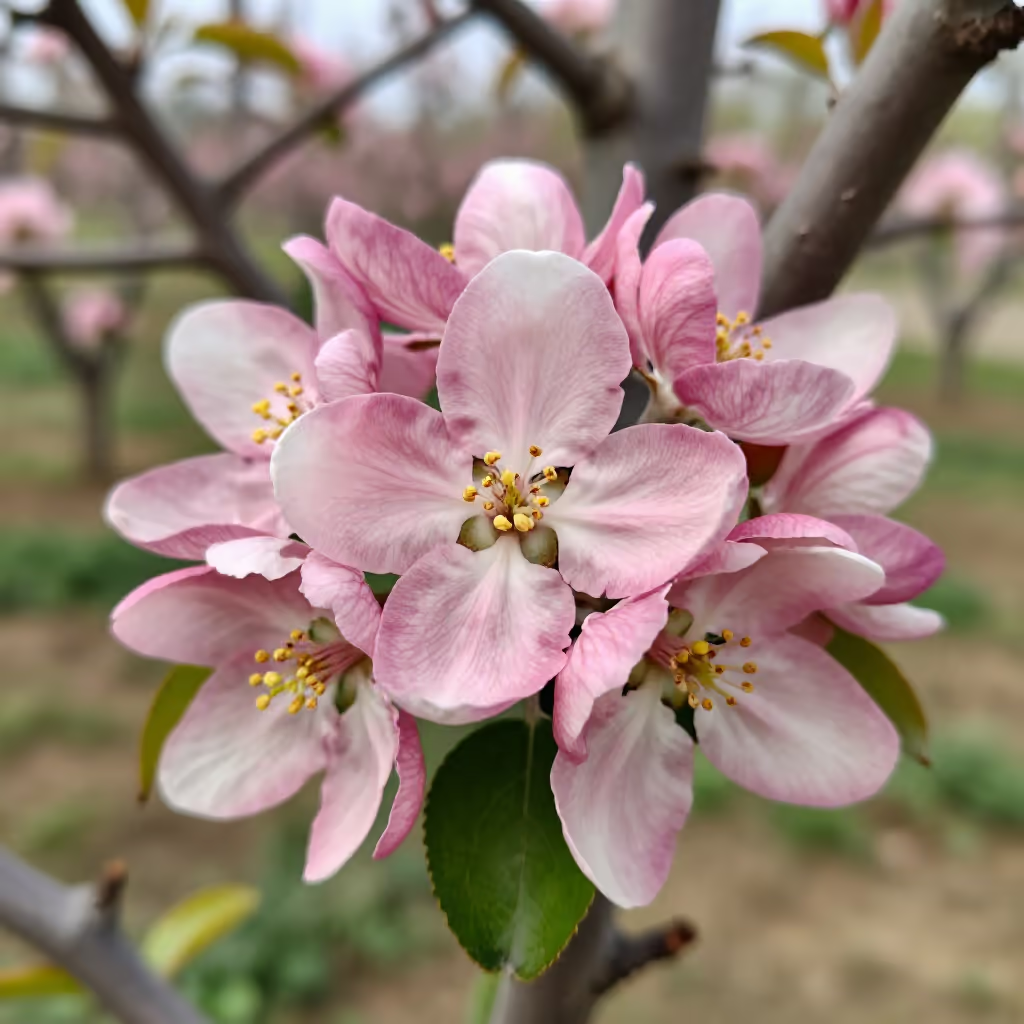
die Blüte
blossom
The colored, often fragrant part of a plant from which the fruit develops.
EXAMPLE
Im Frühling stehen die Kirschbäume in voller Blüte.
In spring, the cherry trees are in full bloom.
blossom / bloom
Loading your saved state.
blossom
The colored, often fragrant part of a plant from which the fruit develops.
Im Frühling stehen die Kirschbäume in voller Blüte.
In spring, the cherry trees are in full bloom.
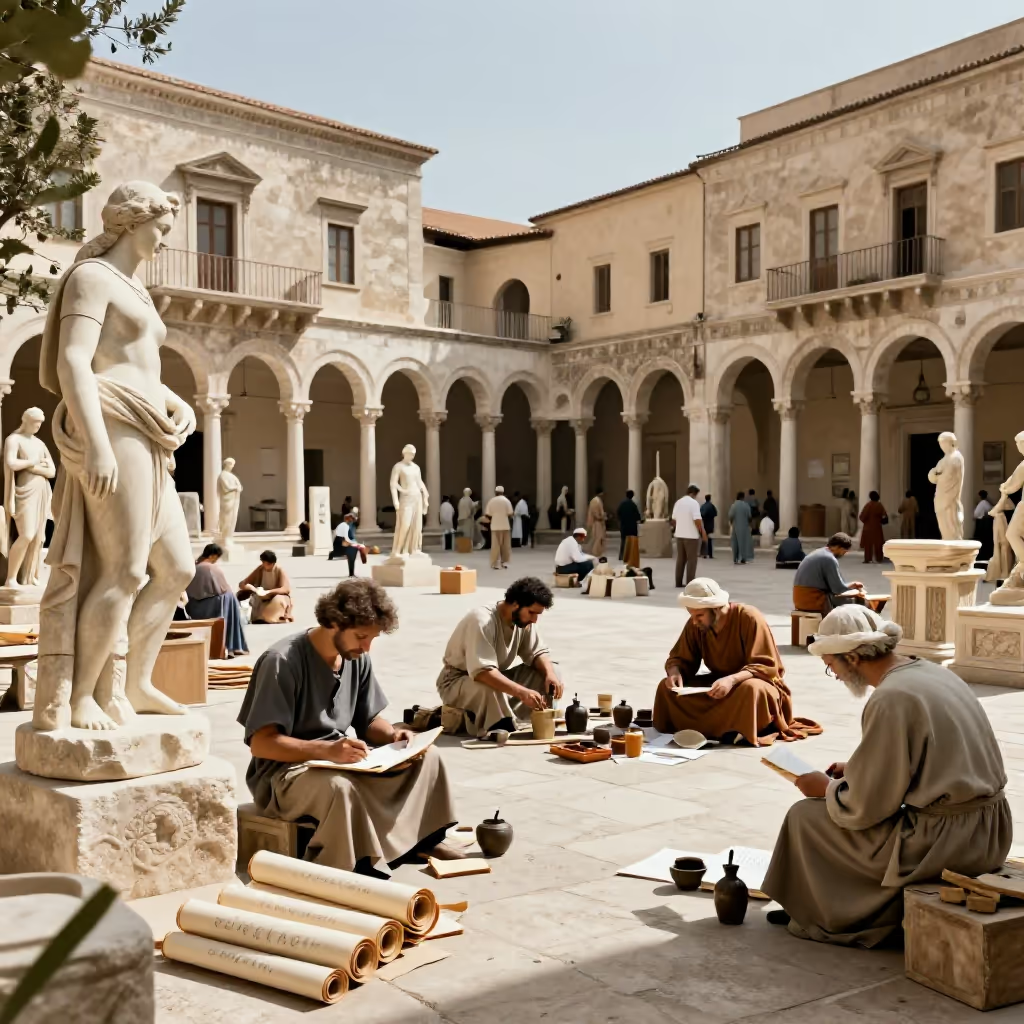
heyday
The peak or best period of a development, for example of a culture, an era, or a life.
Die griechische Antike erlebte ihre Blüte im 5. Jahrhundert vor Christus.
Ancient Greece experienced its heyday in the 5th century BC.
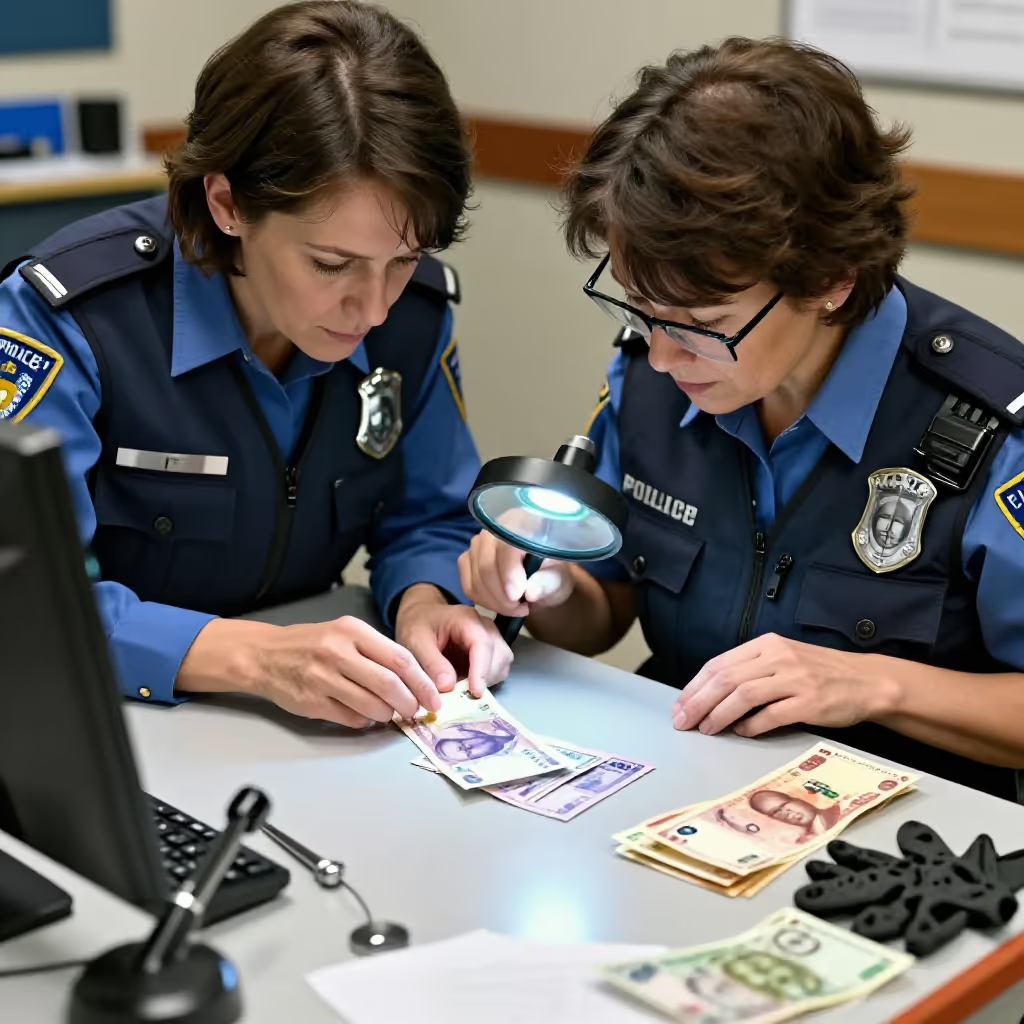
counterfeit bill
A colloquial expression for counterfeit banknotes.
Der Tankwart bemerkte sofort, dass der Kunde mit einer Blüte bezahlen wollte.
The gas station attendant noticed immediately that the customer wanted to pay with a counterfeit bill.
'Die Blüte' (the blossom) belongs to the word family of the verb 'blühen' (to bloom). Both words refer to the process when plants unfold their colored parts.
Die Rosen in unserem Garten blühen wunderschön.
The roses in our garden are blooming beautifully.
The three meanings are clearly separated by context. If people are talking about plants and nature, the blossom part is meant. If it is about history, art, or a life, the peak is meant. In the context of money and crime, counterfeit banknotes are meant.
Die Tulpen haben wunderschöne rote Blüten.
The tulips have beautiful red blossoms.
A very common expression is 'in (voller) Blüte stehen' (to be in full bloom). This means that a plant has opened its blossoms right now and looks its most beautiful.
Die Apfelbäume im Garten stehen in voller Blüte.
The apple trees in the garden are in full bloom.
In the figurative meaning, 'Blüte' (heyday) is often used with a genitive construction to describe the peak of something: 'die Blüte einer Kultur' (the heyday of a culture), 'die Blüte seines Lebens' (the prime of his life), or 'die Blüte einer Epoche' (the heyday of an era).
Mit 30 Jahren stand er in der Blüte seines Lebens.
At 30, he was in the prime of his life.
The meaning 'Falschgeld' (counterfeit money) is colloquial. In official contexts such as police reports or news, people would more likely speak of 'Falschgeld' (counterfeit money) or 'gefälschten Banknoten' (counterfeit banknotes).
Pass auf, dass dir auf dem Flohmarkt niemand eine Blüte andreht.
Watch out that no one palms off a counterfeit bill on you at the flea market.
flower
Blume and Blüte can both refer to the colorful part of a plant. Blüte names this part of the plant more precisely, especially when its development or the later fruit is important. In everyday language, Blume can also mean the entire flowering plant.
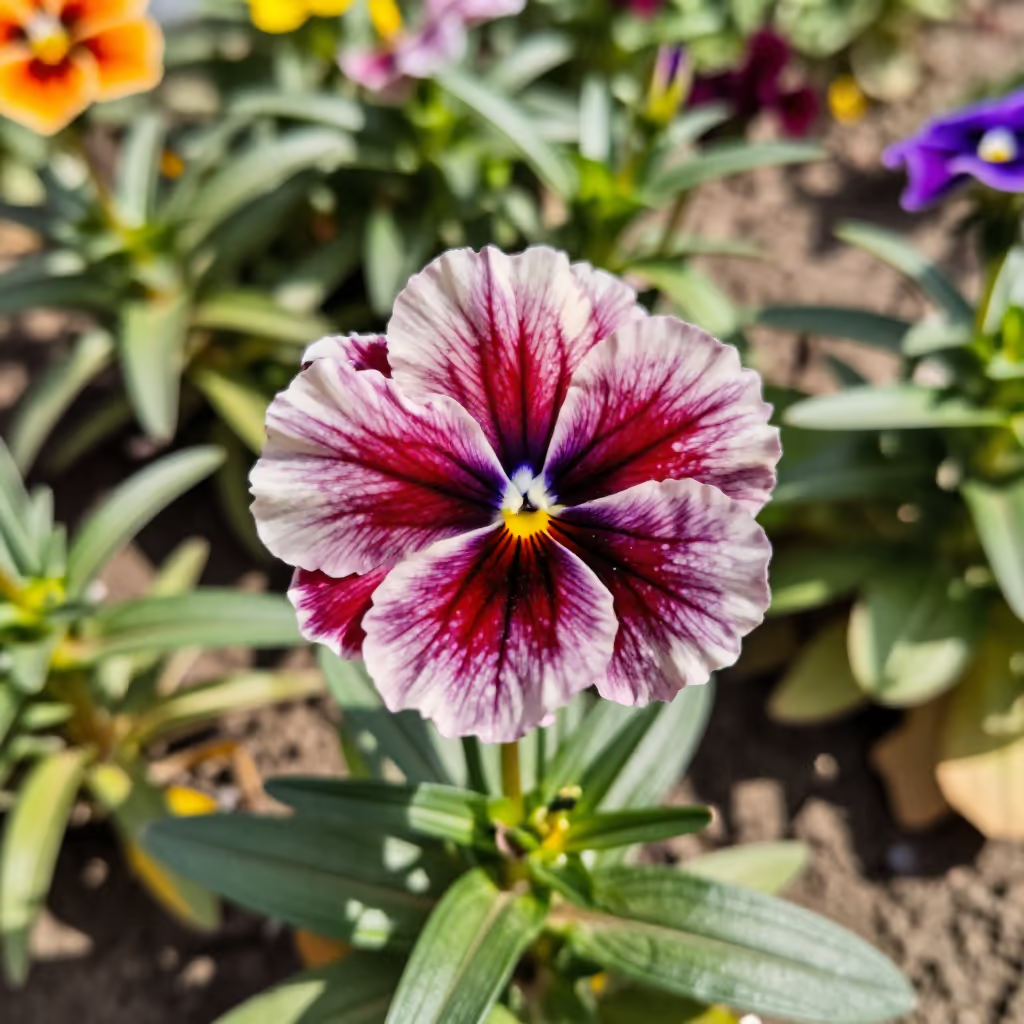
An der Pflanze öffnet sich eine gelbe Blüte.
A yellow blossom is opening on the plant.
Auf der Fensterbank steht eine gelbe Blume im Topf.
There is a yellow flower in a pot on the windowsill.