


brav
well-behaved
To behave in the way that is expected of you; to be obedient and well-mannered. Often used for children and animals.
EXAMPLE
Seid schön brav, während die Babysitterin da ist!
Be nice and well-behaved while the babysitter is here!
well-behaved
Loading your saved state.
well-behaved
To behave in the way that is expected of you; to be obedient and well-mannered. Often used for children and animals.
Seid schön brav, während die Babysitterin da ist!
Be nice and well-behaved while the babysitter is here!

dutiful
Hard-working, honest, and conscientious, sometimes with the slight additional meaning that someone is unimaginative or conformist.
Er hat sein Leben lang brav seine Steuern gezahlt und sich nie etwas zuschulden kommen lassen.
He dutifully paid his taxes all his life and never did anything wrong.
Careful, 'brav' does not mean 'brave'! It means 'well-behaved' or 'gehorsam' (obedient). The English word 'brave' is translated as 'mutig' (brave/courageous).
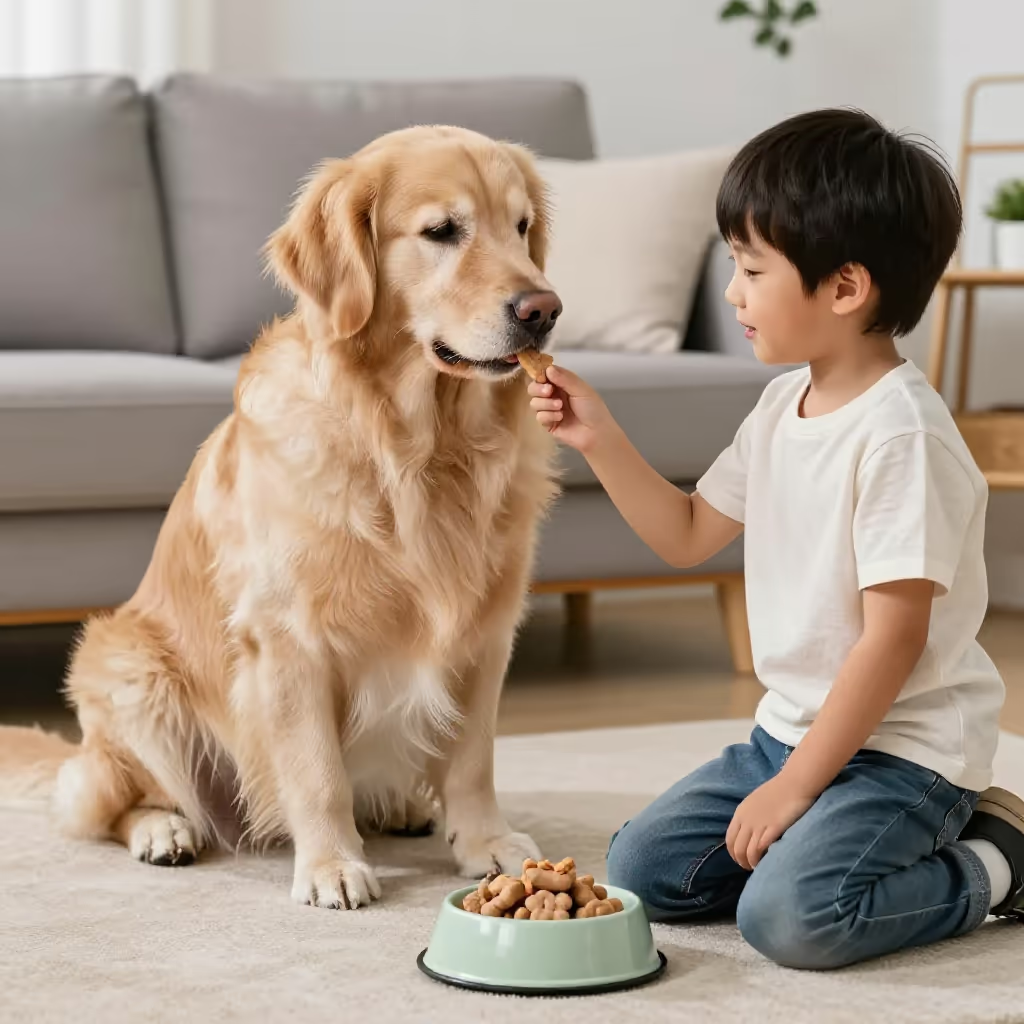
Der Hund ist ganz brav und bellt nie.
The dog is very well-behaved and never barks.
This word is very often used for children and pets. A typical instruction to a child is the imperative 'Sei brav!' (Be good!).
Wenn du beim Arzt brav bist, bekommst du danach ein Eis.
If you're well-behaved at the doctor's, you'll get an ice cream afterward.
When adults are described as 'brav' (dutiful/well-behaved), it can have a slightly negative connotation. It can mean that someone is hard-working and correct, but also somewhat conformist, uncreative, or boring.
Er macht immer nur brav, was der Chef sagt, und hat nie eigene Ideen.
He always just dutifully does what the boss says and never has ideas of his own.
nice / dear
Lieb and brav can both describe good behavior in a child or animal. Lieb often sounds friendlier and more affectionate, while brav emphasizes more strongly that someone obeys and behaves as expected. Use lieb for a personal evaluation and brav for behavior that follows the rules.
Lisa war brav und blieb im Wartezimmer auf ihrem Platz sitzen.
Lisa was well-behaved and stayed seated in her place in the waiting room.
Lisa war lieb und half ihrem kleinen Bruder beim Anziehen.
Lisa was good and helped her little brother get dressed.