

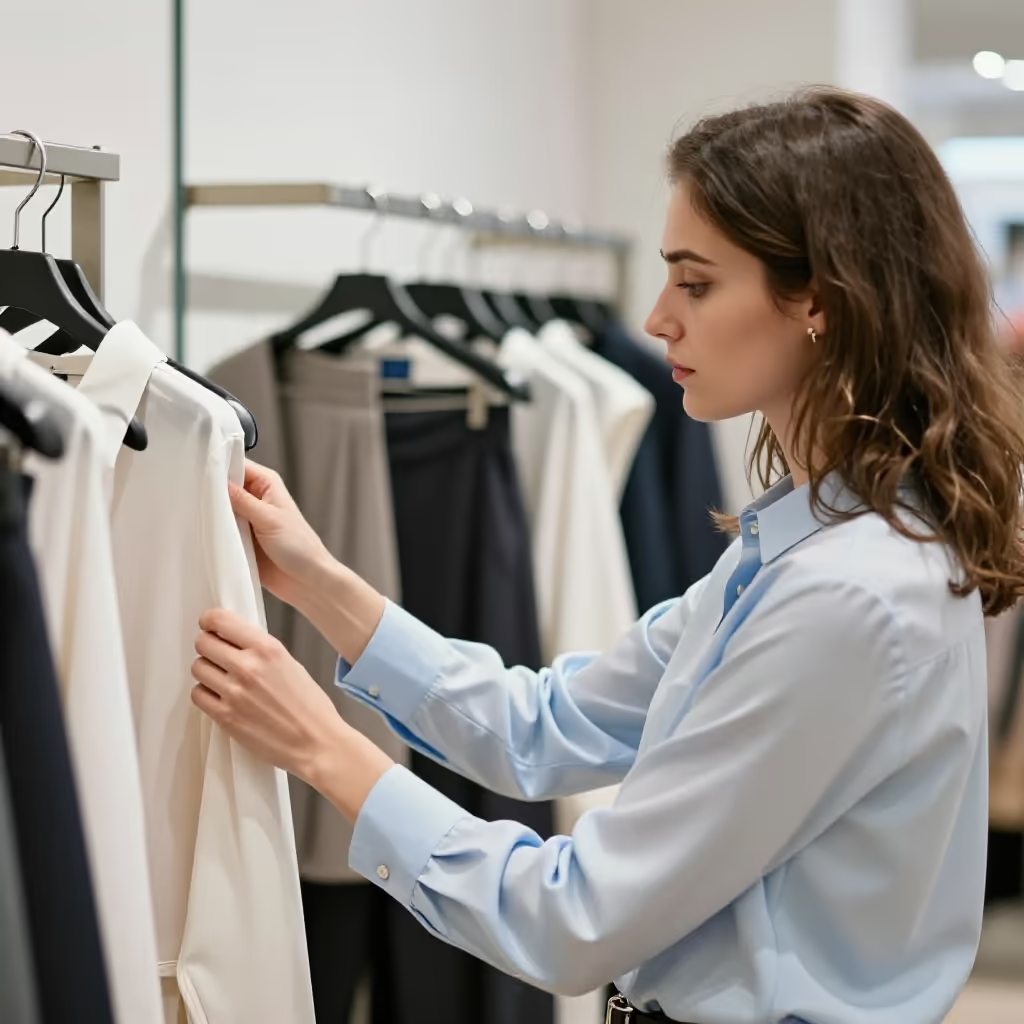
A shirt-like item of clothing for women and girls, usually made from finer fabric and often designed to be more elegant or playful than a men's shirt.
example
Für das Vorstellungsgespräch hat sie eine schlichte weiße Bluse und einen Rock angezogen.
For the job interview, she put on a simple white blouse and a skirt.
Usage tips
Typical verbs
Typical actions associated with a blouse include 'eine Bluse anziehen' (to put on a blouse), 'tragen' (to wear), 'kaufen' (to buy), or 'bügeln' (to iron).
EXAMPLE
Ich muss meine neue Seidenbluse noch für die Feier am Abend bügeln.
I still need to iron my new silk blouse for the celebration this evening.
Typical adjectives
Common adjectives that describe a blouse refer to the material, color, or style, e.g., 'eine seidene Bluse' (a silk blouse), 'eine geblümte Bluse' (a floral blouse), or 'eine sportliche Bluse' (a casual/sporty blouse).
EXAMPLE
Zum neuen Rock passt am besten eine schlichte, weiße Bluse.
A simple white blouse goes best with the new skirt.
Style and context
A blouse is often worn in more formal or festive contexts than a T-shirt, for example at the office or at a family celebration.
EXAMPLE
Für das Bewerbungsgespräch wählte sie eine elegante Bluse.
For the job interview, she chose an elegant blouse.
Compare with
near_synonym · confusable
Bluse vs Shirt
shirt
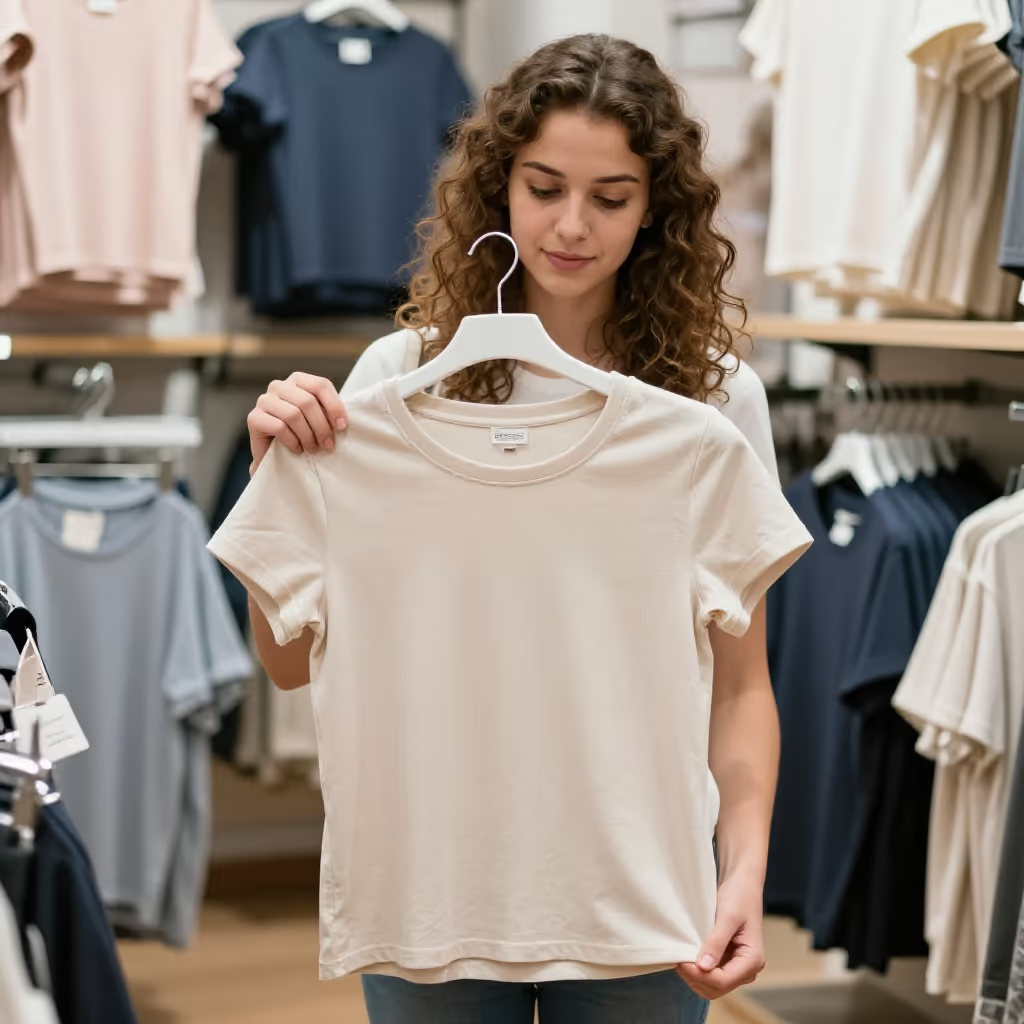
'das Shirt' and 'die Bluse' are both tops. A shirt is usually simple, soft, and more sporty or everyday. A blouse is more shirt-like, often made from finer fabric, and usually looks more elegant. You can confuse the words if you are only speaking generally about clothing for the upper body. If it is casual and simple, 'Shirt' fits better; if it looks finer or somewhat more formal, you are more likely to say 'Bluse'.
Bluse
Für das Gespräch im Büro trägt Anna eine helle Bluse.
For the meeting at the office, Anna wears a light-colored blouse.
Shirt
Im Zug zieht mein Vater sein leichtes Shirt aus der Tasche.
On the train, my father takes his light shirt out of his bag.