


blutig
bloody
Covered with blood, consisting of blood, or containing blood.
EXAMPLE
Nach dem Sturz hatte er ein blutiges Knie.
After the fall, he had a bloody knee.
bloody
Loading your saved state.
bloody
Covered with blood, consisting of blood, or containing blood.
Nach dem Sturz hatte er ein blutiges Knie.
After the fall, he had a bloody knee.

bloody
In a way that involves a lot of violence, fighting, and death.
Die Schlacht endete in einer blutigen Niederlage für die Angreifer.
The battle ended in a bloody defeat for the attackers.
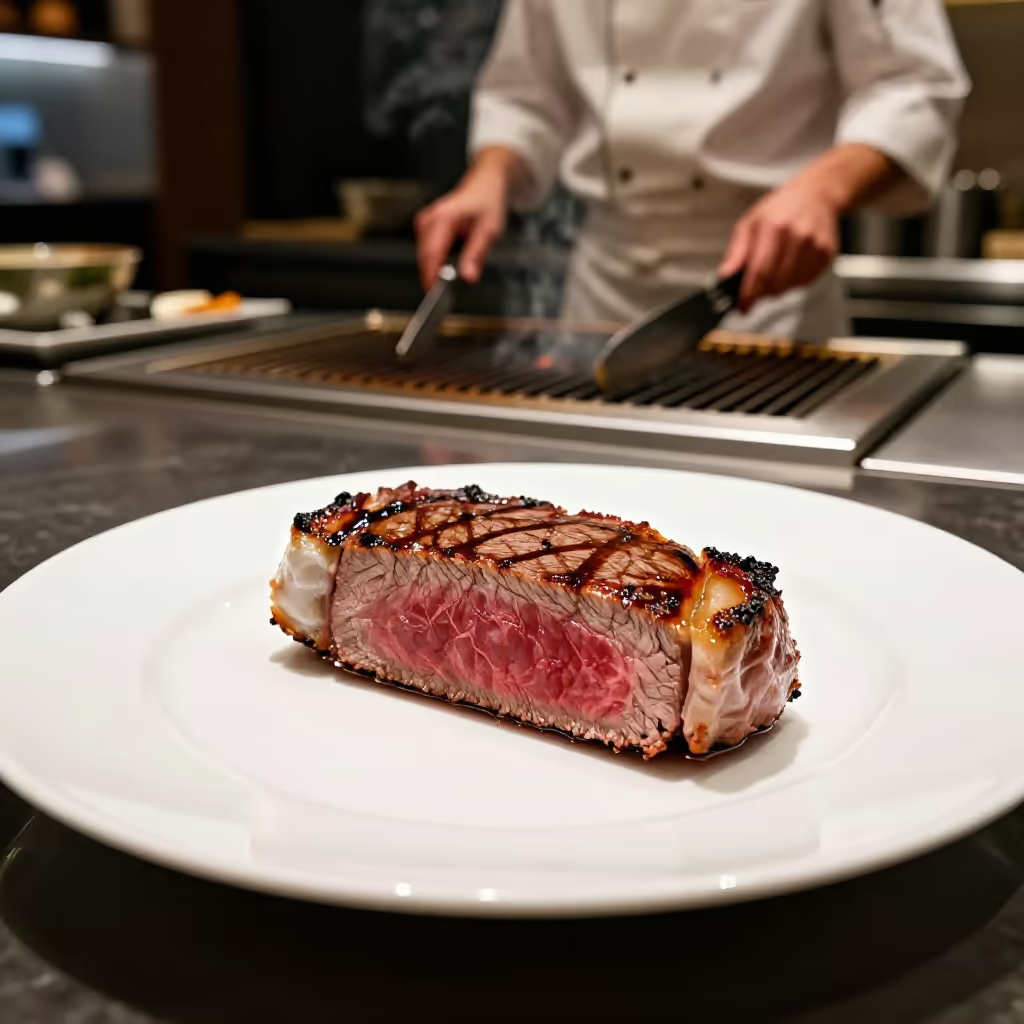
rare
Describes meat that has been fried or grilled only briefly and is still raw and red inside.
Ich hätte mein Steak gern blutig, bitte.
I'd like my steak rare, please.

complete beginner
A person who has absolutely no experience or knowledge in a particular area.
Beim Skifahren bin ich noch ein blutiger Anfänger.
I'm still a complete beginner at skiing.
The adjective 'blutig' (bloody) is derived directly from the noun 'das Blut' (blood). The basic meaning always relates to blood.
Nach dem Kampf war sein Hemd voller Blut.
After the fight, his shirt was full of blood.
In its literal meaning, 'blutig' (bloody) is often combined with minor injuries. Typical examples are 'eine blutige Nase' (a bloody nose), 'ein blutiges Knie' (a bloody knee), or 'eine blutige Wunde' (a bloody wound).
Das Kind kam mit einer blutigen Nase nach Hause.
The child came home with a bloody nose.
In the context of conflicts such as war or disputes, 'blutig' (bloody) has a figurative meaning and means 'violent' or 'with many deaths'. Common collocations are 'ein blutiger Kampf' (a bloody fight/battle) or 'eine blutige Auseinandersetzung' (a bloody confrontation).
Der Film zeigt die blutige Geschichte des Bürgerkriegs.
The film shows the bloody history of the civil war.
When talking about meat in a restaurant, especially steak, 'blutig' (rare) means 'seared only briefly' or 'still raw inside' (in English, 'rare').
Er bestellt sein Steak immer blutig.
He always orders his steak rare.
The expression 'blutiger Anfänger' (complete beginner) is a fixed idiom. It describes a person who has absolutely no experience in an area and is often used colloquially.
Keine Sorge, beim Kochen sind wir alle mal als blutige Anfänger gestartet.
Don't worry, we all started out as complete beginners at cooking at some point.
English
Blutig is supported by the stated meaning for the degree of doneness described. However, the culinary use of englisch is not included among the accepted meanings of this word, so this area of potential confusion cannot be assigned to any meaning of englisch.

Der Gast bestellt sein Steak blutig, weil es innen noch rot sein soll.
The guest orders their steak rare because they want it to still be red inside.
Das Wort englisch gehört hier nicht zur angegebenen Bedeutung des Wortes.
The word englisch does not refer here to the specified meaning of the word.