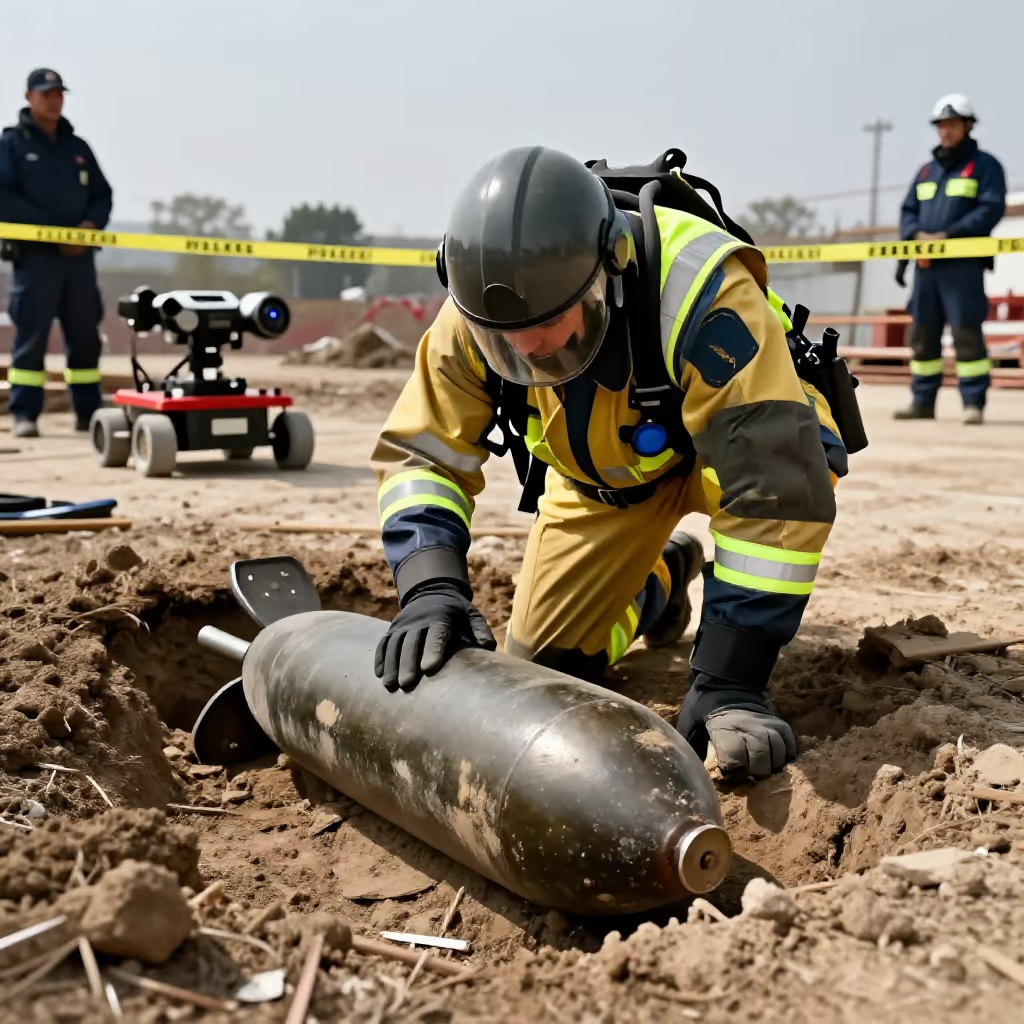
An object filled with explosives that is used for destruction through an explosion.
example
Der Kampfmittelräumdienst konnte die Fliegerbombe aus dem Zweiten Weltkrieg erfolgreich entschärfen.
The bomb disposal service was able to successfully defuse the aerial bomb from the Second World War.

Usage tips
Typical verbs
In the literal sense, 'Bombe' (bomb) is often used with specific verbs. These include 'eine Bombe entschärfen' (to defuse a bomb), 'eine Bombe zünden' (to detonate a bomb), or 'eine Bombe legen' (to plant a bomb).
EXAMPLE
Spezialisten mussten die Bombe unter Wasser zünden.
Specialists had to detonate the bomb underwater.
Fixed expression
The expression 'die Bombe platzen lassen' means to announce surprising and often unpleasant news. The person who delivers the news 'lässt die Bombe platzen' (drops the bombshell).
EXAMPLE
Auf der Familienfeier ließ er die Bombe platzen und verkündete seine Auswanderung.
At the family celebration, he dropped the bombshell and announced that he was emigrating.
Figurative use
When a piece of news has a big, sudden impact, people say it 'schlägt ein wie eine Bombe' (hits like a bomb). This expression describes the shock or surprise triggered by information.
EXAMPLE
Die Nachricht von der Schließung der Fabrik schlug in der Stadt ein wie eine Bombe.
The news of the factory closing hit the town like a bombshell.
Register: colloquial
The use of 'Bombe' (the bomb) as an expression for something great or impressive is purely colloquial. You should only use this expression in informal situations with friends.
EXAMPLE
Die Party war echt die Bombe!
The party was really the bomb!
Compare with
near_synonym · confusable
Bombe vs Hammer
hammer
'der Hammer' and 'die Bombe' can both colloquially refer to something very impressive. 'der Hammer' is very general: something can be great, unbelievable, or even outrageous. 'die Bombe' often sounds even more dramatic. It can be something very good, but also surprising or shocking news. Learners may confuse the words because both sound strong and figurative. The context is important: for a good party or idea, both can fit; for a surprising revelation, 'die Bombe' is more precise.
Bombe
Seine Kündigung war eine Bombe, mit der im Team niemand gerechnet hatte.
His resignation was a bombshell that no one on the team had expected.
Hammer
Der Blick vom Berg war der Hammer, wir haben lange Fotos gemacht.
The view from the mountain was amazing, and we spent a long time taking photos.