

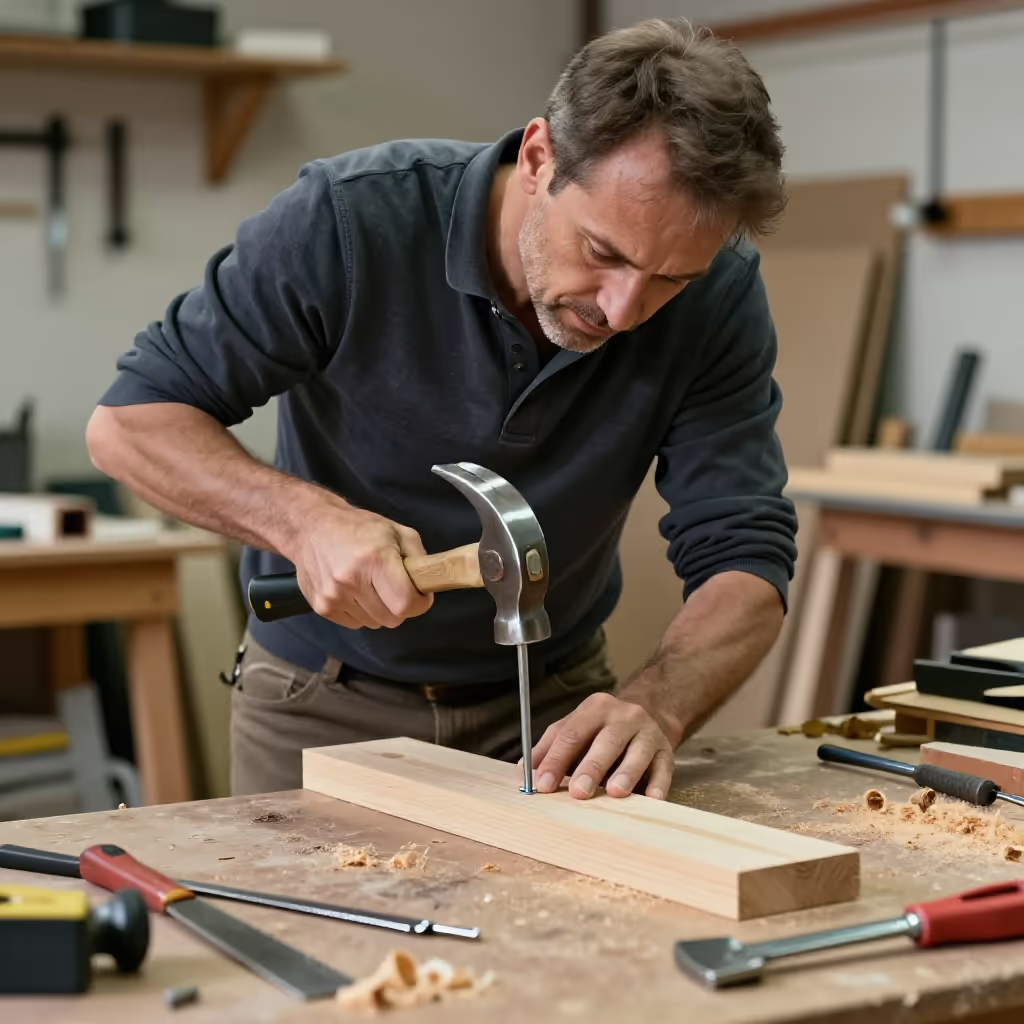
der Hammer
hammer
A tool with a heavy metal head on a handle, used for striking something, for example nails.
EXAMPLE
Ich brauche einen Hammer, um das Bild an die Wand zu hängen.
I need a hammer to hang the picture on the wall.
hammer
Loading your saved state.
hammer
A tool with a heavy metal head on a handle, used for striking something, for example nails.
Ich brauche einen Hammer, um das Bild an die Wand zu hängen.
I need a hammer to hang the picture on the wall.

amazing / outrageous
A colloquial expression for something perceived as unbelievable, amazing, or even outrageous.
Du hast die Prüfung mit 1,0 bestanden? Das ist ja der Hammer!
You passed the exam with a 1.0? That's amazing!

hammer
A piece of sports equipment in athletics, consisting of a metal ball attached to a wire with a handle, which is thrown as far as possible.
Der Athlet schleuderte den Hammer über 70 Meter weit.
The athlete threw the hammer over 70 meters.
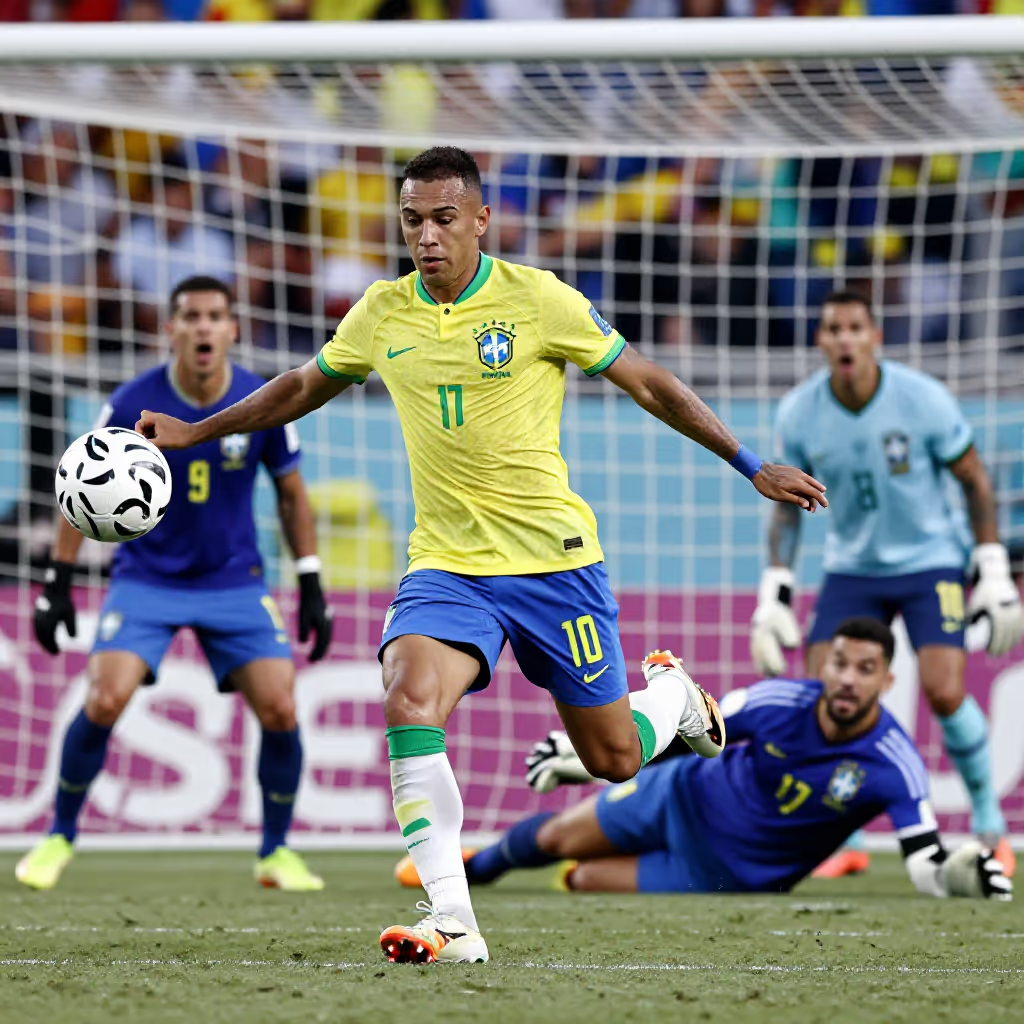
powerful shot
A particularly hard and powerful shot in sports, especially in soccer.
Mit einem Hammer aus 25 Metern Entfernung erzielte er das Tor des Monats.
With a powerful shot from 25 meters out, he scored the goal of the month.
In colloquial speech, 'der Hammer' (amazing/outrageous) is a very common expression for something amazing or surprising. It can be meant both positively (great) and negatively (outrageous).
Du hast die Tickets umsonst bekommen? Das ist ja der Hammer!
You got the tickets for free? That's amazing!
This colloquial meaning is often used in the fixed expression 'Das ist der Hammer!' (That's amazing!/That's outrageous!) or as the short exclamation 'Der Hammer!' to express strong emotions.
Das Konzert gestern war der absolute Hammer!
The concert yesterday was absolutely amazing!
Whether the tool or the colloquial expression is meant can easily be recognized from context. If it is about building or repairing, it is the tool. In emotional reactions, it is the exclamation.
Für dieses Regal brauche ich Schrauben und einen Hammer.
For this shelf, I need screws and a hammer.
When it comes to the tool, typical verbs are 'einen Nagel einschlagen' (to drive in a nail), 'mit dem Hammer schlagen' (to hit with a hammer), or simply 'den Hammer benutzen' (to use the hammer).
Er schlug mit dem Hammer einen Nagel in die Wand.
He drove a nail into the wall with the hammer.
bomb
Both words can colloquially express strong praise for something particularly impressive. „Der Hammer“ is typically used with an article as a fixed evaluation, while „Bombe“ in this meaning often appears predicatively without an article. Both forms are possible, but the expression and sentence structure differ.

Der neue Film ist wirklich der Hammer.
The new film is really amazing.
Der neue Film ist wirklich Bombe.
The new film is really fantastic.