


das Bowling
bowling
A sports and leisure activity in which you roll a heavy ball down a lane to knock down ten pins set up at the end.
EXAMPLE
Lass uns am Wochenende mit Freunden zum Bowling gehen.
Let's go bowling with friends this weekend.
bowling
Loading your saved state.
bowling
A sports and leisure activity in which you roll a heavy ball down a lane to knock down ten pins set up at the end.
Lass uns am Wochenende mit Freunden zum Bowling gehen.
Let's go bowling with friends this weekend.
As the name of an activity or sport, 'Bowling' (bowling) is often used without an article, especially after verbs like 'spielen' (to play).
Ich spiele nicht gern Bowling, aber ich mag Billard.
I don't like playing bowling, but I like billiards.
The most common expressions for talking about this activity are 'Bowling spielen' (to play bowling) and 'zum Bowling gehen' (to go bowling).
Wir wollen am Freitagabend Bowling spielen.
We want to play bowling on Friday evening.
'Bowling' (bowling) is often the first part of compound nouns that refer to the activity, for example 'die Bowlingbahn' (the bowling lane), 'die Bowlingkugel' (the bowling ball), or 'das Bowlingcenter' (the bowling center).
Diese Bowlingkugel ist mir zu schwer.
This bowling ball is too heavy for me.
to bowl
In Bowling, you roll a heavy ball at ten pins. In Kegeln, by contrast, you try to knock over nine pins. To name the specific leisure activity, you therefore need to pay attention to the number of targets and the corresponding lane.
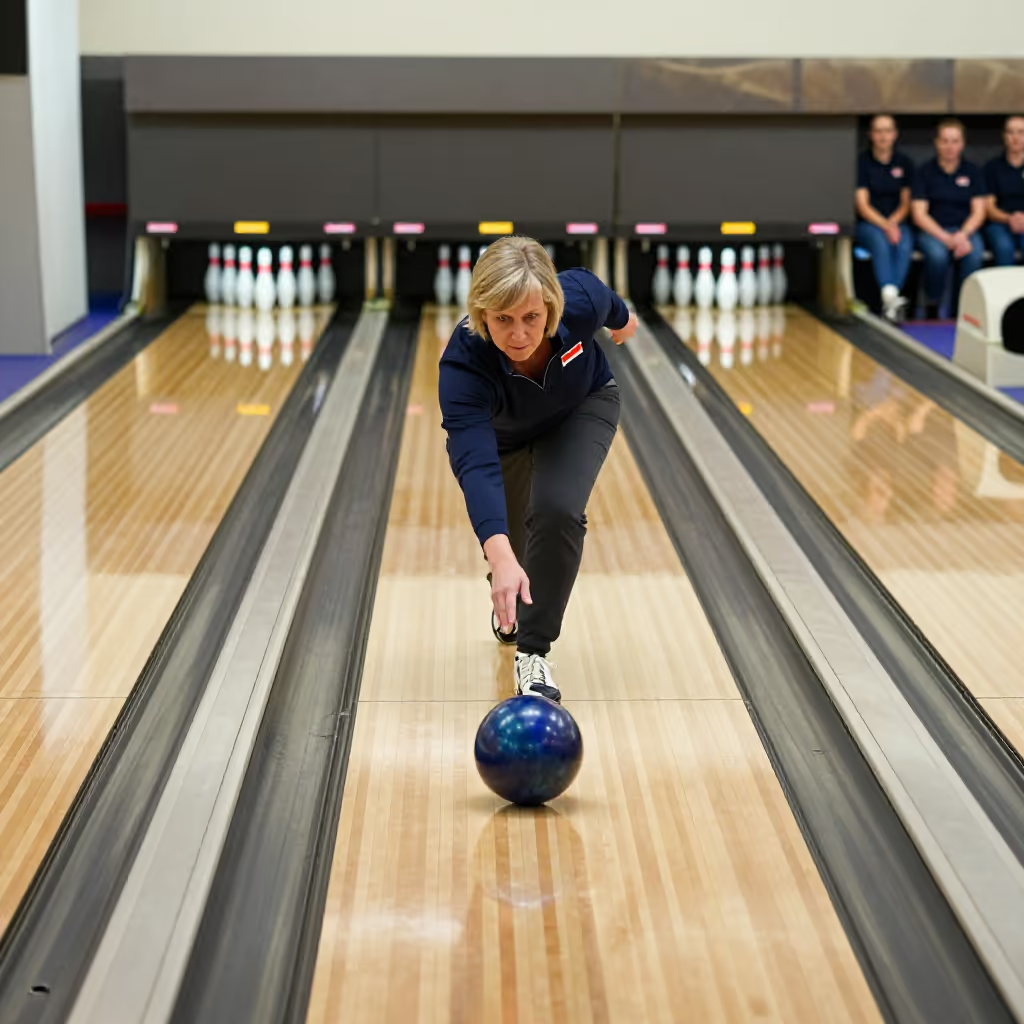
Beim Bowling versucht Nina, alle zehn Pins mit einer Kugel umzuwerfen.
In bowling, Nina tries to knock down all ten pins with one ball.
Beim Kegeln versucht Nina, alle neun Kegel mit einer Kugel umzuwerfen.
When playing nine-pin bowling, Nina tries to knock down all nine pins with one ball.