

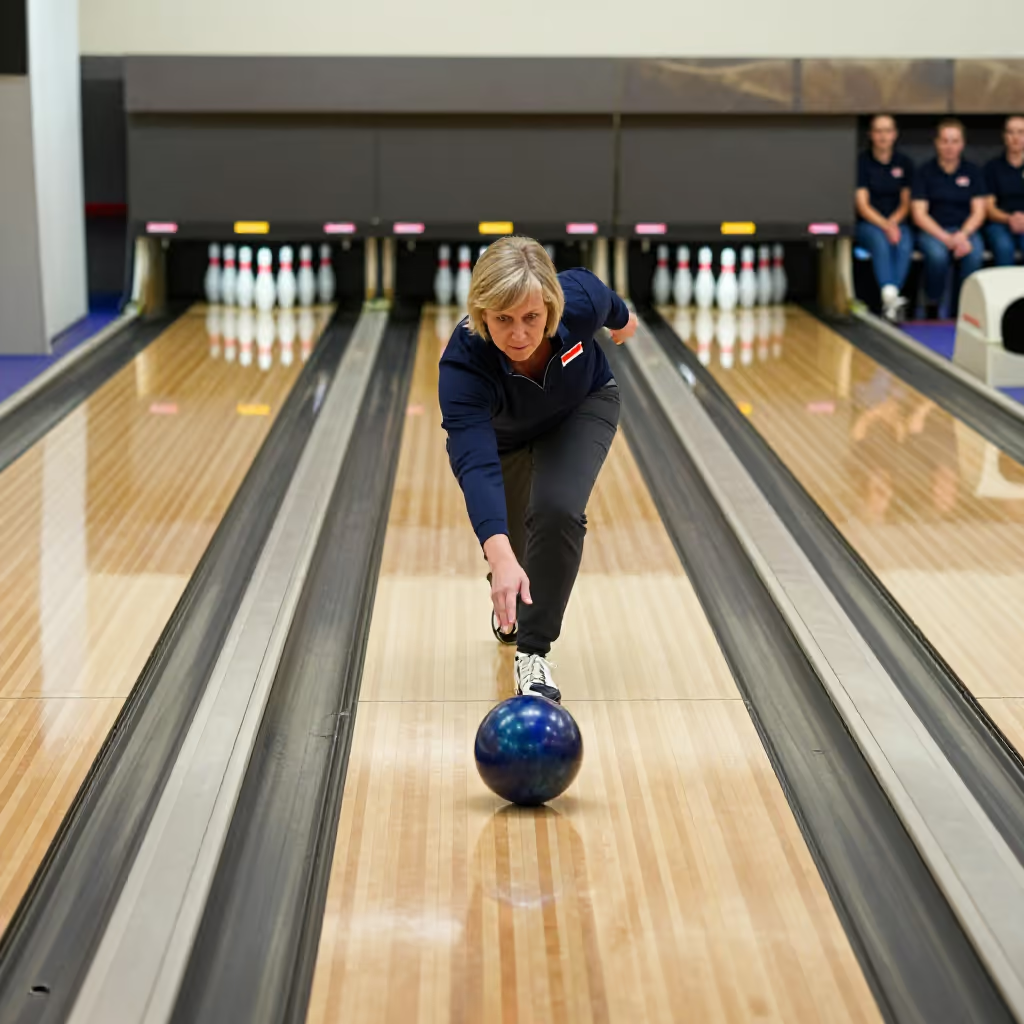
To practice a precision sport in which you roll a ball down a lane in order to knock over nine pins set up at the end of the lane.
example
Jeden zweiten Freitagabend geht unser Stammtisch zusammen kegeln.
Every other Friday evening, our regulars' group goes bowling together.

Usage tips
Perfect tense with “haben”
The perfect tense of “kegeln” (to bowl) is always formed with the auxiliary verb “haben” (to have). It describes an activity, not directed movement.
EXAMPLE
Wir haben gestern Abend zwei Stunden lang gekegelt.
We bowled for two hours yesterday evening.
Use with “gehen”
To express that someone is going to do the activity, the construction “kegeln gehen” (to go bowling) is often used. The verb “kegeln” stays in the infinitive at the end of the sentence.
EXAMPLE
Wollen wir am Wochenende mit Freunden kegeln gehen?
Do we want to go bowling with friends at the weekend?
Cultural context
Kegeln is a popular social activity in Germany, often done in groups in so-called “Kegelclubs” (bowling clubs) or as a leisure activity in pubs or restaurants with a bowling lane.
EXAMPLE
Mein Vater trifft sich jeden Monat mit seinem Kegelclub.
My father meets up with his bowling club every month.
Compare with
confusable
kegeln vs Bowling
bowling
'das Bowling' and 'kegeln' are very similar because in both you roll a ball down a lane and try to knock down pins. They can therefore easily be confused. The practical difference is: bowling involves ten pins and usually refers to the modern leisure activity at a bowling alley. 'kegeln' is a verb and means the sport with nine pins. In everyday language, you say 'Bowling spielen' (to go bowling) when you go to a bowling alley, and 'kegeln' when you play on a nine-pin bowling lane.
kegeln
Jonas kegelt jeden Freitag mit seinen Freunden im Verein.
Jonas goes nine-pin bowling with his friends at the club every Friday.
Bowling
Am Samstag gehen wir zum Bowling, weil mein Vater Geburtstag hat.
On Saturday we are going bowling because my father has his birthday.