

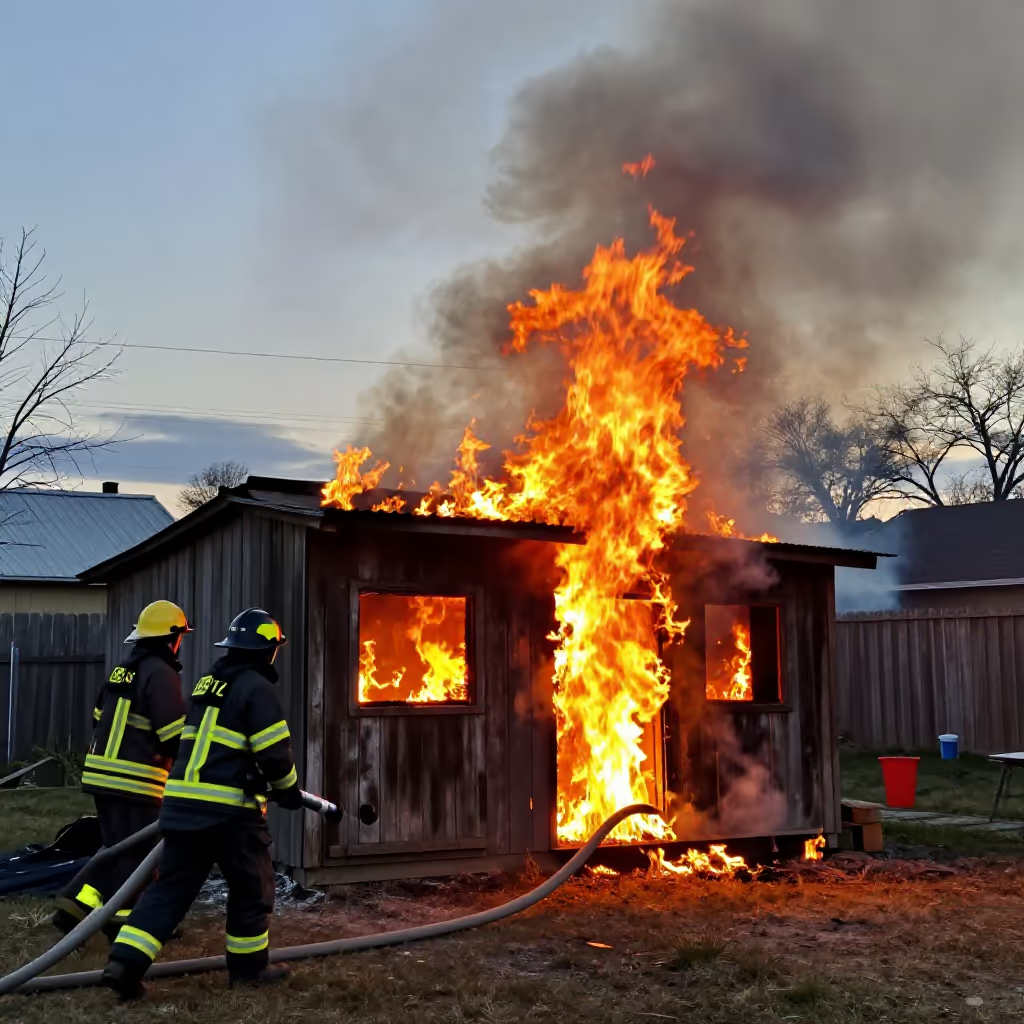
brennend
burning
Being in the state of combustion; standing in flames.
EXAMPLE
Die Feuerwehr konnte das brennende Auto schnell löschen.
The fire department was able to quickly put out the burning car.
burning
Loading your saved state.
burning
Being in the state of combustion; standing in flames.
Die Feuerwehr konnte das brennende Auto schnell löschen.
The fire department was able to quickly put out the burning car.
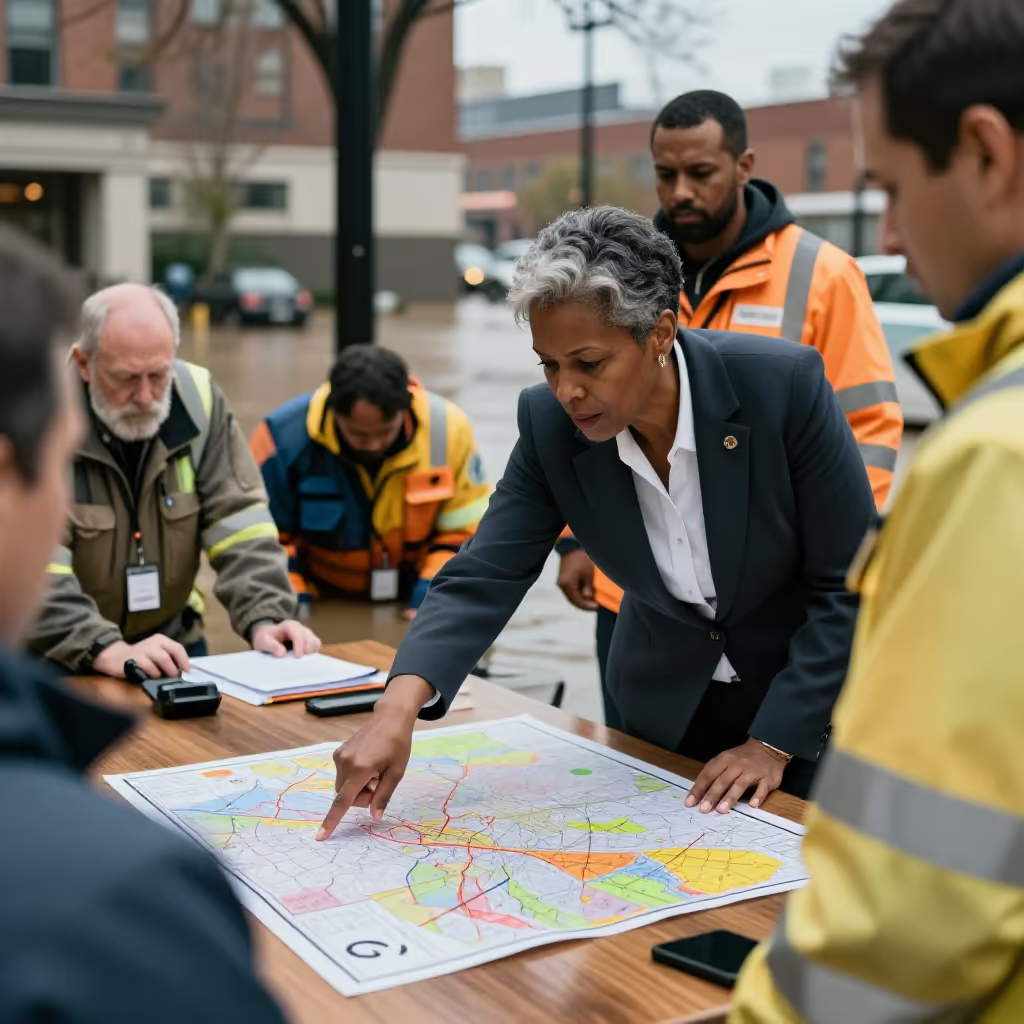
burning
(figurative) Very urgent, important, or of great interest.
Mich interessiert brennend, wie die Geschichte ausgeht.
I am burning to know how the story ends.

burning
Causing a strong, painful, or hot sensation on the skin or in the body.
Nach dem Sport hatte er einen brennenden Schmerz im Knie.
After exercising, he had a burning pain in his knee.

burning
(figurative) Very intense, passionate, or strongly felt.
Sie hatte den brennenden Wunsch, eines Tages als Ärztin zu arbeiten.
She had the burning desire to work as a doctor one day.
'Brennend' (burning) is the present participle of the verb 'brennen' (to burn). All meanings, including the figurative ones, derive from the idea of burning, heat, or intensity.
Eine brennende Kerze stand auf dem Tisch.
A burning candle stood on the table.
You can recognize the literal meaning 'in Flammen stehend' (standing in flames) by the fact that the adjective describes a noun that can physically burn, such as a house, wood, or paper.
Die Kinder saßen um das brennende Lagerfeuer.
The children sat around the burning campfire.
In the meaning of 'dringend' (urgent) or 'wichtig' (important), 'brennend' (burning) often appears with abstract nouns such as 'Frage' (question), 'Thema' (topic), 'Problem' (problem), or 'Interesse' (interest).
Das ist zurzeit ein brennendes Thema in der Politik.
That is currently a burning issue in politics.
'Brennend' (burning) is especially often used as an adverb with the verb 'interessieren' (to interest). The expression 'Das interessiert mich brennend' means 'That interests me very much'.
Mich würde brennend interessieren, was er dazu gesagt hat.
I would be very interested to know what he said about it.
To express strong, passionate feelings, 'brennend' (burning) is combined with nouns such as 'Wunsch' (desire), 'Sehnsucht' (longing), or 'Liebe' (love).
Er verspürte eine brennende Sehnsucht nach seiner Heimat.
He felt a burning longing for his homeland.
urgent / urgently
dringend emphasizes that a problem or task requires immediate attention. brennend can express the same idea, but it also emphasizes that the matter is particularly acute, important, or of great interest. Use dringend for clear time pressure and brennend for a particularly pressing meaning.

Für die Bewohner ist eine Lösung für den Fehler im Computersystem eine brennende Frage.
For the residents, finding a solution to the error in the computer system is a burning question.
Wir brauchen dringend eine Lösung für den Fehler im Computersystem.
We urgently need a solution to the error in the computer system.