

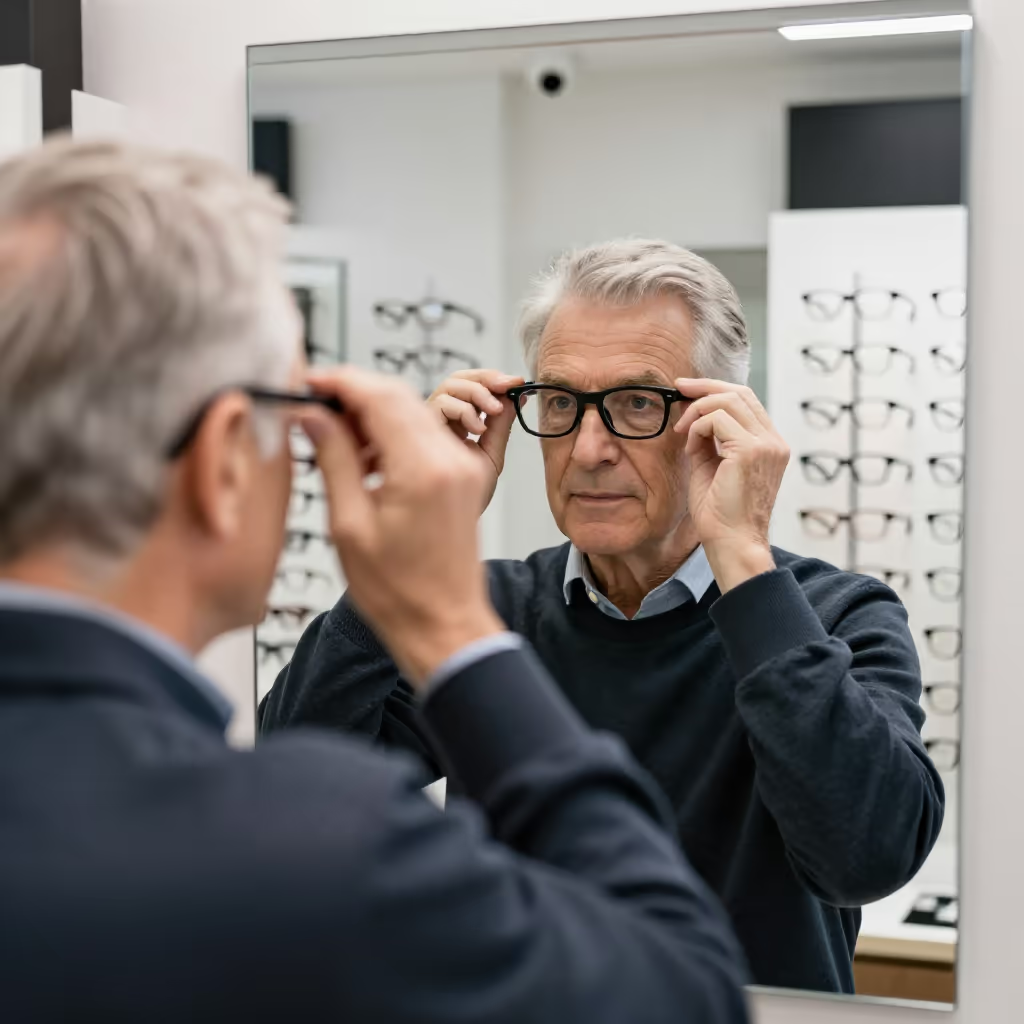
die Brille
glasses
A visual aid consisting of a frame and two lenses, worn in front of the eyes to correct impaired vision.
EXAMPLE
Ich kann ohne meine Brille kaum etwas lesen.
I can hardly read anything without my glasses.
glasses
Loading your saved state.
glasses
A visual aid consisting of a frame and two lenses, worn in front of the eyes to correct impaired vision.
Ich kann ohne meine Brille kaum etwas lesen.
I can hardly read anything without my glasses.
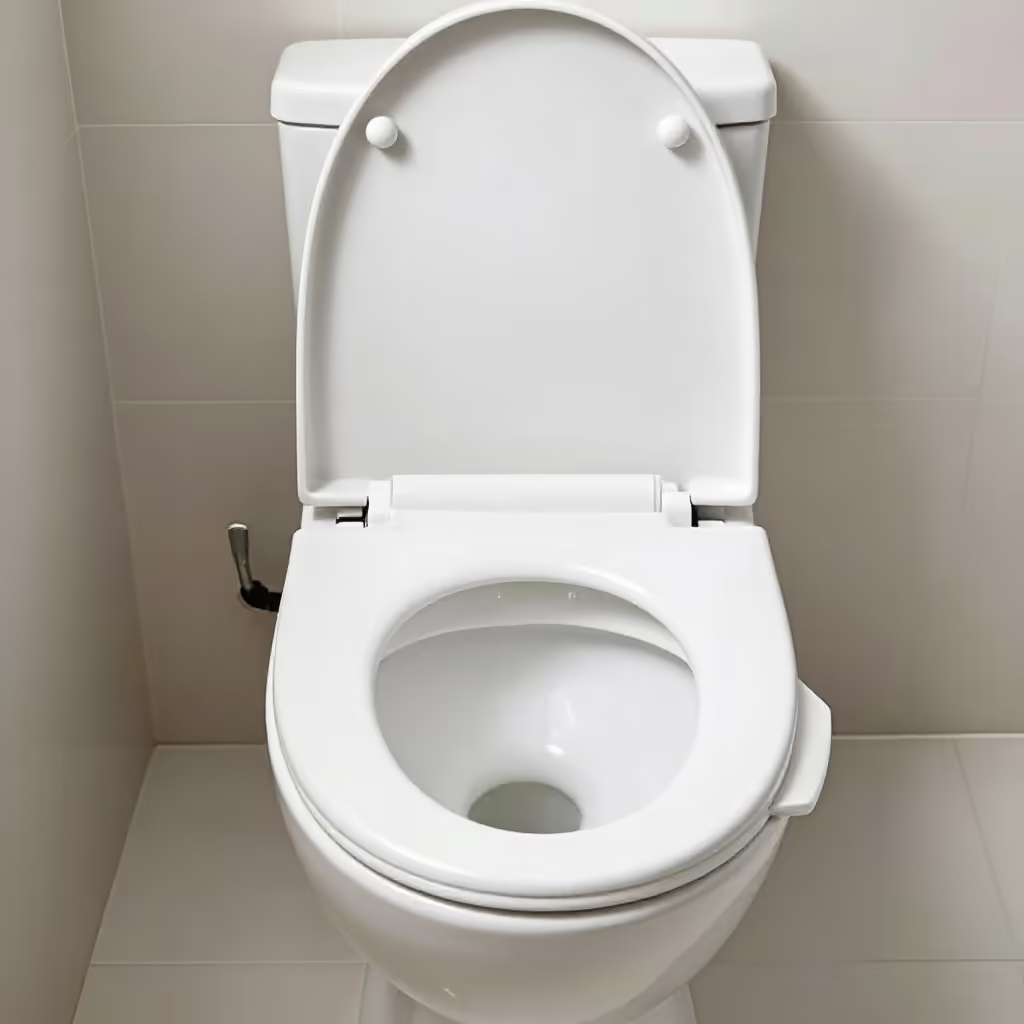
toilet seat
The seat on a toilet, also referred to as a 'Klobrille' (toilet seat) or 'Toilettenbrille' (toilet seat).
Könntest du bitte die Brille herunterklappen?
Could you please put the toilet seat down?
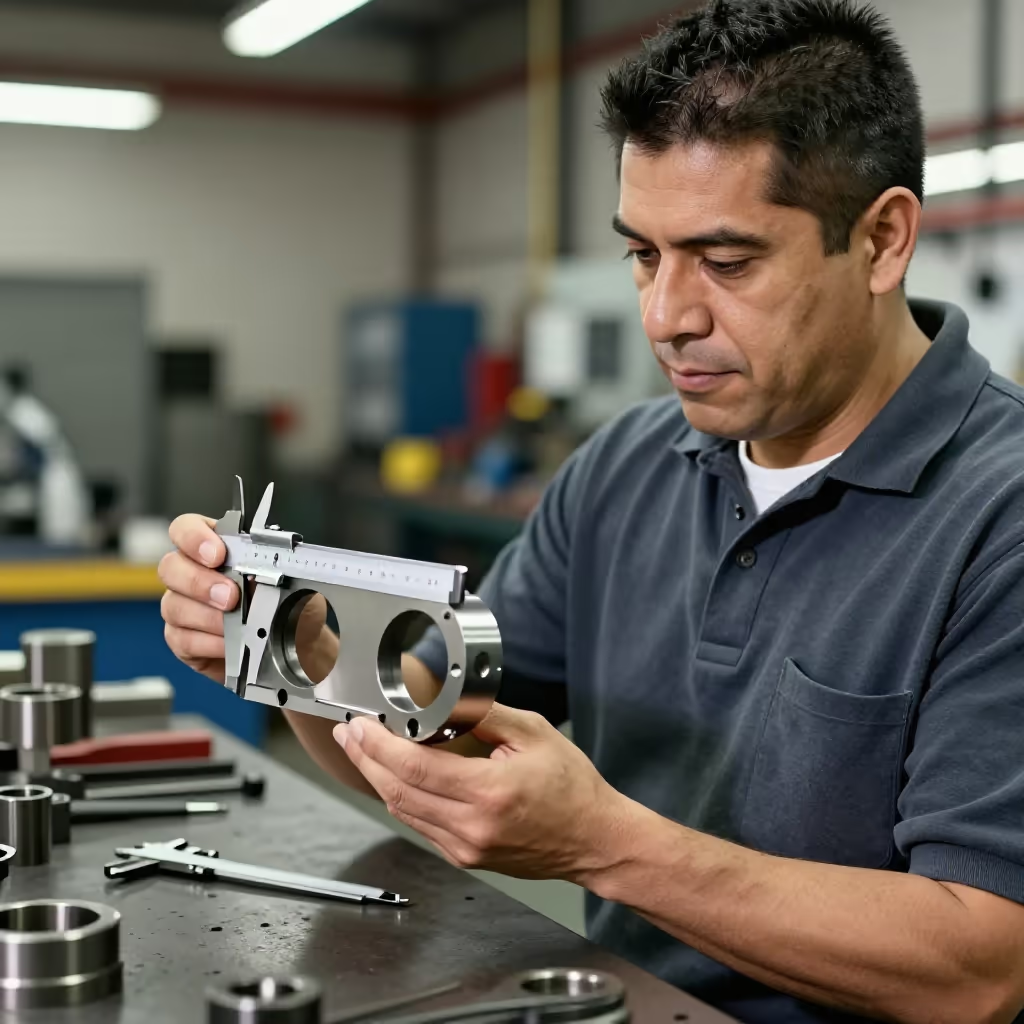
spectacle-shaped part
A technical component whose shape resembles glasses, for example a flange or bearing part.
Der Mechaniker musste die Dichtungsbrille am Motor austauschen.
The mechanic had to replace the spectacle-shaped gasket on the engine.
By far the most common meaning of 'Brille' (glasses) is the visual aid. You will only recognize the other meanings (toilet seat, technical part) from the specific context, for example if you are in the bathroom or in a workshop.
Im Badezimmer war leider die Brille kaputt.
Unfortunately, the toilet seat in the bathroom was broken.
In connection with the visual aid, there are fixed verbs you should learn: man trägt eine Brille (one wears glasses), man setzt eine Brille auf (one puts on glasses), and man nimmt eine Brille ab (one takes off glasses).
Er hat seine Brille aufgesetzt, um die Speisekarte zu lesen.
He put on his glasses to read the menu.
To describe a person who wears glasses, you use the preposition 'mit' (with). The opposite is expressed with 'ohne' (without).
Der Mann mit der Brille dort drüben ist mein Onkel.
The man with the glasses over there is my uncle.
'Brille' (glasses) is the base word for many useful compounds that describe the purpose of the glasses more precisely, for example 'Sonnenbrille' (sunglasses), 'Lesebrille' (reading glasses), or 'Schutzbrille' (safety goggles).
Auf der Baustelle ist das Tragen einer Schutzbrille Pflicht.
Wearing safety goggles is mandatory on the construction site.
In the meaning 'Toilettensitz' (toilet seat), a more precise word such as 'Klobrille' (toilet seat) or 'Toilettenbrille' (toilet seat) is often used to avoid misunderstandings. The word 'Brille' (glasses/toilet seat) on its own is more colloquial here.
Die Klobrille war locker und musste repariert werden.
The toilet seat was loose and had to be repaired.