

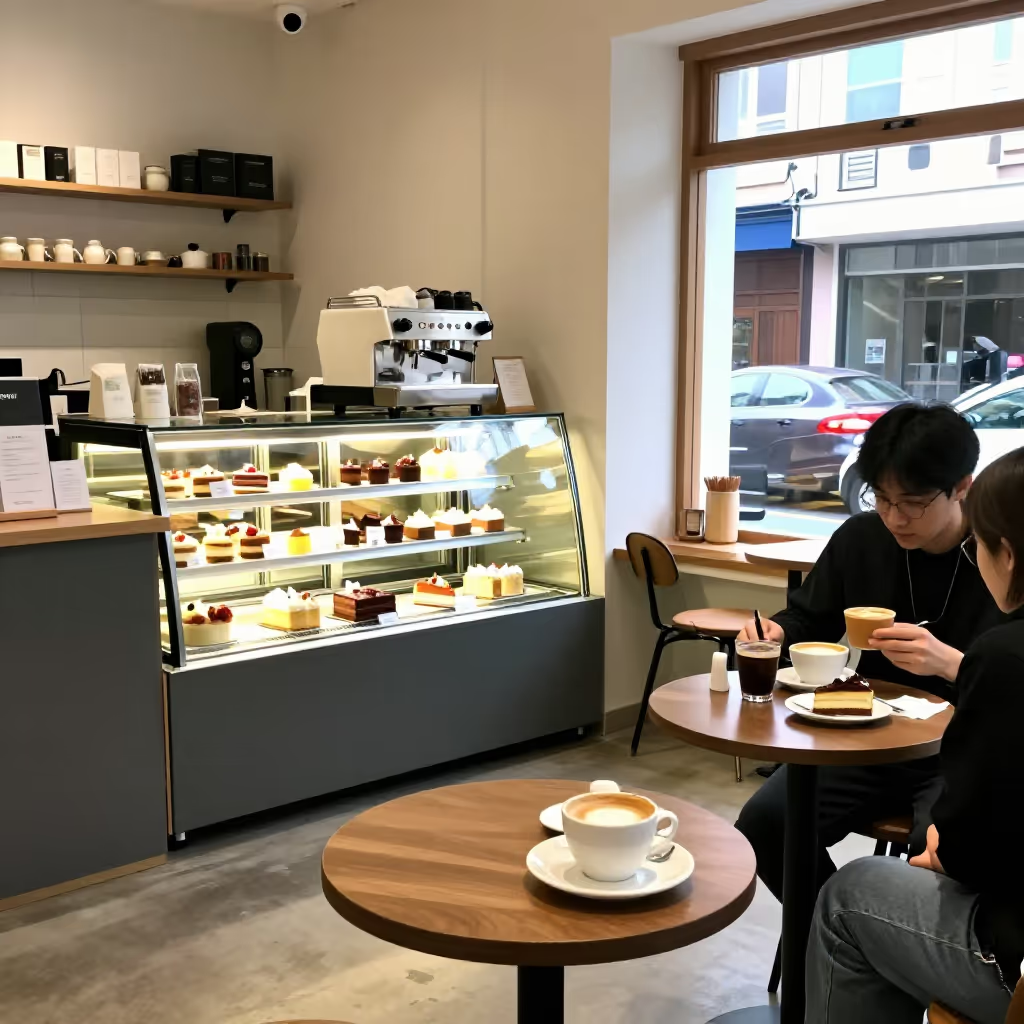
A food-service establishment where you can order and consume coffee, cake, and often small dishes as well.
example
Wir treffen uns am Nachmittag in unserem Lieblingscafé in der Altstadt.
We're meeting in the afternoon at our favorite café in the old town.
Usage tips
Correct preposition
For places like 'Café' (café), the preposition 'in' is important. Movement to the place is expressed with the accusative ('ins Café' - to the café), while being there is expressed with the dative ('im Café' - in the café).
EXAMPLE
Wollen wir später noch ins Café gehen?
Shall we go to the café later?
Typical activities
Typical social activities are associated with 'Café' (café). People go there to meet friends, drink coffee, eat cake, or simply relax.
EXAMPLE
Lass uns am Samstag in einem Café frühstücken.
Let's have breakfast in a café on Saturday.
Origin of the word
'Café' is a word from French. This explains the special spelling with 'é' and the pronunciation. It is closely related to the word 'Kaffee' (coffee).
EXAMPLE
In Wien gibt es viele traditionelle Cafés.
There are many traditional cafés in Vienna.
Compare with
confusable
Café vs Restaurant
restaurant
'Restaurant' and 'Café' are both places where you can order something and eat or drink there. The difference lies in the focus. In a restaurant, the focus is usually on proper meals, for example lunch or dinner. A café is more appropriate when you want coffee, cake, or a small dish. Learners may confuse the words because in both places you can sit, order, and pay. In practical terms: for a hot meal, you would tend to say 'Restaurant'; for coffee and cake, you would tend to say 'Café'.
Café
Bei schlechtem Wetter sitzt sie gern mit ihrer Schwester im Café.
When the weather is bad, she likes sitting in the café with her sister.
Restaurant
Heute Abend essen wir in einem Restaurant in der Innenstadt.