

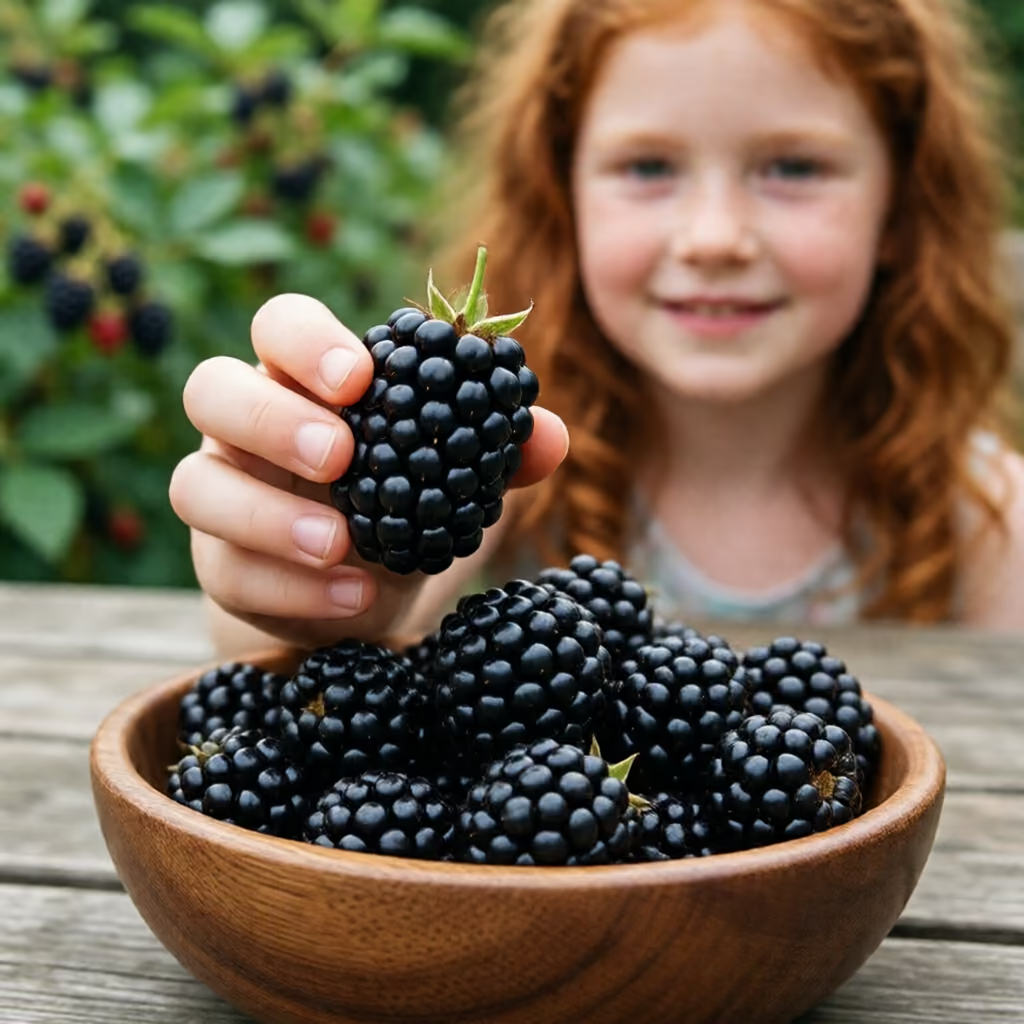
die Brombeere
blackberry
The dark, usually black fruit of the blackberry bush, consisting of many small individual drupelets and suitable for eating.
EXAMPLE
Die reife Brombeere schmeckt süß und saftig.
The ripe blackberry tastes sweet and juicy.
blackberry
die Brombeere, die Brombeeren
Loading your saved state.
blackberry
The dark, usually black fruit of the blackberry bush, consisting of many small individual drupelets and suitable for eating.
Die reife Brombeere schmeckt süß und saftig.
The ripe blackberry tastes sweet and juicy.
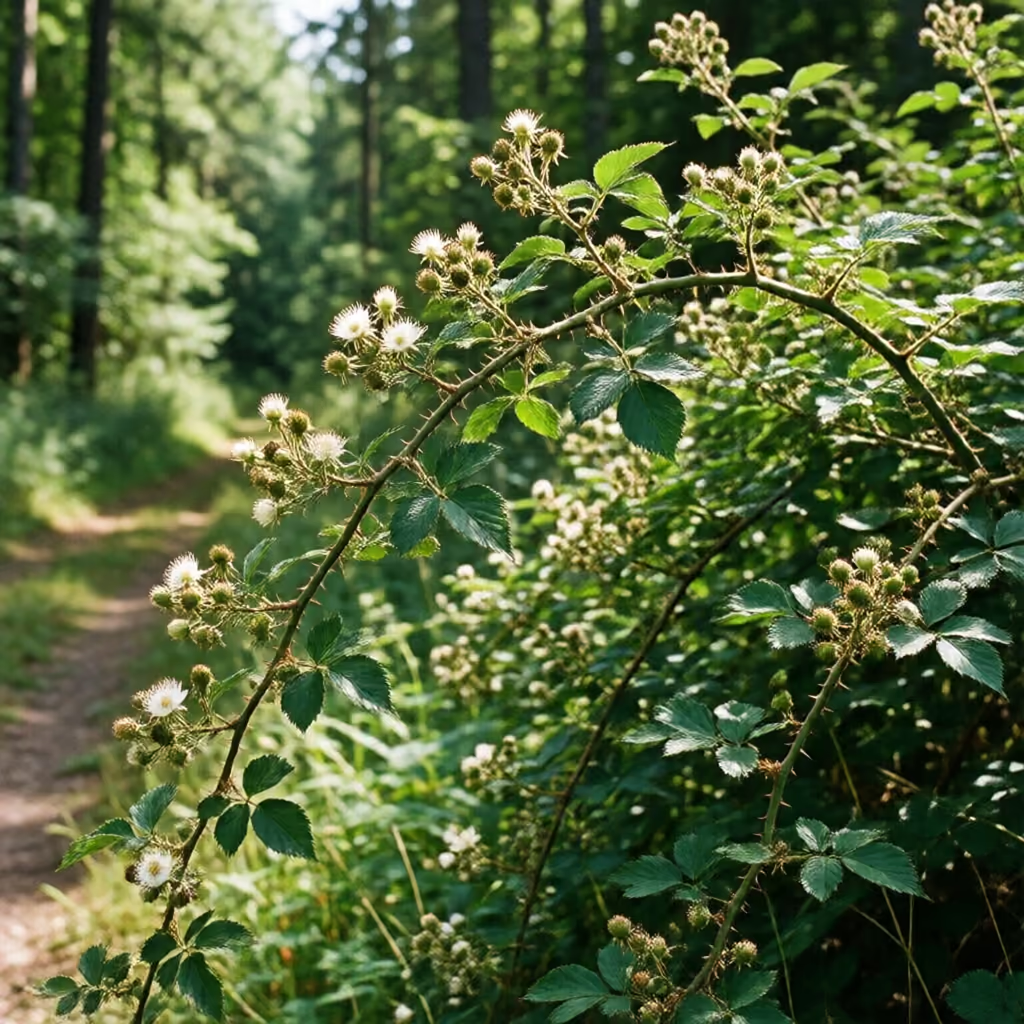
blackberry bush
A thorny bush on which blackberries grow.
Am Waldrand blüht im Juni die Brombeere.
The blackberry bush is blooming at the edge of the forest in June.
| gender | feminine die |
|---|---|
| plural | die Brombeeren |
| genitive | der Brombeere |
| singular | plural | |
|---|---|---|
| nominative | die Brombeere | die Brombeeren |
| accusative | die Brombeere | die Brombeeren |
| dative | der Brombeere | den Brombeeren |
| genitive | der Brombeere | der Brombeeren |
The article changes with the case; it is shown in colour.
'Die Brombeere' (the blackberry) can refer to either the fruit or the bush. Verbs such as 'essen' (to eat), 'pflücken' (to pick), or 'schmecken' (to taste) usually point to the fruit; 'wachsen' (to grow), 'blühen' (to bloom), or 'zurückschneiden' (to prune) point to the bush.
Im August kann man am Weg viele Brombeeren pflücken.
In August, you can pick lots of blackberries along the path.
Die Brombeere wächst hinter dem Schuppen und braucht viel Platz.
The blackberry bush grows behind the shed and needs plenty of space.
For the fruit, combinations such as 'reife Brombeeren pflücken' (to pick ripe blackberries), 'aus Brombeeren Marmelade kochen' (to make jam from blackberries), and 'Brombeeren essen' (to eat blackberries) are especially common.
Wir haben aus den reifen Brombeeren eine leckere Marmelade gekocht.
We made delicious jam from the ripe blackberries.
When 'die Brombeere' (the blackberry) refers to the bush, the word often appears with characteristics such as 'dornig' (thorny) or 'wuchernd' (overgrown), and with verbs such as 'wachsen' (to grow) or 'zurückschneiden' (to prune).
Die wuchernde Brombeere muss im Herbst zurückgeschnitten werden.
The overgrown blackberry bush needs to be pruned in the fall.