

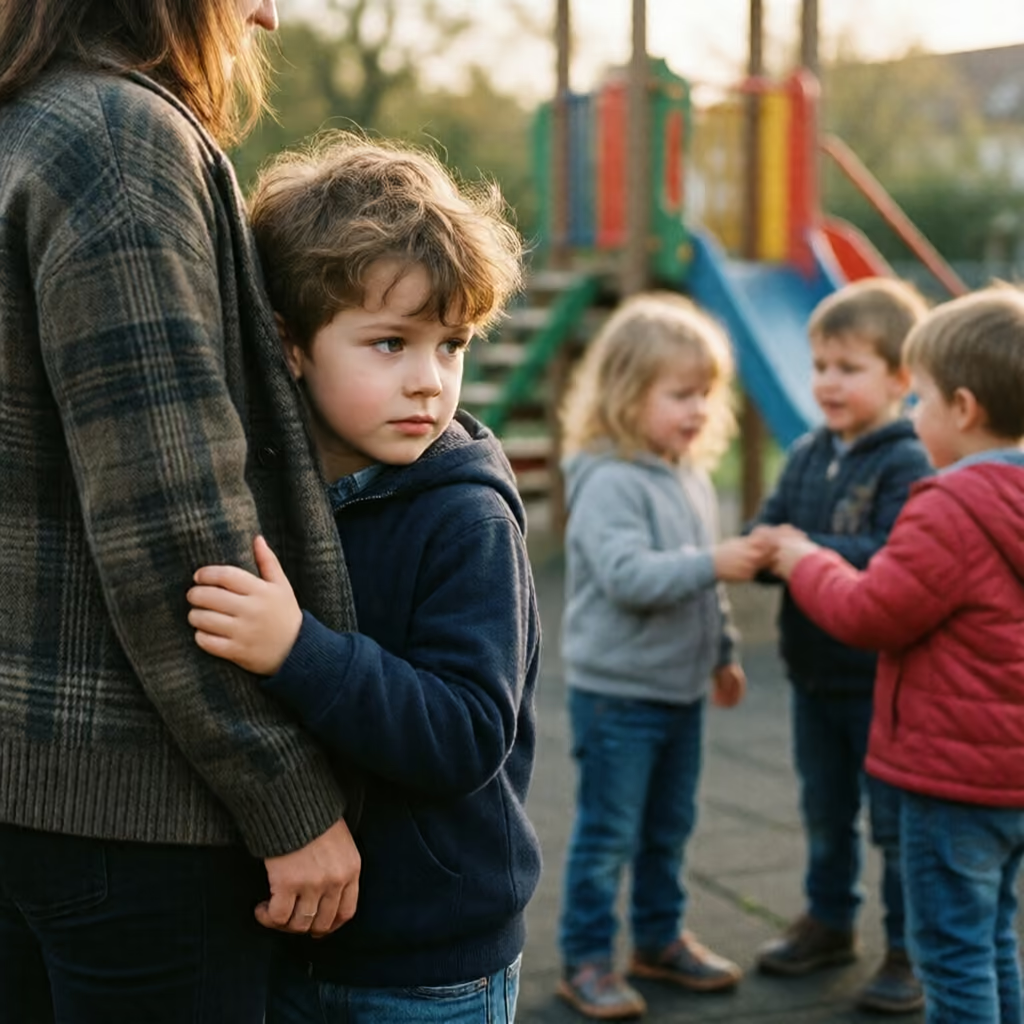
die Scheu
shyness
Fearful reserve or uncertainty around people, animals, or unfamiliar situations.
Das Kind verlor nach wenigen Tagen seine Scheu vor den anderen Kindern.
After a few days, the child lost his shyness around the other children.

shyness / reluctance / awe
die Scheu
Loading your saved state.

shyness
Fearful reserve or uncertainty around people, animals, or unfamiliar situations.
Das Kind verlor nach wenigen Tagen seine Scheu vor den anderen Kindern.
After a few days, the child lost his shyness around the other children.


reluctance
An inner aversion or hesitation about doing something specific or exposing oneself to something.
Seine Scheu vor Konflikten hindert ihn daran, Probleme offen anzusprechen.
His reluctance to face conflict prevents him from addressing problems openly.

awe
Deep respect for something significant, sublime, or sacred, accompanied by a sense of reserve.
Mit ehrfürchtiger Scheu betrachteten die Pilger die heilige Stätte.
The pilgrims gazed at the holy site in reverent awe.
| gender | feminine die |
|---|---|
| genitive | der Scheu |
| singular | plural | |
|---|---|---|
| nominative | die Scheu | – |
| accusative | die Scheu | – |
| dative | der Scheu | – |
| genitive | der Scheu | – |
The article changes with the case; it is shown in colour.
The object of 'Scheu' (shyness, reluctance, or awe) is often introduced by 'vor' followed by the dative. This applies to people and situations as well as actions or sacred things.
Ihre Scheu vor fremden Menschen machte die erste Begegnung schwierig.
Her shyness around strangers made the first meeting difficult.
A typical expression is 'jemandem die Scheu nehmen' (to take away someone's shyness or apprehension). The person being helped is in the dative.
Mit einem freundlichen Gespräch nahm die Ärztin dem Jungen die Scheu vor der Untersuchung.
By having a friendly chat with the boy, the doctor took away his apprehension about the examination.
With 'Scheu haben' (to be reluctant), the action in question can be expressed using an infinitive with 'zu'. The expression often includes 'keine' (no), emphasizing that someone acts without inhibition.
Sie hat keine Scheu, auch vor einem großen Publikum ihre Meinung zu sagen.
She has no qualms about expressing her opinion, even in front of a large audience.
In this sense, 'Scheu' (awe) is mainly used in elevated or literary language and in religious texts. Expressions such as 'mit heiliger Scheu' (with sacred awe) make this solemn tone particularly clear.
Mit heiliger Scheu nahm der Sammler die alte Handschrift in die Hand.
With sacred awe, the collector picked up the old manuscript.