


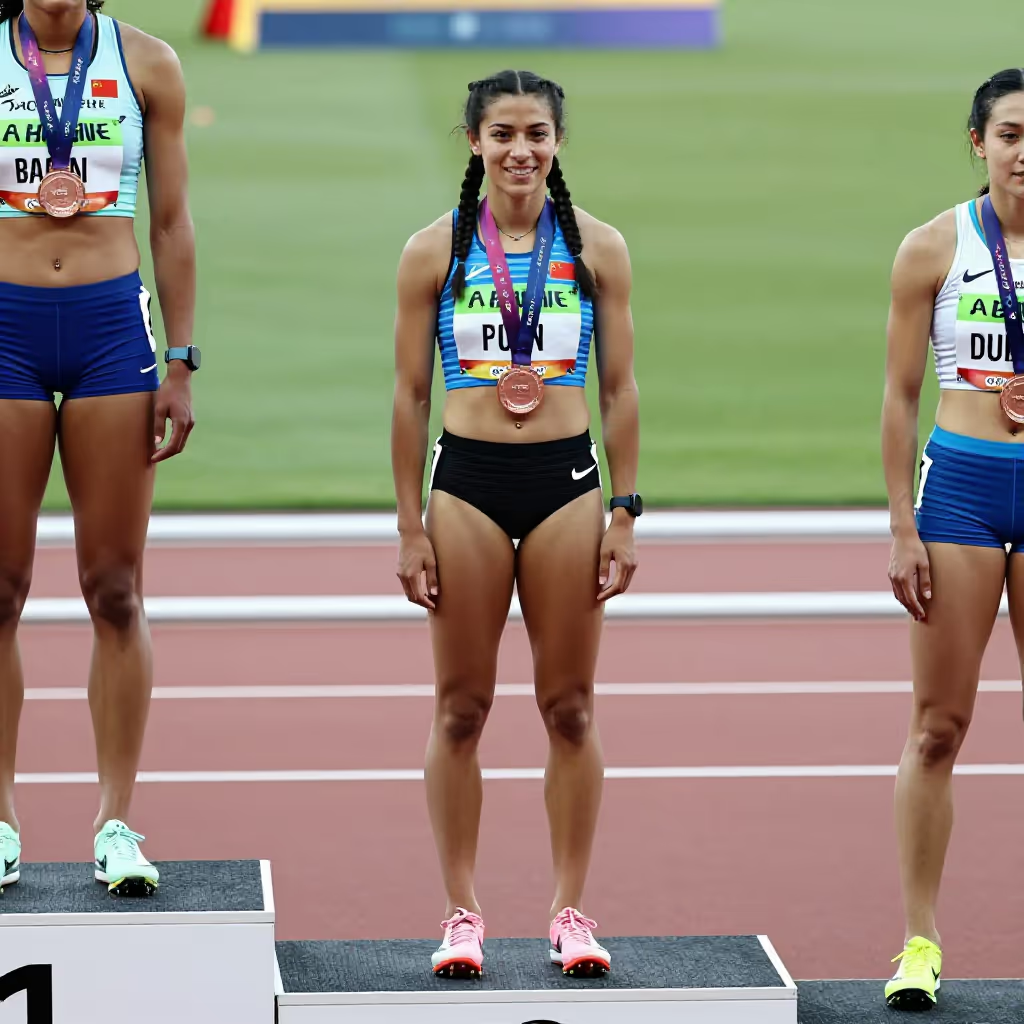
A medal made of bronze that is awarded in a competition, especially in sports, for third place.
example
Die Schwimmerin freute sich riesig über ihre erste Bronzemedaille bei den Olympischen Spielen.
The swimmer was absolutely delighted with her first bronze medal at the Olympic Games.
Usage tips
Compound word
The word is made up of 'Bronze' (bronze) and 'Medaille' (medal). The '-e-' in the middle is a linking sound that connects the two parts of the word. The meaning is therefore literally a medal made of bronze.
EXAMPLE
Bei der Siegerehrung erhielt er die Bronzemedaille.
At the awards ceremony, he received the bronze medal.
Typical collocations
In a sports context, a bronze medal is typically 'gewonnen' (won), 'geholt' (won/got), or 'erkämpft' (fought for). You can also 'sich über die Bronzemedaille freuen' (be happy about the bronze medal).
EXAMPLE
Die Mannschaft hat bei der Weltmeisterschaft die Bronzemedaille geholt.
The team won the bronze medal at the World Championship.
Placement context
The bronze medal always stands for third place. The order in competitions is fixed: gold medal for first, silver medal for second, and bronze medal for third place.
EXAMPLE
Sie verpasste die Silbermedaille nur knapp und gewann Bronze.
She narrowly missed the silver medal and won bronze.
Compare with
synonym · confusable
Bronzemedaille vs Bronze
bronze
'die Bronze' and 'die Bronzemedaille' can mean the same thing in sports: the medal for third place. 'Bronze' is the shorter form and sounds especially natural in reports about competitions. 'Bronzemedaille' is more precise because it is immediately clear that it refers to a medal and not to the metal. They can be confused because 'Bronze' can also mean the material. In a sports context, however, it usually means the medal.
Bronzemedaille
Bei der Siegerehrung bekam Lisa ihre Bronzemedaille.
At the awards ceremony, Lisa received her bronze medal.