

buchen
to book
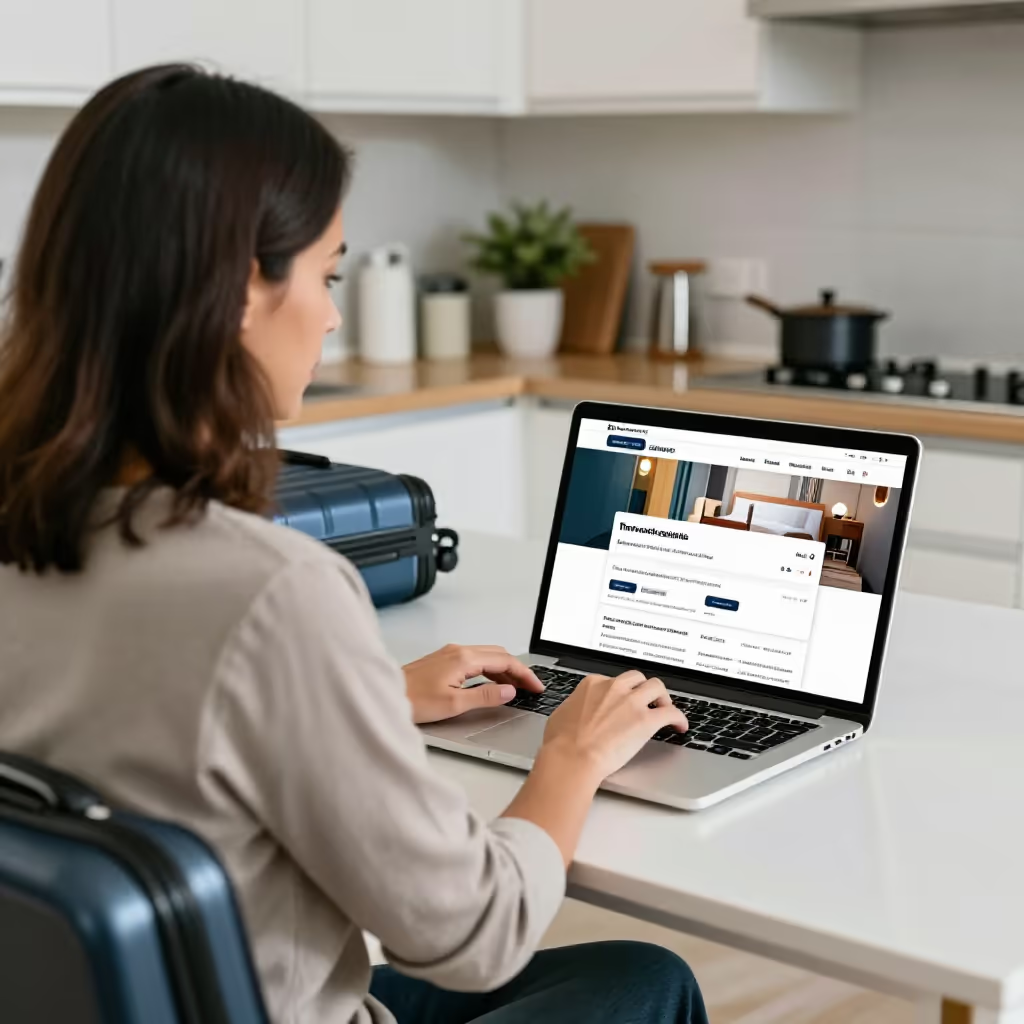
To reserve or buy something in a binding way, for example a flight, a hotel room, or a ticket.
EXAMPLE
Wir haben für den Sommer eine Reise nach Italien gebucht.
We booked a trip to Italy for the summer.
to book
Loading your saved state.
to book
To reserve or buy something in a binding way, for example a flight, a hotel room, or a ticket.
Wir haben für den Sommer eine Reise nach Italien gebucht.
We booked a trip to Italy for the summer.

to post / record
In accounting, to record a business transaction, such as income or an expense, in the business accounts.
Die Finanzabteilung muss die Rechnung noch auf das richtige Konto buchen.
The finance department still has to post the invoice to the correct account.

to count as
To mentally or categorically classify or record something as something specific.
Diesen Vorfall können wir als wertvolle Erfahrung buchen.
We can count this incident as valuable experience.
The verb 'buchen' (to book/post) is closely related to 'das Buch' (book). Originally, it meant entering something into a book. This origin can still be seen today in accounting, when a business transaction is recorded.
Früher wurden alle Einnahmen von Hand in ein großes Buch gebucht.
In the past, all income was posted by hand in a large book.
You can tell from context whether 'buchen' means 'to reserve' or 'to record in accounting.' Words like 'Reise' (trip), 'Flug' (flight), or 'Hotel' (hotel) point to a reservation, while 'Rechnung' (invoice), 'Konto' (account), or 'Betrag' (amount) refer to accounting.
Ich habe online einen Flug nach Berlin gebucht.
I booked a flight to Berlin online.
In everyday life, 'buchen' is very often used in fixed combinations. Typical phrases are: 'einen Flug buchen' (to book a flight), 'ein Hotelzimmer buchen' (to book a hotel room), 'eine Reise buchen' (to book a trip), or 'Tickets für ein Konzert buchen' (to book tickets for a concert).
Wir sollten die Tickets für das Musical frühzeitig buchen.
We should book the tickets for the musical early.
In the context of accounting, the preposition 'auf' is often used to indicate where something is posted. You post an amount to a specific account.
Bitte buchen Sie diese Ausgabe auf das Konto für Büromaterial.
Please post this expense to the office supplies account.
When something is mentally classified, 'buchen' is often used with the preposition 'als' (as) and an accusative object. You count something as a success or as an experience.
Den knappen Sieg konnte die Mannschaft als großen Erfolg buchen.
The team could count the narrow victory as a great success.
to book / prove / top
Belegen and buchen can both be used in connection with a room or course. Buchen emphasizes making a binding reservation or purchase, whereas belegen refers more to actual use or allocation. Buchen is usually the better choice when planning; after arrival or when attending, belegen is more appropriate.
Für nächste Woche buche ich das Hotelzimmer online.
I am booking the hotel room online for next week.
Nach der Ankunft belege ich das für mich vorgesehene Hotelzimmer.
After arriving, I occupy the hotel room set aside for me.