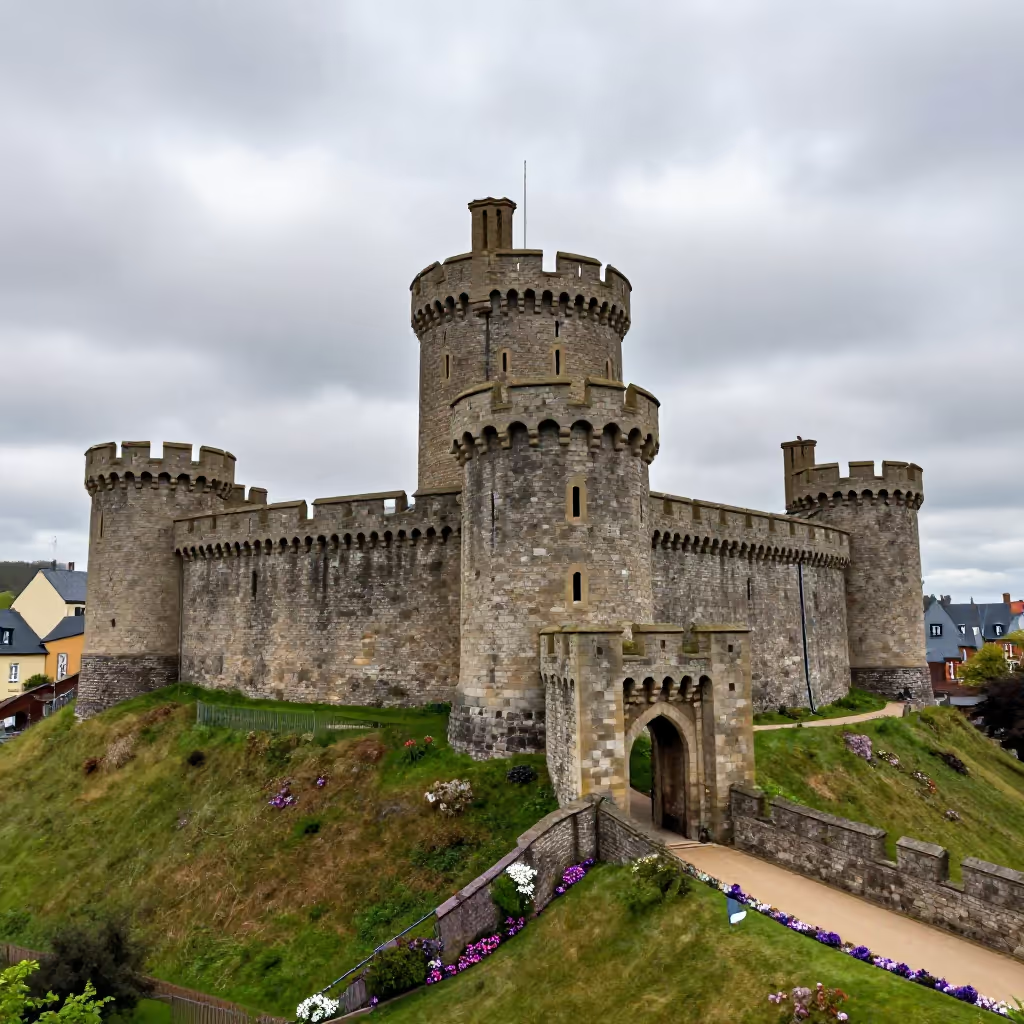
A large fortified structure from the Middle Ages, often built on a mountain or hill, which served as a residence for nobles as well as for defense.
example
Vom Turm der alten Burg hat man eine fantastische Aussicht über das ganze Tal.
From the tower of the old castle, you have a fantastic view over the whole valley.

Usage tips
Part of compounds
'Burg' (castle) is a common base word for compounds related to medieval fortresses. Examples are 'die Burgmauer' (castle wall), 'der Burghof' (castle courtyard), or 'das Burgfräulein' (castle maiden).
EXAMPLE
Vom Burghof aus führte eine Treppe auf die Mauern.
From the castle courtyard, a staircase led up to the walls.
False friend
'Die Burg' means 'castle' or 'fortress'. Do not confuse it with the English word 'burg', which refers to a town or settlement, often in historical names like Hamburg or Pittsburgh.
EXAMPLE
Die alte Burg thront hoch über der Stadt.
The old castle towers high above the city.
Prepositions: auf vs. in
You can say both 'auf der Burg' (at/on the castle grounds) and 'in der Burg' (inside the castle). 'Auf der Burg' often describes being on the entire castle grounds, especially if it is located on a mountain. 'In der Burg' emphasizes that you are inside the buildings.
EXAMPLE
Auf der Burg findet jedes Jahr ein Mittelaltermarkt statt.
A medieval market takes place at the castle every year.
Figurative meaning
The saying 'Mein Zuhause ist meine Burg' (my home is my castle) is very well known. It expresses that one's own home is a safe and private retreat where one feels protected.
EXAMPLE
Am Wochenende verlässt er seine Burg nur selten.
On the weekend, he rarely leaves his castle.
Compare with
near_synonym · confusable
Burg vs Schloss
castle / lock
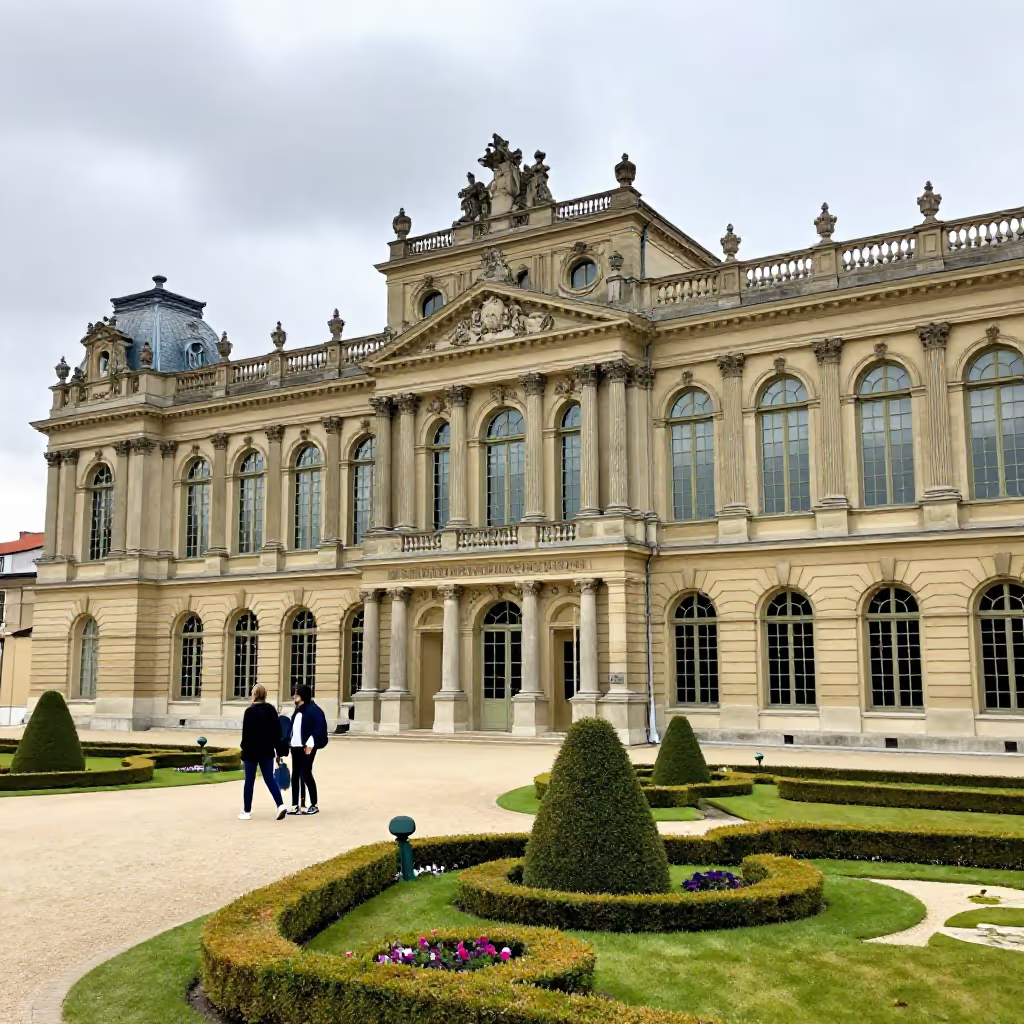
'das Schloss' and 'die Burg' can both be large old buildings where nobles or rulers used to live. The most important difference is the purpose of the building. A 'Burg' is above all fortified and was meant to protect or defend, often on a mountain or hill. A 'Schloss' is more of an impressive residence and is meant to look beautiful or elegant. Learners can easily confuse the words because both can be historical and large. As a guide: walls, towers, and defense fit better with 'Burg'; parks, splendor, and living quarters fit better with 'Schloss'.
Burg
Am Wochenende wandert die Klasse zu einer alten Burg auf dem Hügel.
At the weekend, the class hikes to an old castle on the hill.
Schloss
Im Sommer besuchen wir ein Schloss mit einem großen Garten.