

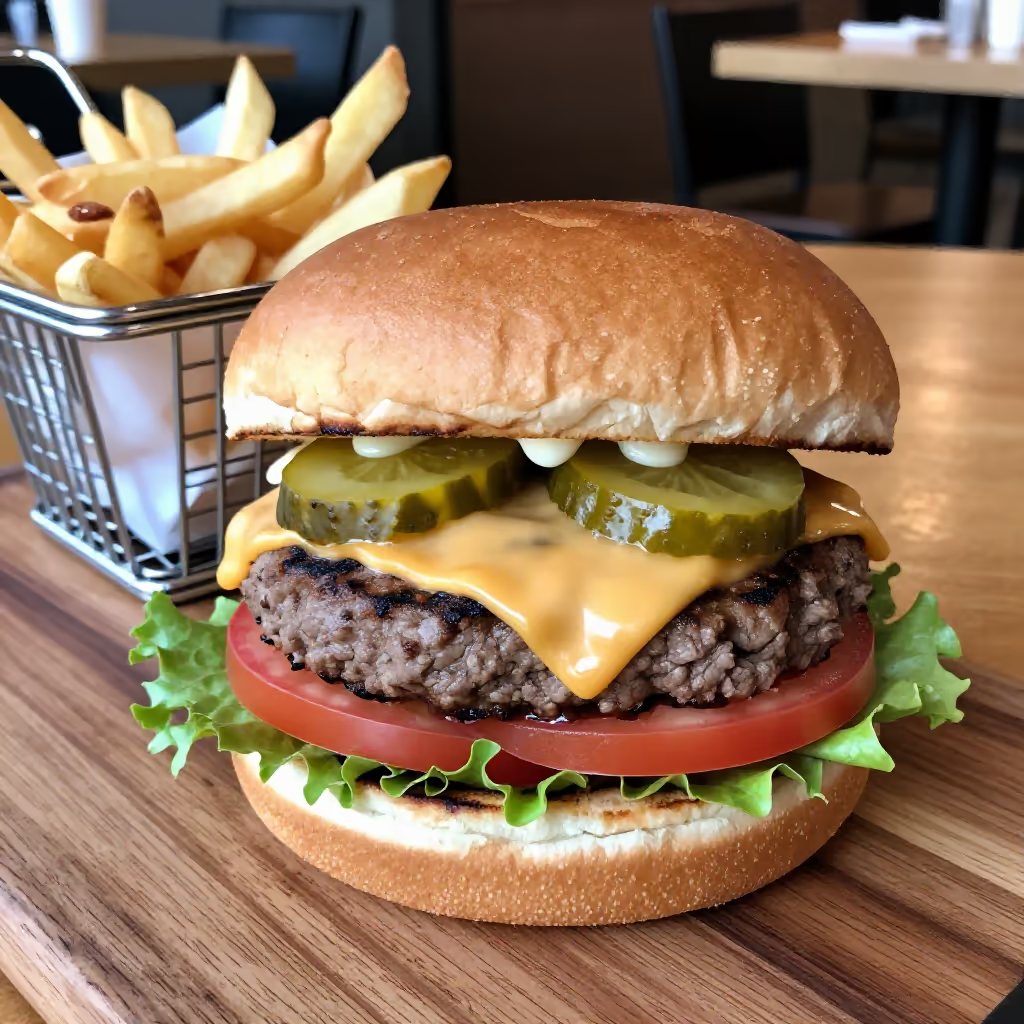
der Burger
burger
A dish consisting of a grilled or fried meat or vegetable patty in a sliced bun.
EXAMPLE
Zum Mittagessen gab es heute einen Burger mit Pommes frites.
For lunch today there was a burger with French fries.
burger
Loading your saved state.
burger
A dish consisting of a grilled or fried meat or vegetable patty in a sliced bun.
Zum Mittagessen gab es heute einen Burger mit Pommes frites.
For lunch today there was a burger with French fries.
The word 'Burger' (burger) is very productive and is used as the base word for many compounds. The first component describes the type of burger.
Ich esse am liebsten einen Cheeseburger.
I like eating cheeseburgers best.
In everyday language, 'Burger' (burger) is often combined with verbs like 'essen' (to eat), 'bestellen' (to order), 'machen' (to make), or 'grillen' (to grill). You can also say 'Lust auf einen Burger haben' (to feel like having a burger).
Wollen wir heute Abend Burger bestellen?
Shall we order burgers tonight?
'Der Burger' (the burger) always refers to the complete dish, meaning the bun with the patty and the additional ingredients. It does not mean just the meat or vegetable patty by itself.
Dieser Burger ist riesig, den schaffe ich nie.
This burger is huge; I'll never manage it.