


betreten
to enter
To go into or walk onto a room, building, or enclosed area.
EXAMPLE
Das Betreten der Baustelle ist für Unbefugte streng verboten.
Entering the construction site is strictly prohibited for unauthorized persons.
to enter
Loading your saved state.
to enter
To go into or walk onto a room, building, or enclosed area.
Das Betreten der Baustelle ist für Unbefugte streng verboten.
Entering the construction site is strictly prohibited for unauthorized persons.
'Betreten' (to enter) is an inseparable verb. The prefix 'be-' remains firmly attached to the stem 'treten' in all tenses and sentence types.
Er betrat den Raum und alle waren still.
He entered the room and everyone was silent.
The verb 'betreten' (to enter) is always used directly with an accusative object. You do not need a preposition like 'in' or 'auf'. This is a common mistake among learners.
Bitte betreten Sie den Rasen nicht.
Please do not walk on the grass.
'Betreten' (to enter) sounds more formal and is often used in written language, on signs, or in official instructions. It emphasizes the act of going into a specific place.
Das Betreten des Grundstücks ist nur mit Genehmigung erlaubt.
Entering the property is permitted only with authorization.
to get in / join
For a vehicle, both betreten and einsteigen can sometimes be used, but they emphasize different things. Betreten describes entering the space, whereas einsteigen usually means getting into the vehicle in order to use it. For a journey, einsteigen is therefore usually the better choice.
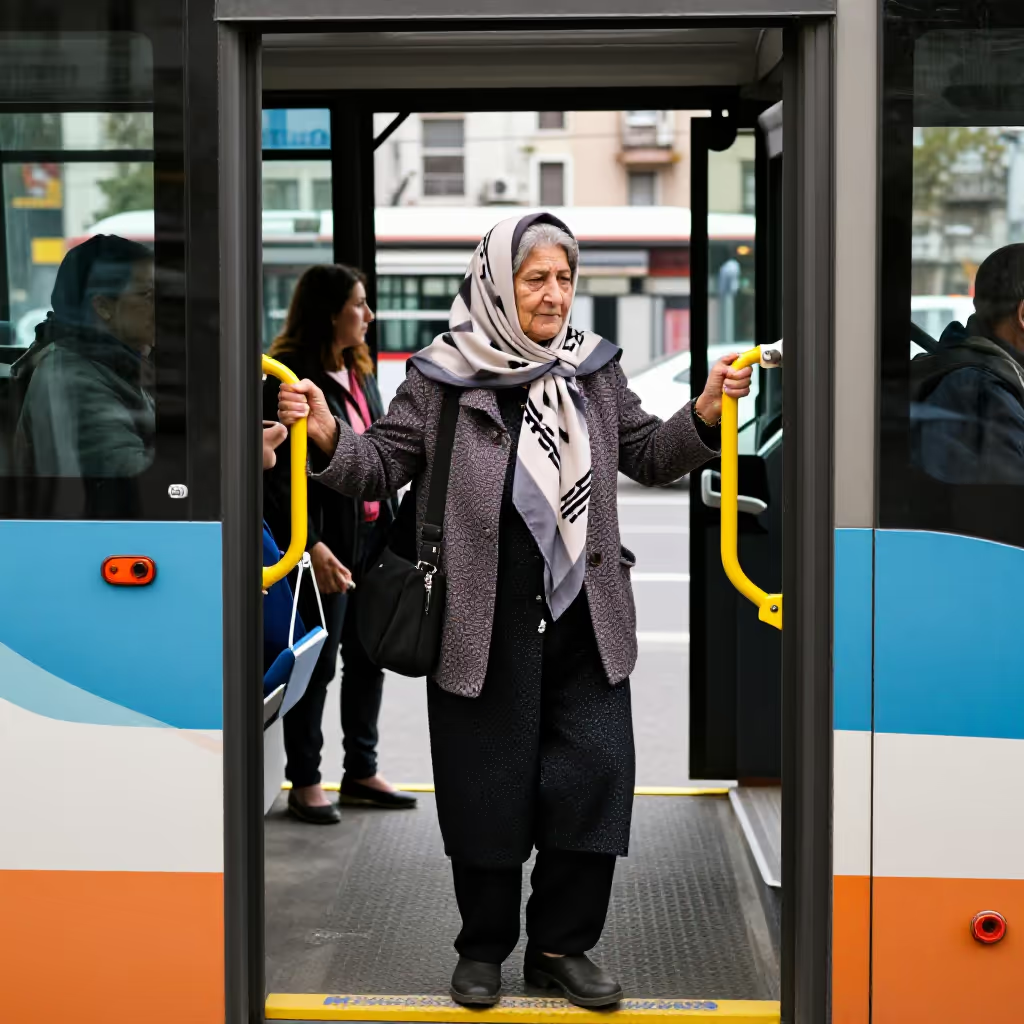
Der Kontrolleur betritt den Zug, um die Wagen zu überprüfen.
The inspector enters the train to check the carriages.
Die Reisende steigt in den Zug ein, um nach Hamburg zu fahren.
The traveler gets on the train to go to Hamburg.