


danken
to thank
To express one's gratitude to someone for something.
EXAMPLE
Ich möchte Ihnen herzlich für Ihre Unterstützung danken.
I would like to sincerely thank you for your support.
to thank
Loading your saved state.
to thank
To express one's gratitude to someone for something.
Ich möchte Ihnen herzlich für Ihre Unterstützung danken.
I would like to sincerely thank you for your support.
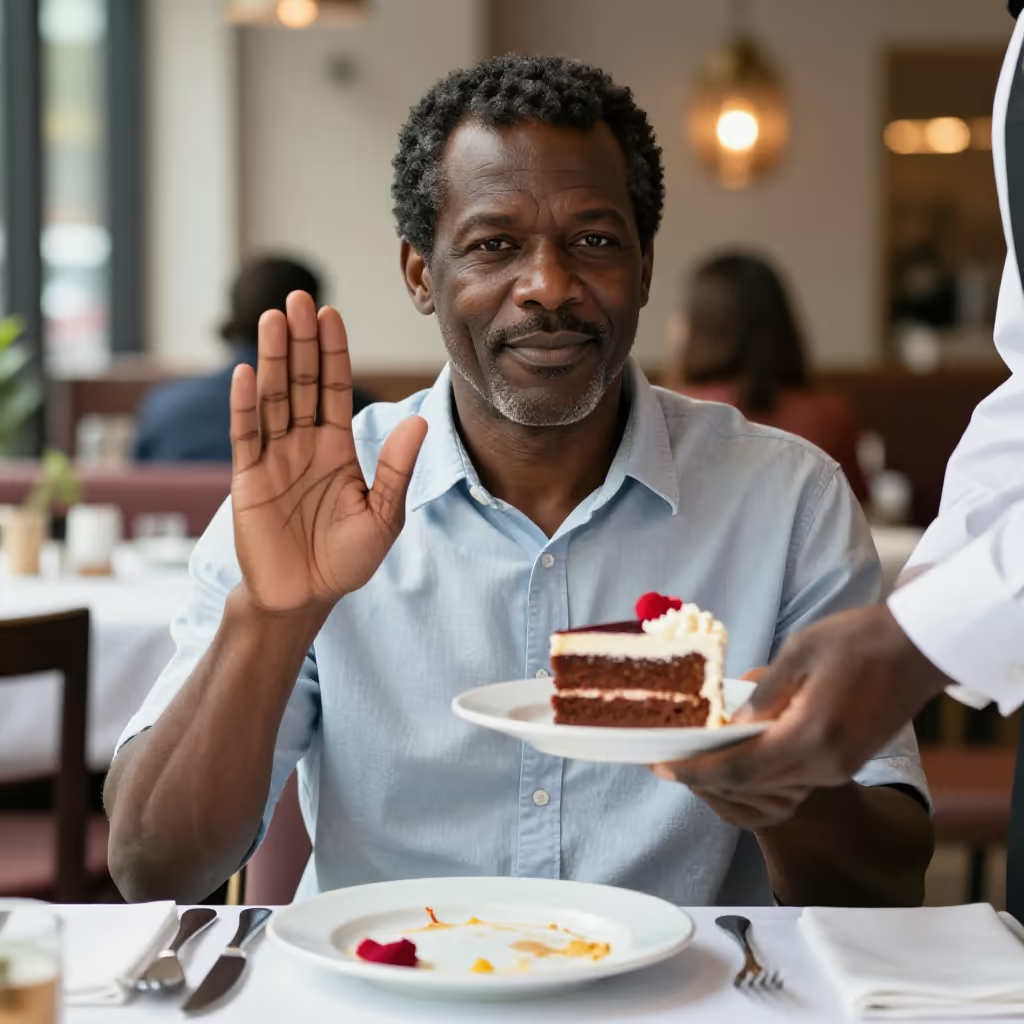
to decline
To politely but firmly decline an offer.
Möchtest du noch ein Stück Kuchen? – Nein, danke, ich bin wirklich satt.
Would you like another piece of cake? – No, thank you, I'm really full.

to have to thank
For someone or something to be responsible for a positive or negative result; to owe something to someone.
Diesen ganzen Ärger haben wir nur seiner Unvorsichtigkeit zu danken.
We have only his carelessness to thank for all this trouble.
The verb 'danken' (to thank) requires a special sentence structure: the person you are thanking is always in the dative. The reason for the thanks is expressed with the preposition 'für' (for) and the accusative.
Ich danke dir für deine Hilfe.
I thank you for your help.
'Danken' (to thank) belongs to a word family with the noun 'der Dank' (thanks/gratitude) and the adjective 'dankbar' (grateful). All of these words express gratitude.
Vielen Dank für das tolle Geschenk!
Many thanks for the great gift!
To politely decline an offer, people often say 'Nein, danke' (No, thank you). Sometimes just 'Danke' (thanks) is enough, with the intonation and situation making it clear that it is a refusal.
Möchten Sie noch Kaffee? – Nein, danke, ich habe genug.
Would you like more coffee? – No, thank you, I've had enough.
The idiom 'jemandem etwas zu danken haben' (to have someone to thank for something) means that someone is responsible for a result. It is often used ironically for negative consequences.
Dass wir den Zug verpasst haben, haben wir nur dir zu danken.
We have only you to thank for the fact that we missed the train.
to reject
Ablehnen neutrally indicates that you do not accept an offer. Danken can express the same refusal in a set polite response, with the thanks to the person making the offer taking center stage. Use ablehnen for the act of refusing and danken for a polite personal response.

Mara dankt für das angebotene Stück Kuchen, möchte aber keines.
Mara thanks them for the offered piece of cake but does not want any.
Mara lehnt das angebotene Stück Kuchen ab.
Mara rejects the offered piece of cake.