

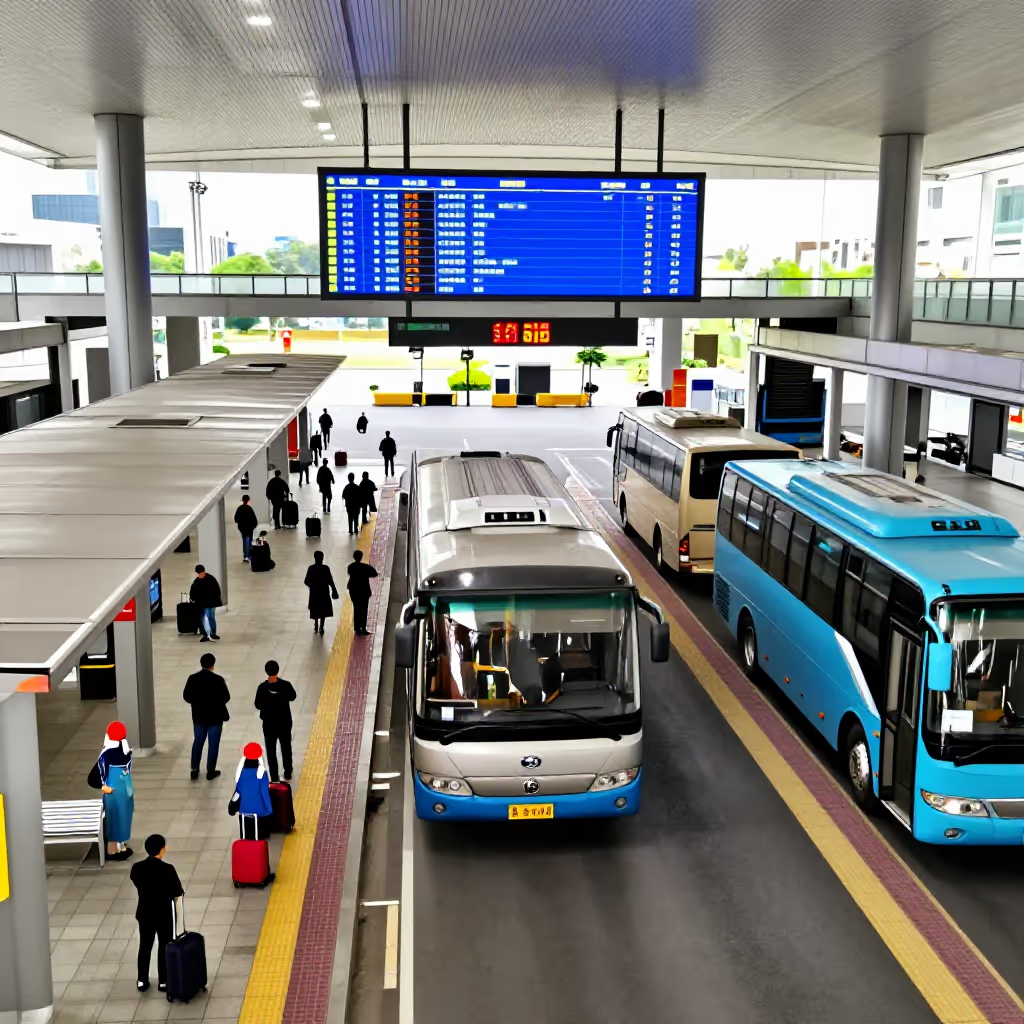
A central place or facility where several bus lines, especially long-distance buses or regional lines, arrive, depart, and stop.
example
Wir treffen uns um 15 Uhr am Busbahnhof, um den Fernbus nach Hamburg zu nehmen.
We'll meet at the bus station at 3 p.m. to take the long-distance bus to Hamburg.

Usage tips
Word composition
The word is composed of 'Bus' (bus) and 'Bahnhof' (station). The 's' in the middle is a linking s that connects the two words. A 'Busbahnhof' is therefore literally a station for buses.
EXAMPLE
Alle Fernbusse fahren von diesem Busbahnhof ab.
All long-distance buses depart from this bus station.
Correct preposition
To indicate a location, you use 'am Busbahnhof' (at the bus station). To express direction, you say 'zum Busbahnhof' (to the bus station).
EXAMPLE
Ich warte am Busbahnhof auf dich.
I'll wait for you at the bus station.
Typical verbs
Typical verbs in connection with a bus station are 'ankommen' (to arrive), 'abfahren' (to depart), and 'warten' (to wait).
EXAMPLE
Der Bus nach Berlin fährt in zehn Minuten am Busbahnhof ab.
The bus to Berlin departs from the bus station in ten minutes.
Compare with
confusable
Busbahnhof vs Bahnhof
train station
'der Bahnhof' and 'der Busbahnhof' are both places where public transportation arrives and departs. The most important difference is the type of transportation. Trains stop at a 'Bahnhof'. Buses stop at a 'Busbahnhof', often several lines or long-distance buses. Learners may confuse the words because they have a similar ending and both have to do with travel. If you are traveling by train, say 'Bahnhof'. If you are traveling by bus or long-distance bus, 'Busbahnhof' is more precise.
Busbahnhof
Wir treffen uns vor dem Busbahnhof, weil unser Fernbus dort abfährt.
We'll meet in front of the bus station because our long-distance bus leaves from there.
Bahnhof
Am Bahnhof wartet Lisa auf den Zug nach Köln.
Lisa is waiting at the train station for the train to Cologne.