


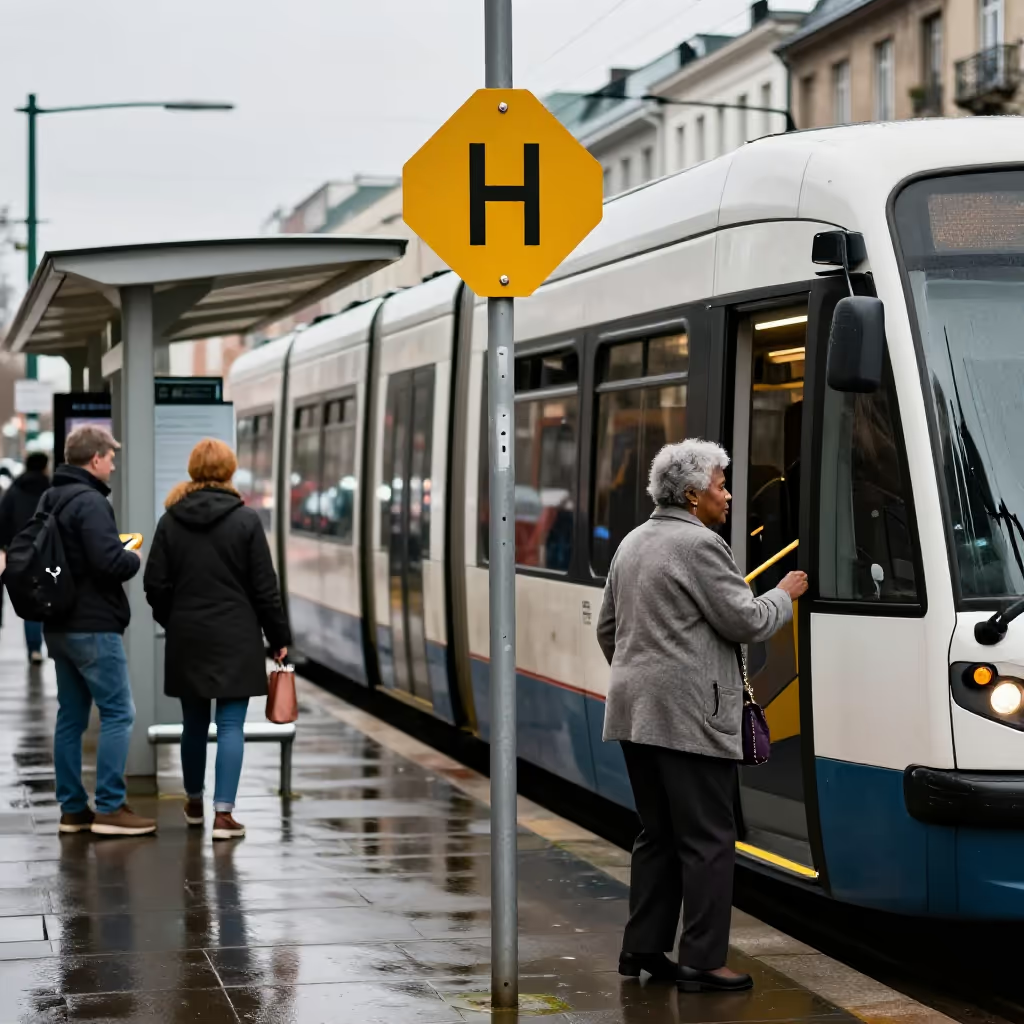
A marked place on a street where scheduled buses stop to let passengers get on and off.
example
Der Bus kommt in fünf Minuten, wir müssen uns zur Bushaltestelle beeilen.
The bus is coming in five minutes; we need to hurry to the bus stop.
Usage tips
Compound word
This word is a clear example of a German compound word: it consists of 'Bus' (bus), 'halten' (to stop, in the form 'Halte'), and 'Stelle' (place). So it is literally a 'place for buses to stop'.
EXAMPLE
Die nächste Bushaltestelle ist nur 200 Meter entfernt.
The next bus stop is only 200 meters away.
Important prepositions
To indicate a position, you use 'an der Bushaltestelle' (at the bus stop, dative). To express direction, you say 'zur Bushaltestelle' (to the bus stop, dative).
EXAMPLE
Ich warte an der Bushaltestelle auf dich.
I'm waiting for you at the bus stop.
Typical verbs
Common verbs used in connection with 'Bushaltestelle' (bus stop) are 'warten' (to wait), 'stehen' (to stand), '(ein/aus)steigen' (to get on/off), and 'verpassen' (to miss).
EXAMPLE
An der nächsten Bushaltestelle müssen wir aussteigen.
We have to get off at the next bus stop.
Compare with
near_synonym · confusable
Bushaltestelle vs Station
station
'die Station' and 'die Bushaltestelle' can both be places where passengers get on and off. 'die Station' is more general and can be used for different means of transport, especially the subway or commuter rail. 'die Bushaltestelle' is more specific and means only the place where a scheduled bus stops. The words can be confused when talking generally about public transport. If it is definitely about the bus, 'Bushaltestelle' sounds more precise and more natural.
Bushaltestelle
Vor dem Termin wartet Lena an der Bushaltestelle vor der Schule.
Before the appointment, Lena waits at the bus stop in front of the school.
Station
Die nächste Station ist nur zwei Minuten zu Fuß entfernt.