

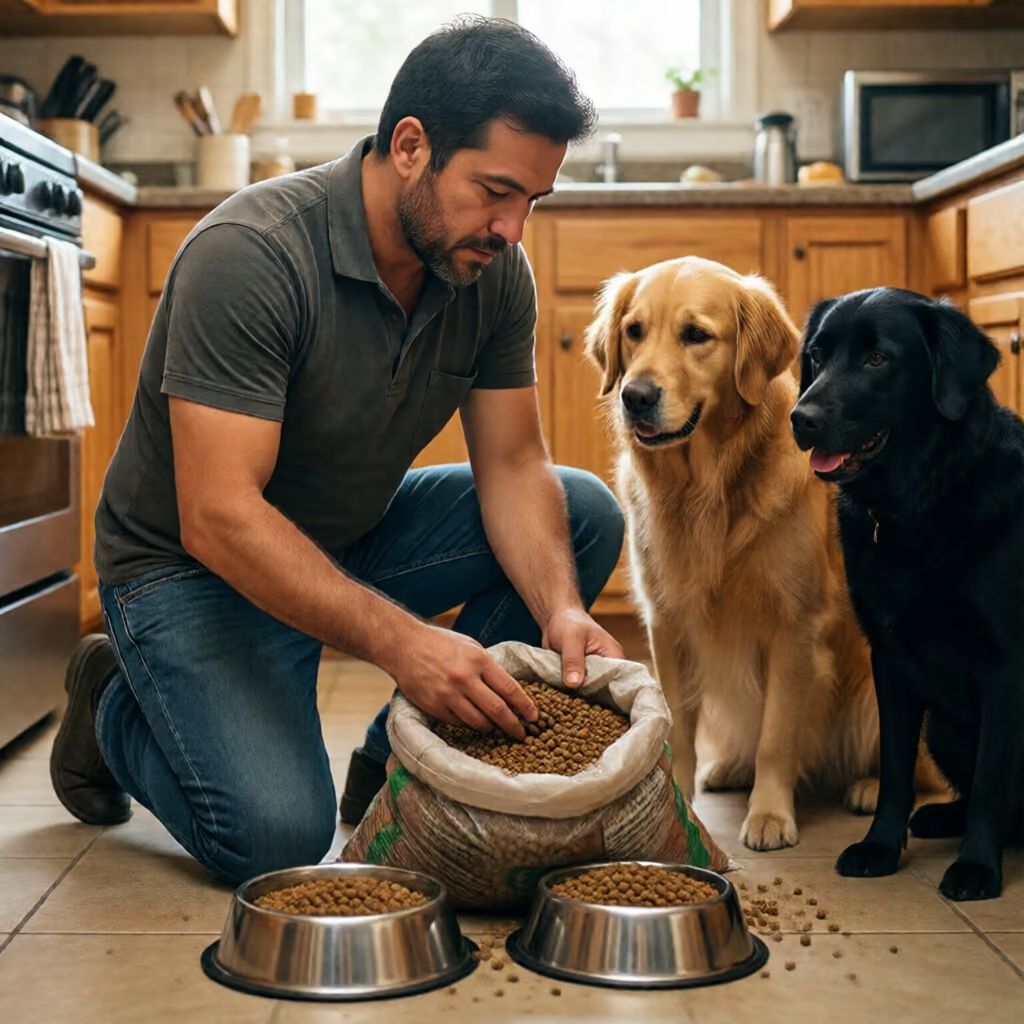
das Fressen
feed
Food for animals, especially when it is given to them or they eat it themselves.
EXAMPLE
Das Fressen für die Hunde steht schon in den Näpfen.
The feed for the dogs is already in their bowls.
feed
das Fressen
Loading your saved state.
feed
Food for animals, especially when it is given to them or they eat it themselves.
Das Fressen für die Hunde steht schon in den Näpfen.
The feed for the dogs is already in their bowls.

slop / grub
A crude or derogatory term for human food.
Dieses Fressen kann doch niemand freiwillig essen.
No one could possibly eat this slop willingly.
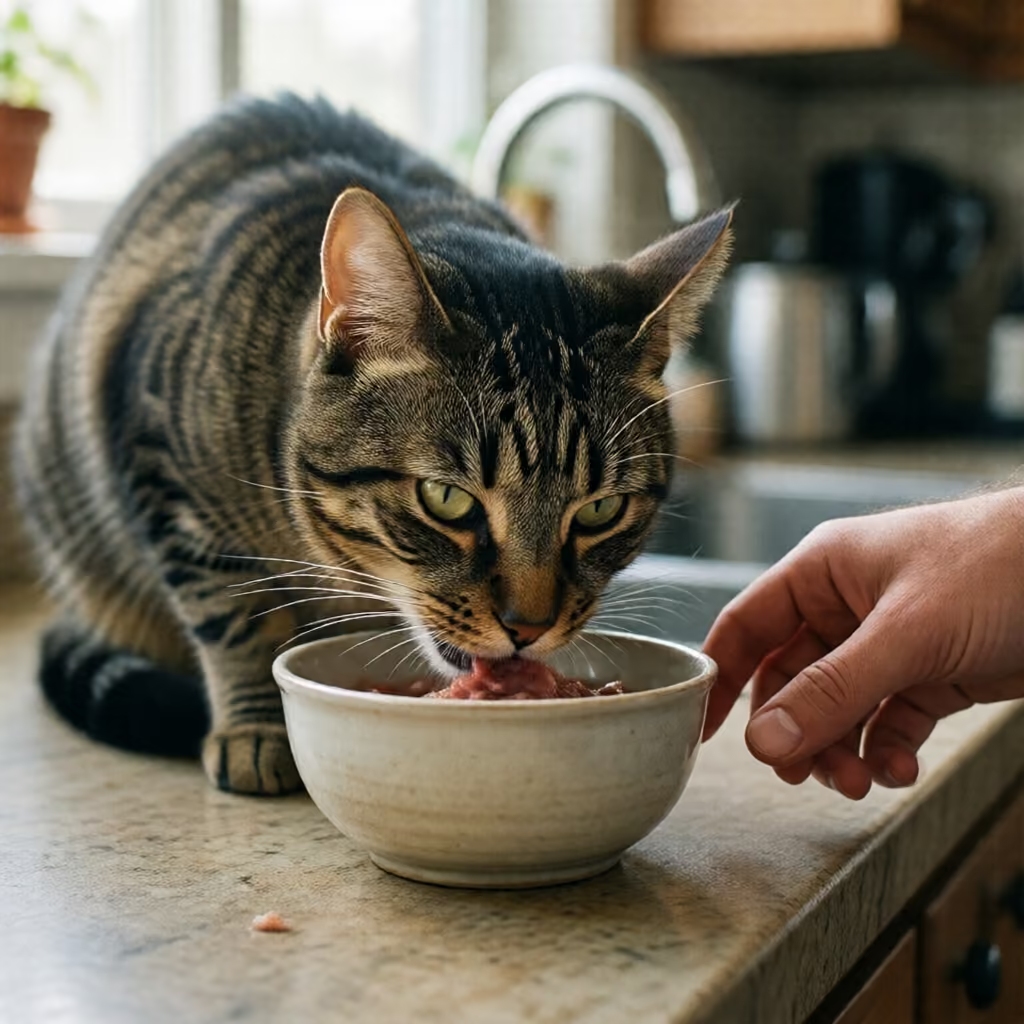
feeding
The taking in of food, especially by animals; the process of feeding.
Beim Fressen lässt sich die Katze nur ungern stören.
The cat does not like being disturbed while feeding.

a gift
A good opportunity or welcome topic that someone can use for their own purposes.
Der Fehler des Ministers war für die Opposition ein gefundenes Fressen.
The minister's mistake was a gift to the opposition.

to love someone to bits
To be very fond of someone; this expression is usually used jokingly or affectionately.
Ich habe dich zum Fressen gern.
I love you to bits.
| gender | neuter das |
|---|---|
| genitive | des Fressens |
| singular | plural | |
|---|---|---|
| nominative | das Fressen | – |
| accusative | das Fressen | – |
| dative | dem Fressen | – |
| genitive | des Fressens | – |
The article changes with the case; it is shown in colour.
'Das Fressen' (feeding/feed) is derived from the verb 'fressen' (to eat, used for animals) and is used as a nominalized infinitive. That is why it frequently appears in fixed prepositional phrases such as 'beim Fressen' (while feeding) or 'zum Fressen' (for feeding).
Pünktlich um sechs kommt die Katze zum Fressen in die Küche.
At six o'clock sharp, the cat comes into the kitchen for feeding.
For the animal-related meaning, collocations with 'geben' (to give), 'bringen' (to bring), and 'bereitstellen' (to provide) are especially common. For purchased animal food, however, German usually uses 'Futter' (feed), as in 'Hundefutter' (dog food) or 'Katzenfutter' (cat food).
Die Pfleger bringen den Löwen morgens frisches Fressen.
The keepers bring the lions fresh feed every morning.
When 'Fressen' refers to human food, the word sounds deliberately crude or derogatory. It often shows that the speaker considers the food disgusting, inferior, or inappropriate.
Über das Kantinenessen schimpfte er: „Das ist kein Essen, das ist Fressen!“
He complained about the cafeteria food: 'That's not food, that's slop!'
For the process, 'Fressen' is often used with 'beim' (while). 'Beim Fressen' refers to the time or situation in which an animal is taking in food.
Beim Fressen hebt das Pferd den Kopf, sobald es ein Geräusch hört.
While feeding, the horse raises its head as soon as it hears a noise.
In 'ein gefundenes Fressen sein' (to be a gift), 'Fressen' is often used with 'für' (for) and a person or group in the accusative. The expression describes an opportunity or topic that someone can use very effectively for their own purposes.
Der unklare Bericht war für die Journalisten ein gefundenes Fressen.
The unclear report was a gift to the journalists.
In 'jemanden zum Fressen gernhaben' (to love someone to bits), the loved person is in the accusative. The fixed expression is usually joking or affectionate and is not understood literally.
Meine kleine Nichte habe ich zum Fressen gern.
I love my little niece to bits.