

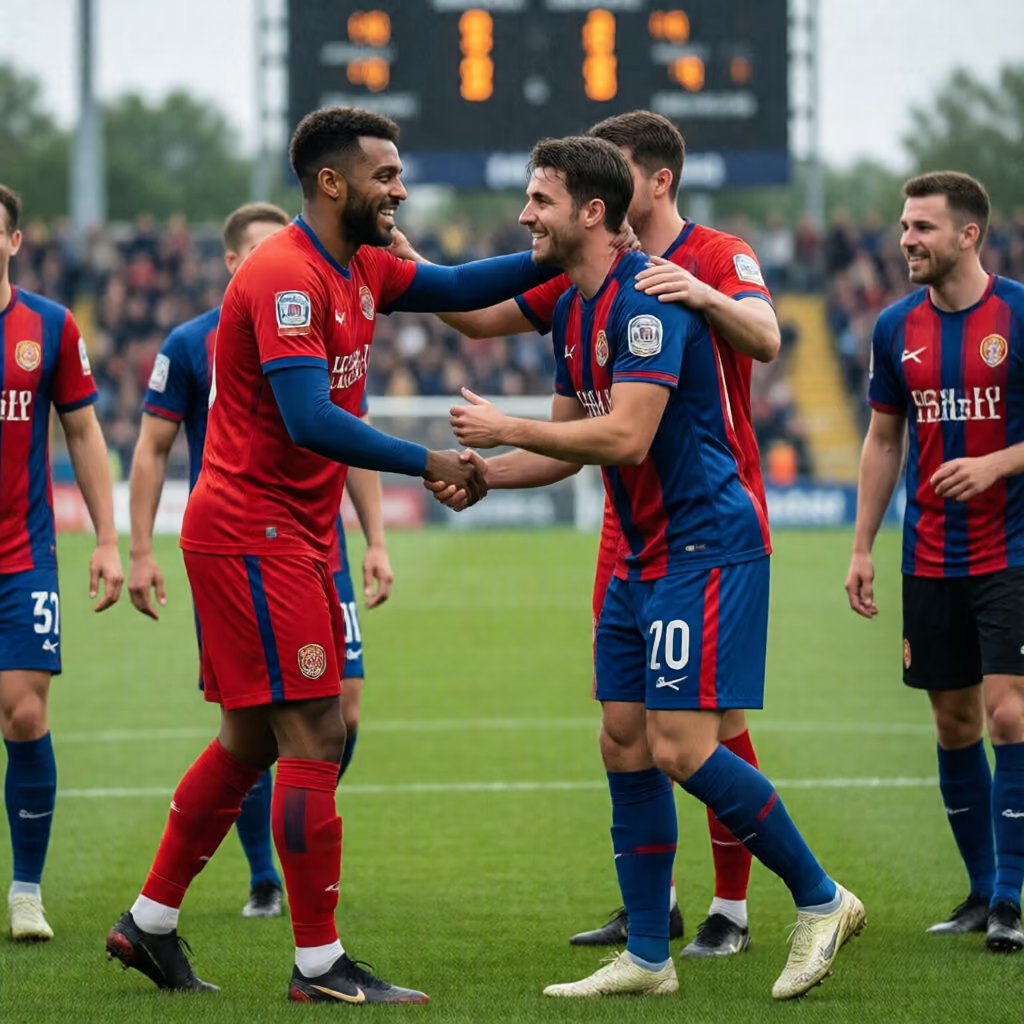
das Unentschieden
draw
A result in which two opponents or teams have the same number of points or goals and neither wins.
EXAMPLE
Das Spiel endete mit einem Unentschieden.
The game ended in a draw.
draw
das Unentschieden, die Unentschieden
Loading your saved state.
draw
A result in which two opponents or teams have the same number of points or goals and neither wins.
Das Spiel endete mit einem Unentschieden.
The game ended in a draw.
| gender | neuter das |
|---|---|
| plural | die Unentschieden |
| genitive | des Unentschiedens |
| singular | plural | |
|---|---|---|
| nominative | das Unentschieden | die Unentschieden |
| accusative | das Unentschieden | die Unentschieden |
| dative | dem Unentschieden | den Unentschieden |
| genitive | des Unentschiedens | der Unentschieden |
The article changes with the case; it is shown in colour.
'Unentschieden' (draw) consists of 'un-' and 'entschieden' (decided) and literally refers to a result in which nothing has been decided. As a nominalized adjective, it is capitalized and used with 'das'.
Das Unentschieden war für beide Mannschaften ein gerechtes Ergebnis.
The draw was a fair result for both teams.
Common expressions include 'mit einem Unentschieden enden' (to end in a draw), 'ein Unentschieden erreichen' (to achieve a draw), and 'sich mit einem Unentschieden zufriedengeben' (to settle for a draw). After 'mit', the dative is used.
In letzter Minute erreichte die Mannschaft noch ein Unentschieden.
The team managed to achieve a draw at the last minute.
Nach dem schwierigen Spiel mussten sich beide Teams mit einem Unentschieden zufriedengeben.
After the difficult game, both teams had to settle for a draw.
'Unentschieden' (draw) is used particularly often in reports about sporting competitions and other games. The specific result is often mentioned together with the word.
Nach dem 2:2 feierten die Fans das Unentschieden ihrer Mannschaft.
After the 2–2 draw, the fans celebrated their team's result.