

das Verhungern
starvation
Death or the process of dying from a prolonged lack of food.
EXAMPLE
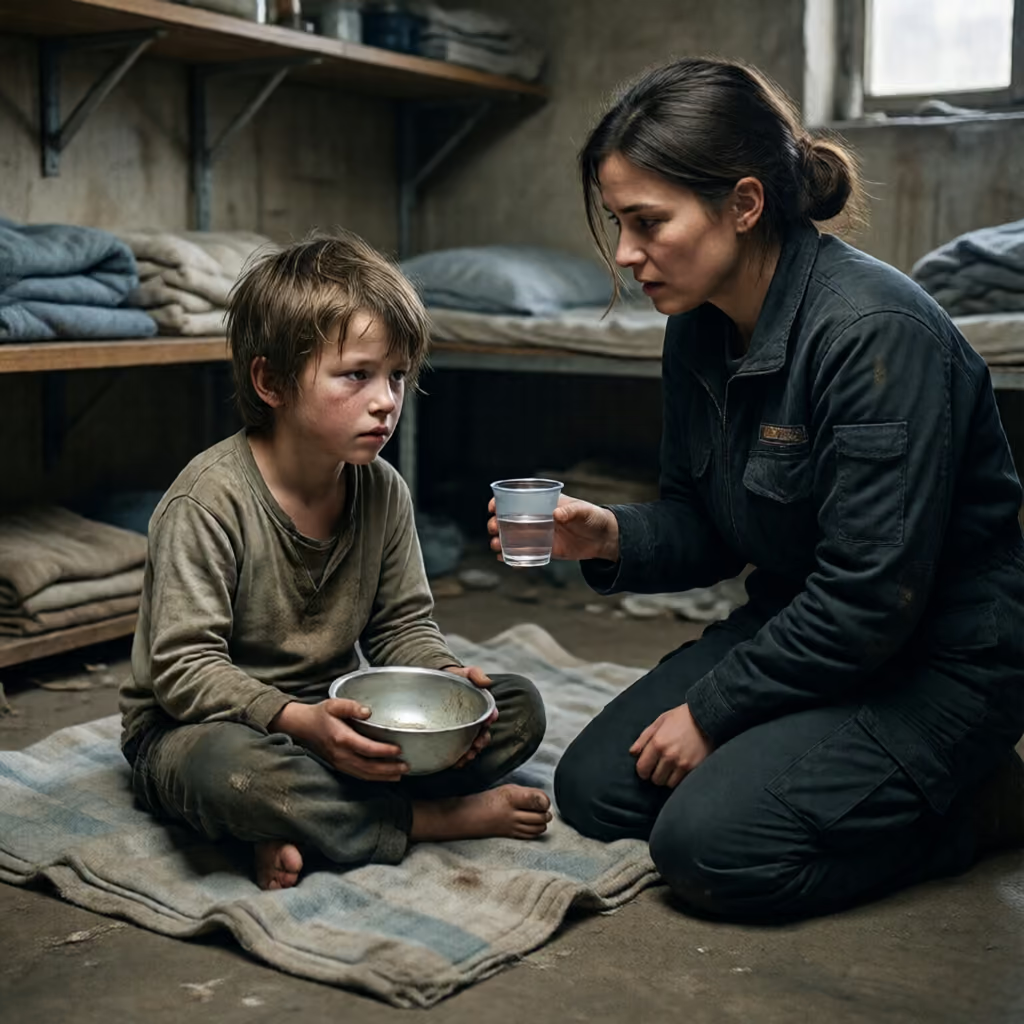
Als die Helfer das Kind fanden, war es dem Verhungern nahe.
When the helpers found the child, it was close to starving to death.
starvation
das Verhungern
Loading your saved state.
starvation
Death or the process of dying from a prolonged lack of food.
Als die Helfer das Kind fanden, war es dem Verhungern nahe.
When the helpers found the child, it was close to starving to death.
| gender | neuter das |
|---|---|
| genitive | des Verhungerns |
| singular | plural | |
|---|---|---|
| nominative | das Verhungern | – |
| accusative | das Verhungern | – |
| dative | dem Verhungern | – |
| genitive | des Verhungerns | – |
The article changes with the case; it is shown in colour.
'Verhungern' (starvation) is the nominalized infinitive of the verb 'verhungern' (to starve): the infinitive is used as a noun without an additional ending, capitalized, and usually used with the article 'das'. This allows the entire process to function as a grammatical subject or object in a sentence.
Das Verhungern vieler Menschen konnte verhindert werden.
The starvation of many people could be prevented.
Common collocations include 'vom Verhungern bedroht sein' (to be at risk of starving to death) and 'jemanden vor dem Verhungern bewahren' (to save someone from starving to death). After the prepositions 'von' and 'vor', 'Verhungern' takes the dative: 'vom Verhungern', 'vor dem Verhungern'.
Nach der Dürre waren viele Familien vom Verhungern bedroht.
After the drought, many families were at risk of starving to death.
Die Hilfslieferungen bewahrten Tausende Menschen vor dem Verhungern.
The aid deliveries saved thousands of people from starving to death.
'Das Verhungern' (starvation) is mainly used in serious, factual contexts, such as reports about famines, wars, or humanitarian crises.
Der Bericht beschreibt das Verhungern zahlreicher Menschen in der belagerten Stadt.
The report describes the starvation of numerous people in the besieged city.