

das Wild
game
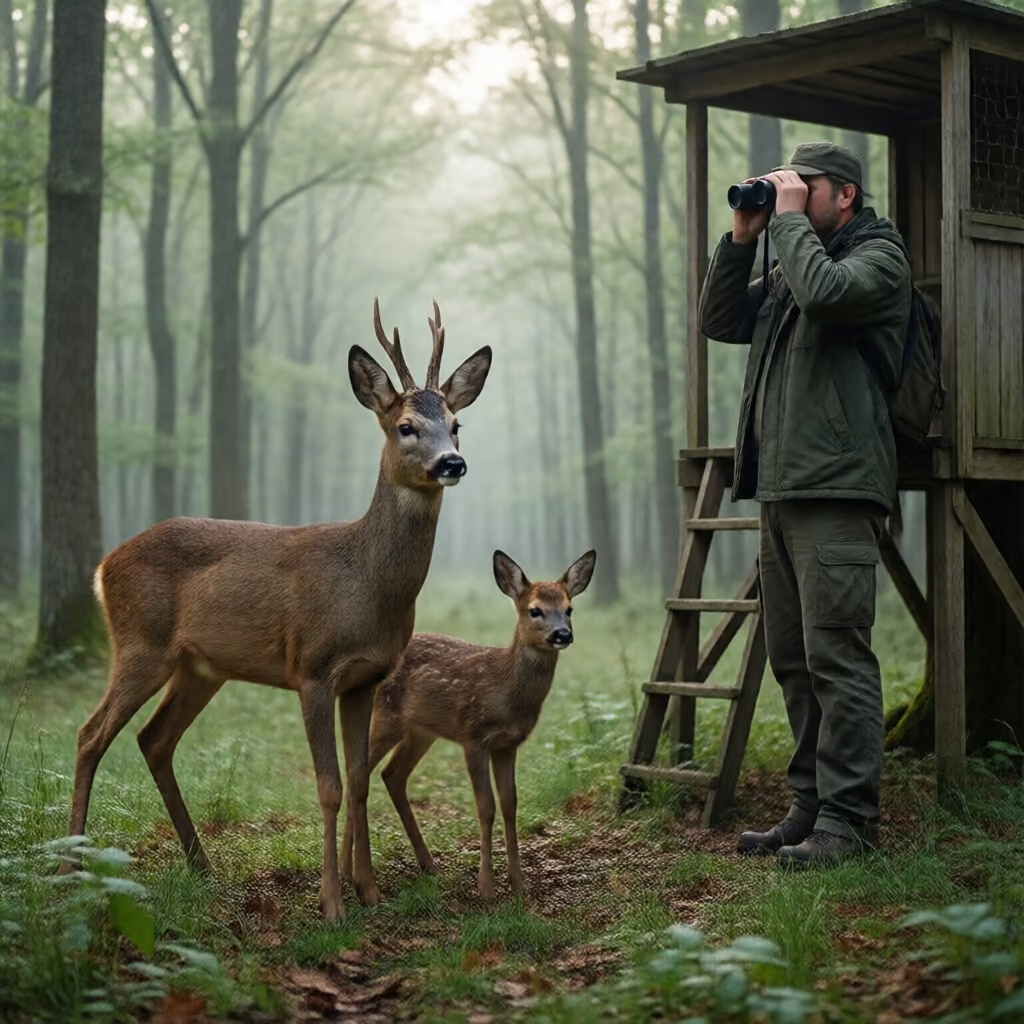
Wild animals collectively, especially those that may legally be hunted.
EXAMPLE
In diesem Wald gibt es noch viel Wild.
There is still plenty of game in this forest.
game
das Wild
Loading your saved state.
game
Wild animals collectively, especially those that may legally be hunted.
In diesem Wald gibt es noch viel Wild.
There is still plenty of game in this forest.
game
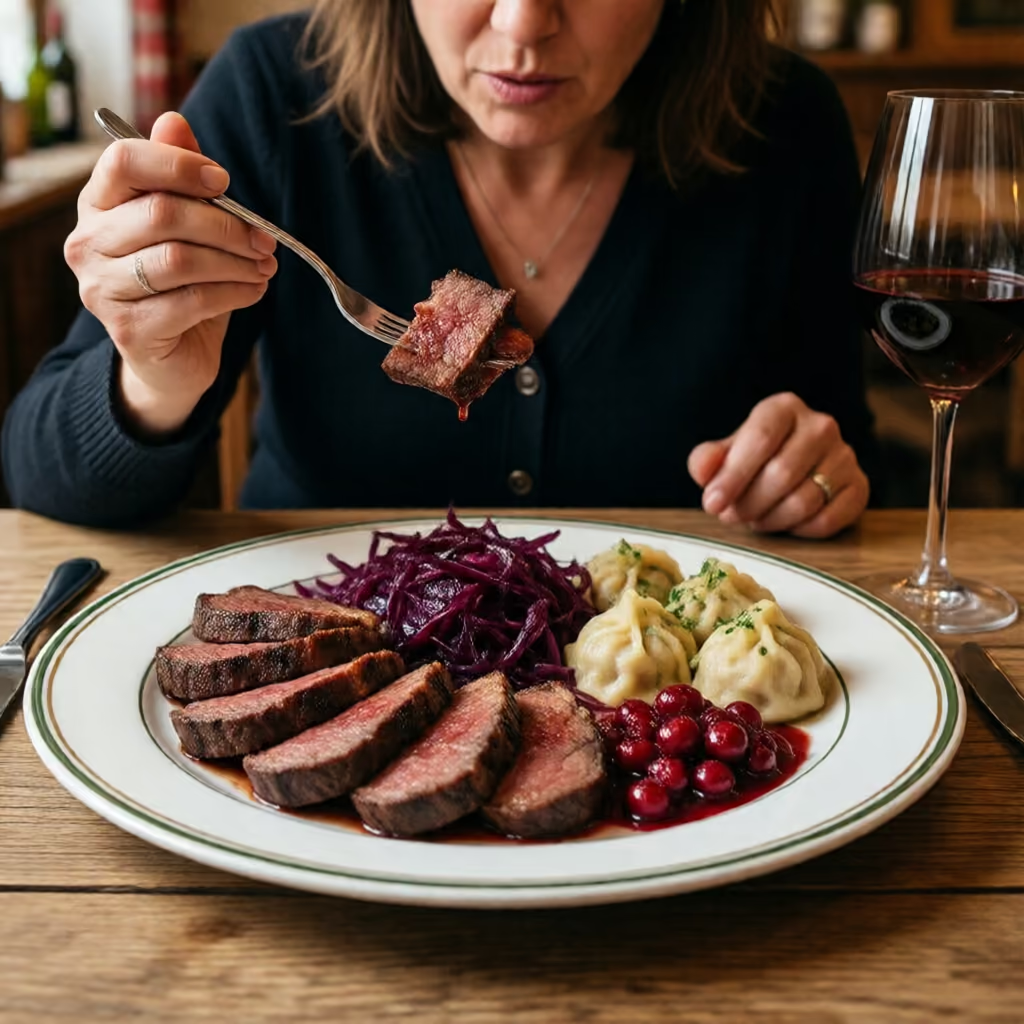
The meat of wild animals, prepared as food.
Im Restaurant bestellte sie das Wild mit Rotkohl.
At the restaurant, she ordered the game with red cabbage.
| gender | neuter das |
|---|---|
| genitive | des Wildes |
| singular | plural | |
|---|---|---|
| nominative | das Wild | – |
| accusative | das Wild | – |
| dative | dem Wild | – |
| genitive | des Wildes des Wilds | – |
The article changes with the case; it is shown in colour.
'Wild' (game) is a collective noun: it refers to a whole group of animals rather than an individual animal. It is therefore almost always used in the singular.
Im Winter findet das Wild im Wald nur wenig Nahrung.
In winter, the game finds little food in the forest.
In texts about hunting, forestry, or a hunting ground, 'das Wild' (game) usually refers to all the wild animals in that area. Context clues include words such as 'Jagd' (hunting), 'Revier' (hunting ground), 'Bestand' (population), or 'beobachten' (to observe).
Die Försterin beobachtet das Wild im Revier und kontrolliert seinen Bestand.
The forester observes the game in the hunting ground and monitors its population.
When 'Wild' (game) refers to food, it often occurs with verbs such as 'zubereiten' (to prepare), 'servieren' (to serve), 'essen' (to eat), and 'bestellen' (to order). Details about side dishes or sauces are also often included.
Zum Festessen wurde Wild mit einer kräftigen Soße serviert.
Game with a rich sauce was served at the festive meal.