

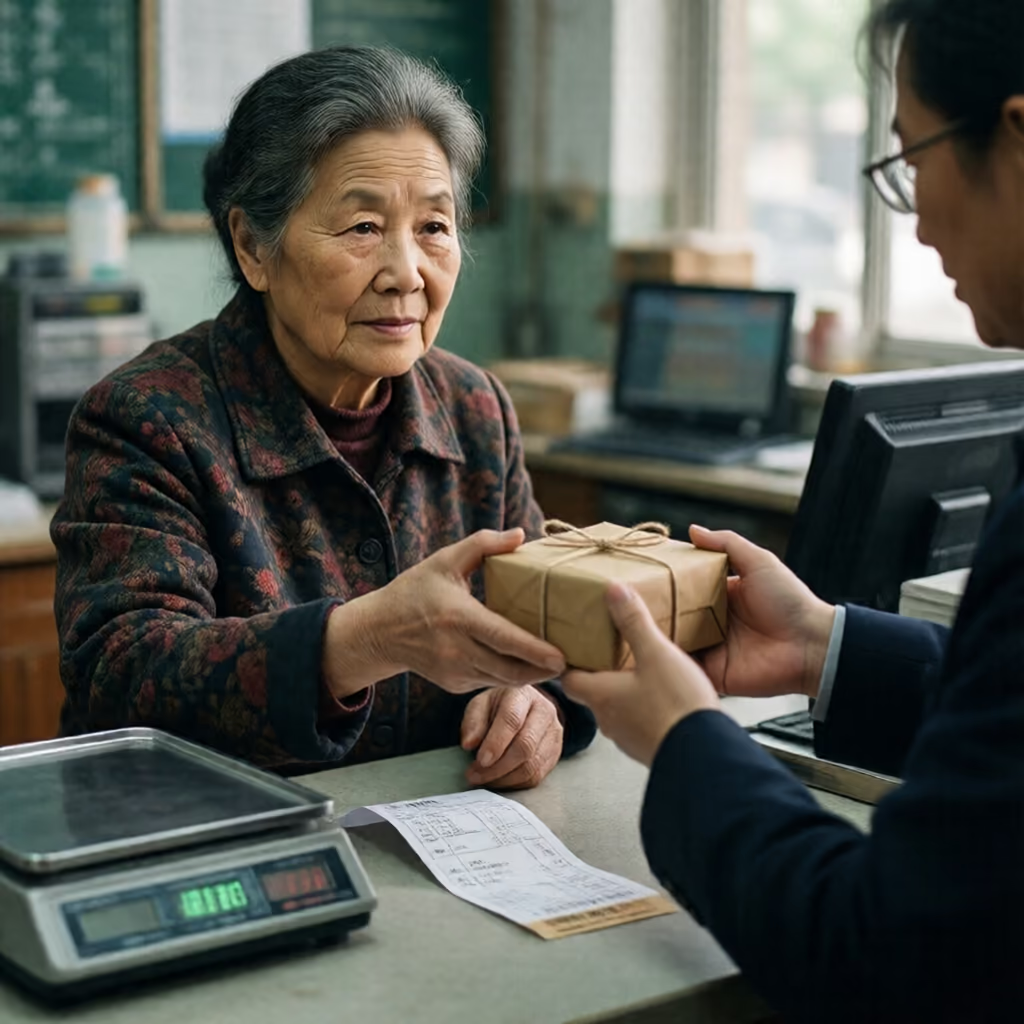
das Päckchen
parcel
A small package or a small shipment, usually wrapped or packed.
EXAMPLE
Das Päckchen liegt seit gestern bei der Post.
The parcel has been at the post office since yesterday.
package
das Päckchen, die Päckchen
Loading your saved state.
parcel
A small package or a small shipment, usually wrapped or packed.
Das Päckchen liegt seit gestern bei der Post.
The parcel has been at the post office since yesterday.

to have one's burdens to carry
To have to carry difficulties, worries, or a burdensome past with you.
Jeder Mensch hat sein eigenes Päckchen zu tragen.
Everyone has their own burdens to carry.

pack / packet
A small package in which a specific quantity of a product is sold, especially baking powder, sugar, tea, or cigarettes.
Für den Kuchen brauchst du noch ein Päckchen Backpulver.
You still need a packet of baking powder for the cake.
| gender | neuter das |
|---|---|
| plural | die Päckchen |
| genitive | des Päckchens |
| singular | plural | |
|---|---|---|
| nominative | das Päckchen | die Päckchen |
| accusative | das Päckchen | die Päckchen |
| dative | dem Päckchen | den Päckchen |
| genitive | des Päckchens | der Päckchen |
The article changes with the case; it is shown in colour.
The ending '-chen' marks 'Päckchen' as a diminutive form. In the figurative expression, however, this ending does not automatically make the worries small or insignificant.
In dem kleinen Päckchen war ein Armband.
There was a bracelet in the small package.
Nach all diesen schweren Jahren hat sie ihr Päckchen zu tragen.
After all those difficult years, she has her own burdens to carry.
In the context of sending mail, 'ein Päckchen verschicken' (to send a parcel), 'ein Päckchen aufgeben' (to hand in a parcel), and 'ein Päckchen zustellen' (to deliver a parcel) are typical collocations. When you hand it in, you give the shipment to a postal service; when it is delivered, it reaches the recipient.
Ich möchte dieses Päckchen nach Hamburg verschicken.
I would like to send this parcel to Hamburg.
Learn the expression as a whole: 'sein Päckchen zu tragen haben' (to have one's burdens to carry). The possessive word changes according to the person affected, and 'zu' before 'tragen' is a fixed part of the construction.
Meine Nachbarin hat auch ihr Päckchen zu tragen.
My neighbor also has her own burdens to carry.