

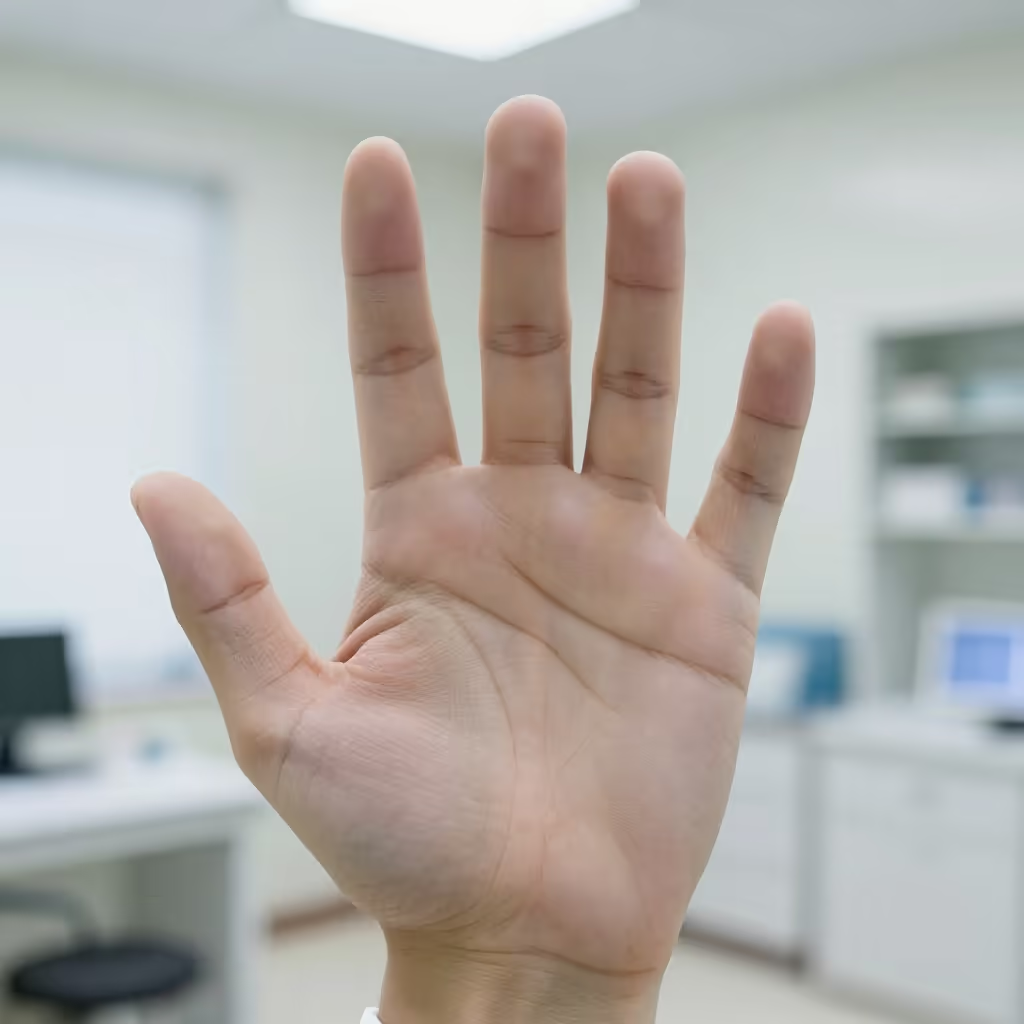
der Daumen
thumb
The first, shortest, and strongest finger of the human hand.
EXAMPLE
Er hat sich beim Hämmern auf den Daumen geschlagen.
He hit his thumb while hammering.
thumb
Loading your saved state.
thumb
The first, shortest, and strongest finger of the human hand.
Er hat sich beim Hämmern auf den Daumen geschlagen.
He hit his thumb while hammering.

to keep fingers crossed
To wish someone luck for an upcoming task or situation.
Ich drücke dir für deine Prüfung ganz fest die Daumen!
I'll be keeping my fingers crossed really hard for your exam!
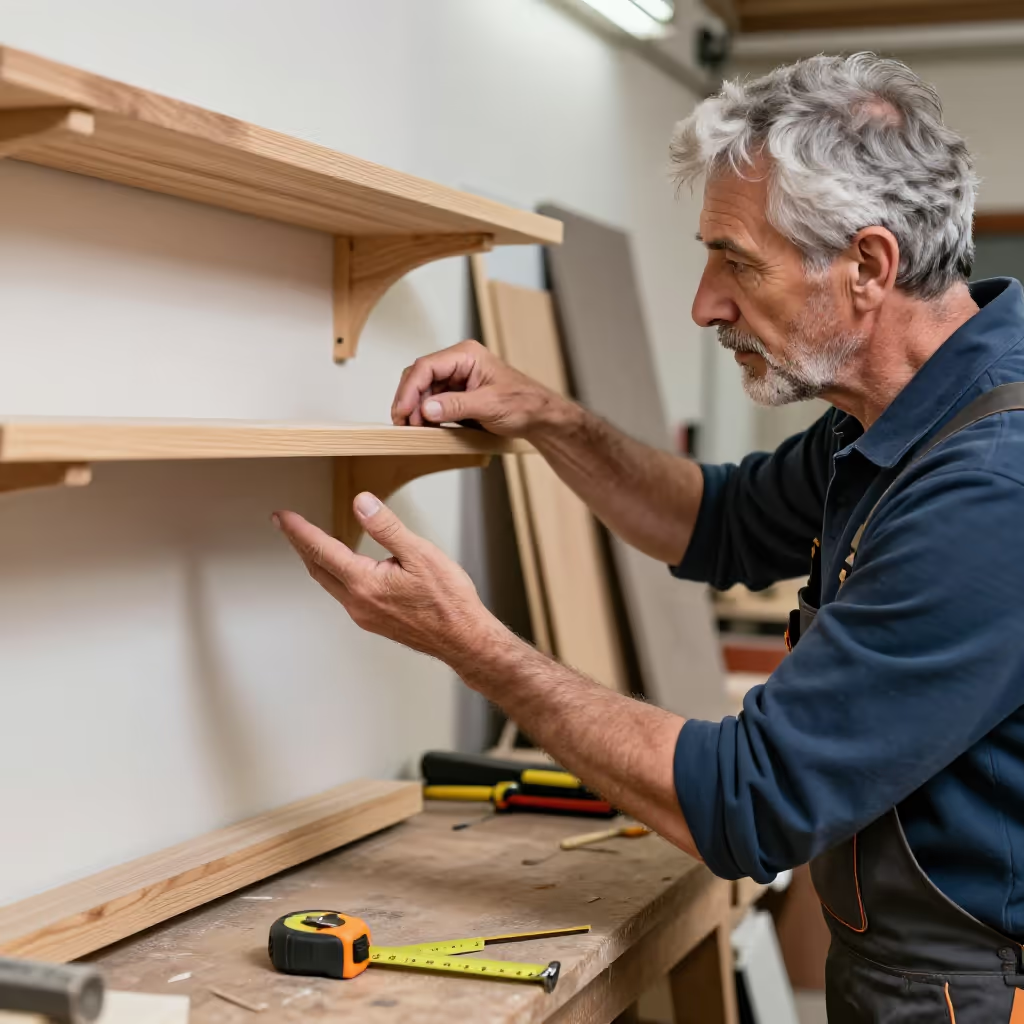
to estimate roughly
To estimate something roughly and without exact measurement.
Über den Daumen gepeilt, wird die Renovierung etwa 10.000 Euro kosten.
Roughly estimated, the renovation will cost about 10,000 euros.
The idiom 'jemandem die Daumen drücken' (to keep one's fingers crossed for someone) means to wish someone luck. The person you wish luck to is always in the dative.
Ich drücke dir für das Vorstellungsgespräch die Daumen.
I'll keep my fingers crossed for your job interview.
The expression 'über den Daumen peilen' (to estimate roughly) means to estimate something only roughly. The participle form 'über den Daumen gepeilt' (roughly estimated) is also often used at the beginning of a sentence.
Über den Daumen gepeilt, brauchen wir für die Fahrt zwei Stunden.
Roughly estimated, we'll need two hours for the drive.
The gesture 'Daumen hoch' (thumbs up) is a very common positive signal in Germany. It means 'great', 'all right', or 'well done'.
Als ich fragte, ob alles okay sei, zeigte er mir nur den Daumen.
When I asked whether everything was okay, he just gave me a thumbs-up.