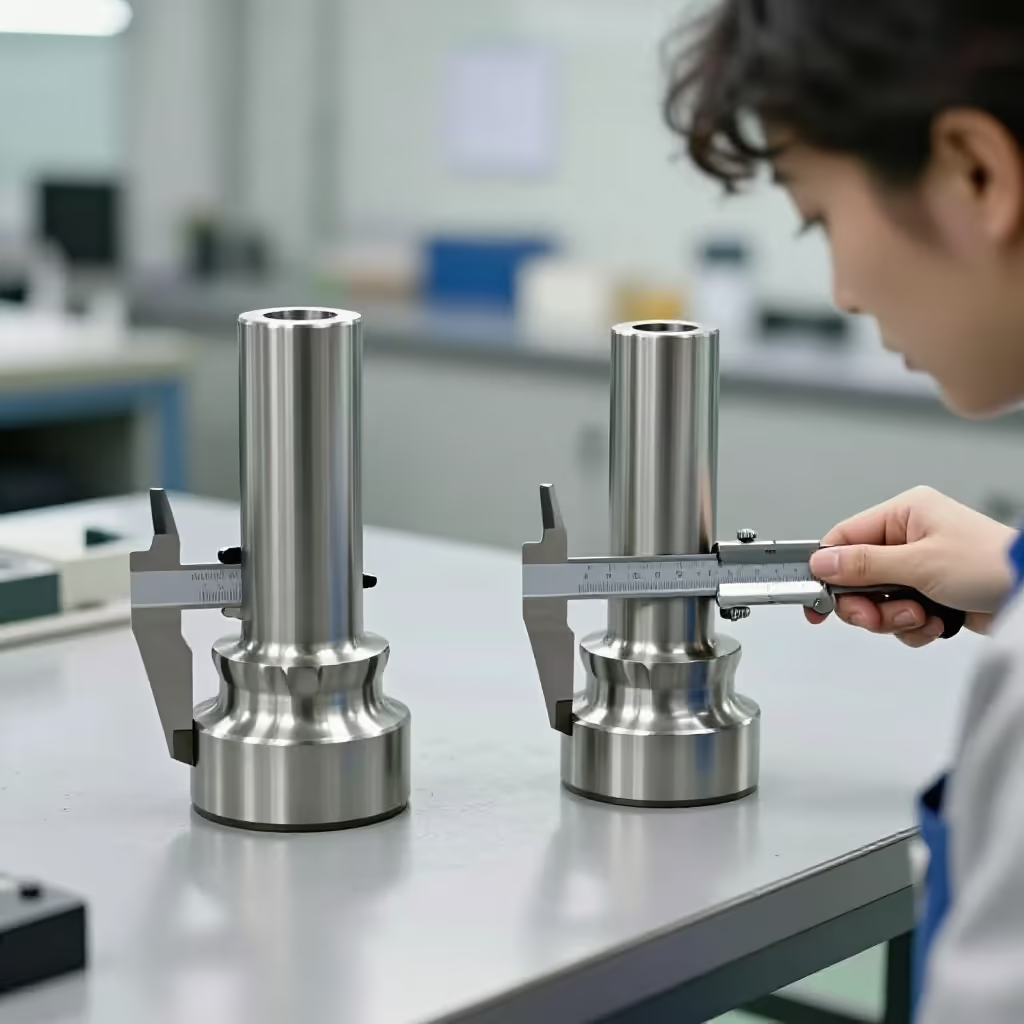
In a figurative sense, the complete agreement of opinions, interests, goals, or statements.
example
Unsere Vorstellungen für die Zukunft des Projekts sind nahezu deckungsgleich.
Our ideas for the future of the project are nearly identical.
Usage tips
Word composition
The word is made up of 'Deckung' (coverage/overlap) and 'gleich' (same/equal). Here, 'Deckung' means 'coverage' or 'overlap.' Literally, it describes something that is 'the same' when overlapped, so it fits perfectly.
EXAMPLE
Die beiden Puzzleteile sind deckungsgleich und passen genau ineinander.
The two puzzle pieces are congruent and fit exactly into each other.
Sentence structure
'Deckungsgleich' (congruent/identical) is very often used with the verb 'sein' (to be) to establish agreement between two or more things. The typical sentence pattern is: 'X und Y sind deckungsgleich' (X and Y are congruent/identical).
EXAMPLE
Ihre Interessen und meine Interessen sind vollkommen deckungsgleich.
Her interests and my interests are completely identical.
Context clue
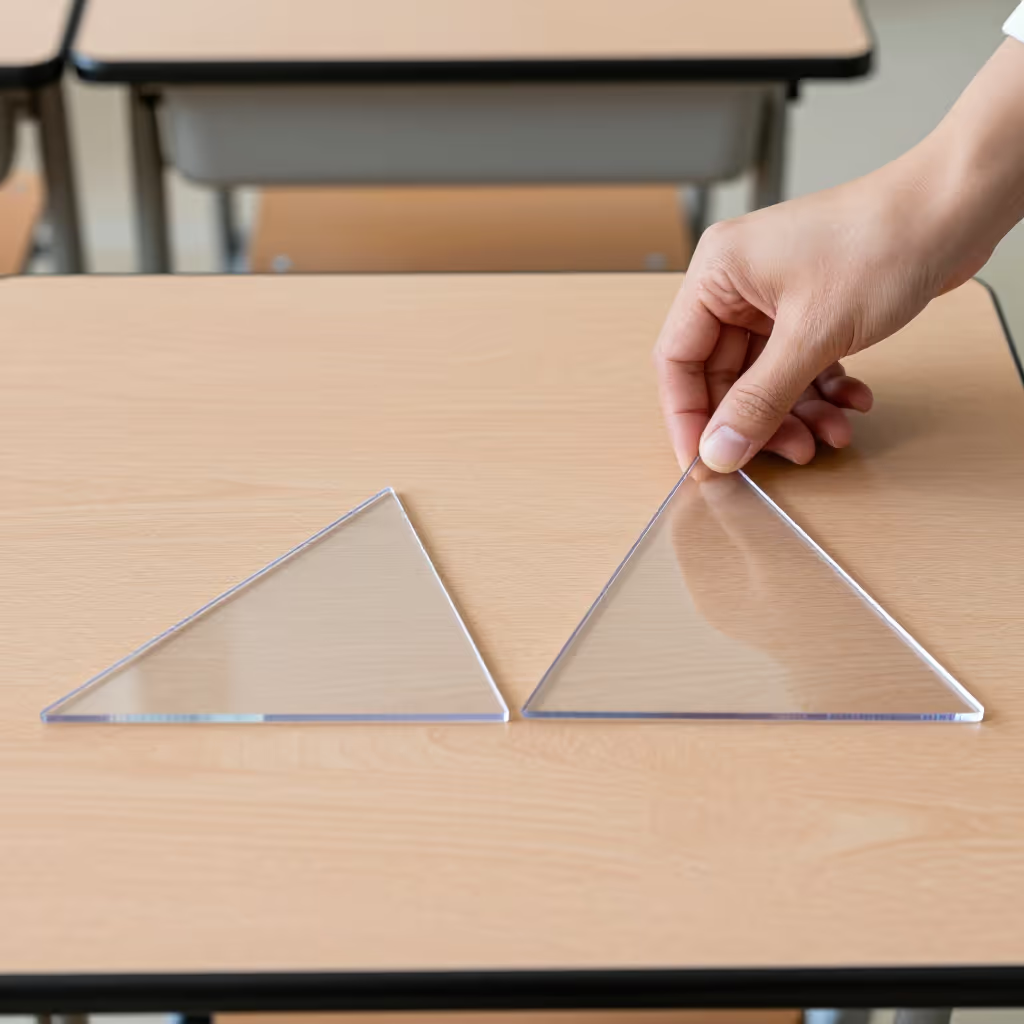
You can easily recognize the meaning from the context. If people are talking about geometry (figures, triangles, shapes), the literal meaning is intended. If it is about abstract things (opinions, plans, interests), the figurative meaning is intended.
EXAMPLE
In der Geometrie lernt man, wann zwei Dreiecke deckungsgleich sind.
In geometry, you learn when two triangles are congruent.
Typical collocations
In the figurative meaning, 'deckungsgleich' (identical) is often combined with abstract nouns. Common combinations are: identical opinions, interests, goals, or ideas.
EXAMPLE
Die beiden Parteien haben nur wenige deckungsgleiche Ziele.
The two parties have only a few identical goals.
Compare with
near_synonym · confusable
deckungsgleich vs gleich
immediate / same
'gleich' and 'deckungsgleich' both describe that things match or correspond. 'gleich' is the normal, general word: two things can look the same, cost the same amount, or have the same meaning. 'deckungsgleich' is more precise and stronger. It means that something matches completely, for example shapes in geometry or goals and opinions in a figurative sense. Learners may confuse the words because both express agreement or correspondence. In everyday language, 'gleich' usually sounds more natural. 'deckungsgleich' is more suitable when you want to emphasize an exact or complete match.
deckungsgleich
Nach dem Gespräch waren unsere Ziele für das Projekt deckungsgleich.
After the conversation, our goals for the project were identical.
gleich
Die beiden Jacken sehen gleich aus, aber eine ist viel teurer.
The two jackets look the same, but one is much more expensive.