

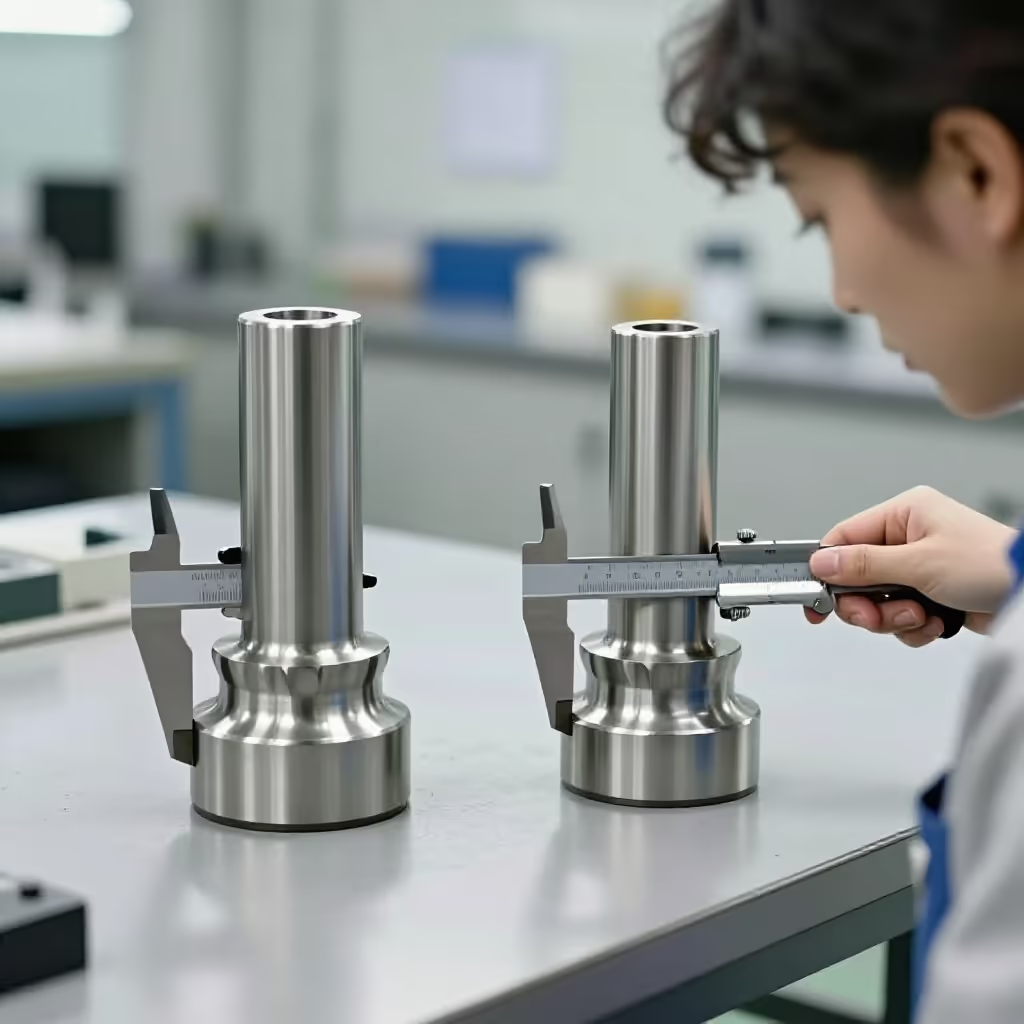
identisch
identical
Completely the same; matching exactly in all features and characteristics.
EXAMPLE
Die DNA-Proben der beiden Zwillinge waren identisch.
The DNA samples of the two twins were identical.
identical
Loading your saved state.
identical
Completely the same; matching exactly in all features and characteristics.
Die DNA-Proben der beiden Zwillinge waren identisch.
The DNA samples of the two twins were identical.
When comparing two things, 'identisch' (identical) is almost always used with the preposition 'mit' and the dative. The structure is: A ist identisch mit B (A is identical to B).
Dein Rucksack ist identisch mit meinem.
Your backpack is identical to mine.
When you want to say that several things are the same as one another, you use a plural subject. No preposition is needed then.
Die beiden Häuser sehen von außen identisch aus.
The two houses look identical from the outside.
'Identisch' (identical) can be modified by adverbs. 'Völlig identisch' or 'absolut identisch' means 100% the same, while 'fast identisch', 'nahezu identisch', or 'praktisch identisch' expresses a very strong similarity.
Die Kopie war vom Original praktisch nicht zu unterscheiden; sie war fast identisch.
The copy was practically indistinguishable from the original; it was almost identical.
immediate / same
Gleich and identisch can express complete agreement. Identisch emphasizes especially clearly that all features and characteristics match exactly, whereas gleich can also be understood more generally depending on the context. Choose identisch when complete agreement is to be explicitly emphasized.

Die beiden gedruckten Einladungen sind identisch und stimmen in jedem Detail überein.
The two printed invitations are identical and match in every detail.
Die beiden gedruckten Einladungen sind gleich.
The two printed invitations are the same.