

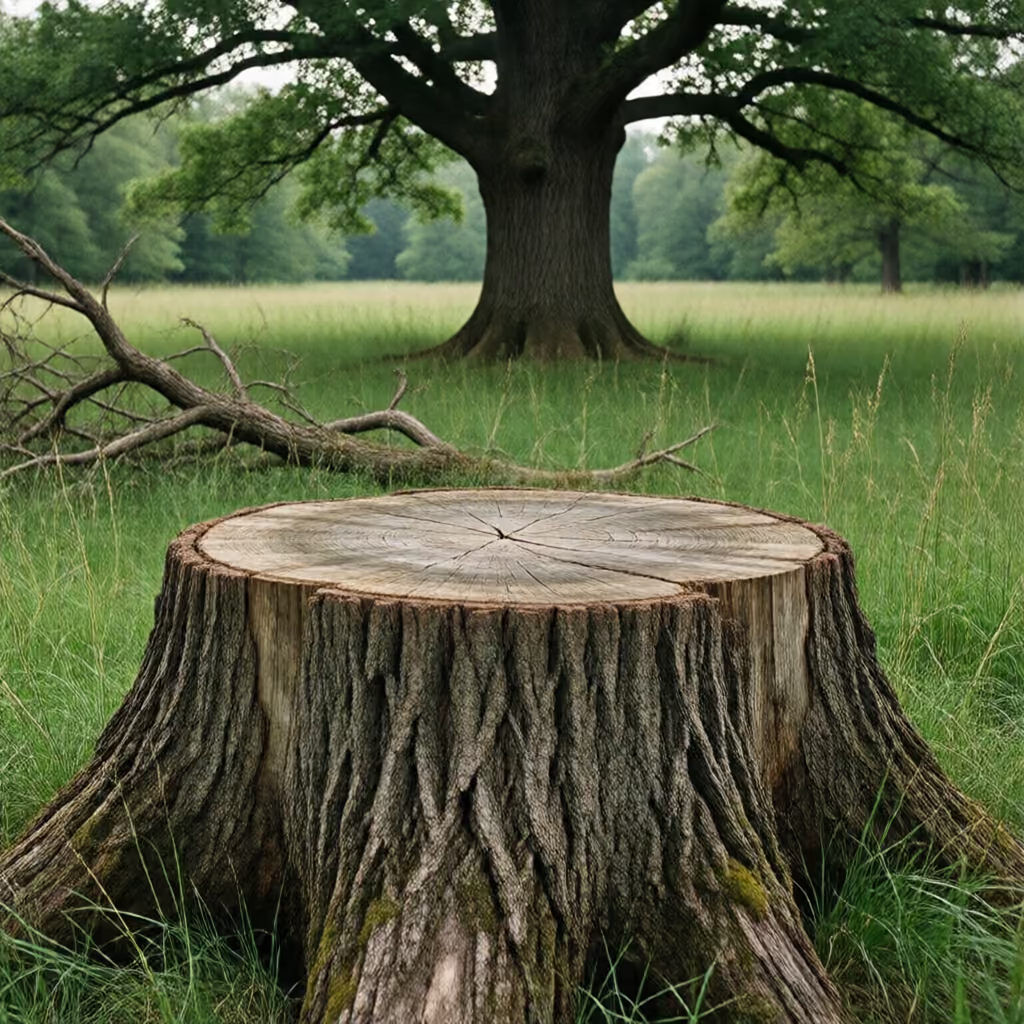
der Stumpf
tree stump
The lower part of a tree trunk that remains standing after the tree has been cut down.
EXAMPLE
Auf der Wiese steht noch der Stumpf einer alten Eiche.
There is still the stump of an old oak tree in the meadow.
stump / stub
der Stumpf, die Stümpfe
Loading your saved state.
tree stump
The lower part of a tree trunk that remains standing after the tree has been cut down.
Auf der Wiese steht noch der Stumpf einer alten Eiche.
There is still the stump of an old oak tree in the meadow.

body-part stump
The part of a limb that remains after an injury or amputation.
Der Arzt untersuchte den Stumpf des amputierten Beins.
The doctor examined the stump of the amputated leg.
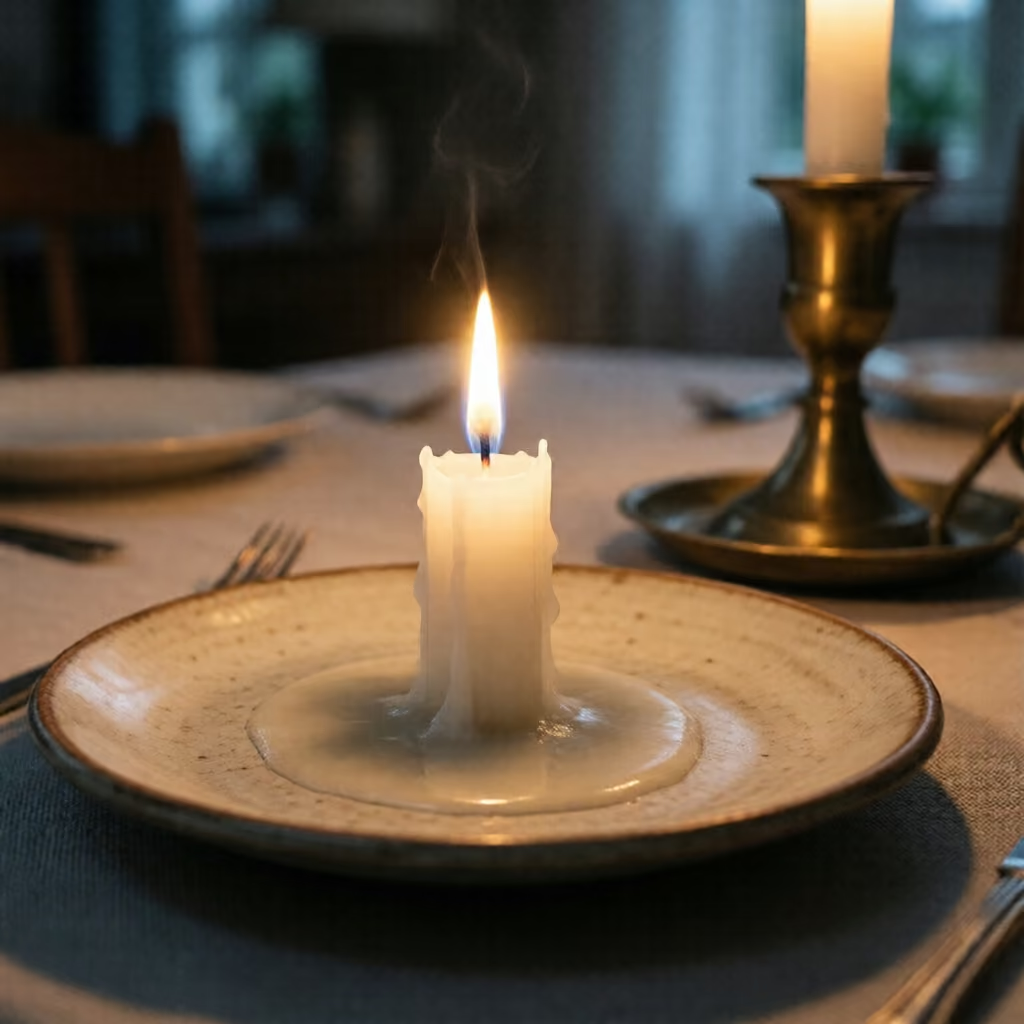
stub
The short remainder of an object created by cutting or breaking it off.
Von der Kerze war nur noch ein kleiner Stumpf übrig.
Only a small stub of the candle was left.
| gender | masculine der |
|---|---|
| plural | die Stümpfe |
| genitive | des Stumpfes |
| singular | plural | |
|---|---|---|
| nominative | der Stumpf | die Stümpfe |
| accusative | den Stumpf | die Stümpfe |
| dative | dem Stumpf | den Stümpfen |
| genitive | des Stumpfes des Stumpfs | der Stümpfe |
The article changes with the case; it is shown in colour.
You can usually tell which meaning is intended from the surrounding words: with 'Baum' (tree), 'Eiche' (oak), or 'Fällen' (cutting down), it refers to a tree stump; with 'Bein' (leg), 'Arm' (arm), or 'Amputation' (amputation), it refers to a body part; and with 'Kerze' (candle) or 'Bleistift' (pencil), it refers to the short remainder of an object.
Nach dem Fällen blieb vom Baum nur ein niedriger Stumpf zurück.
After the tree was cut down, only a low stump remained.
Nach der Amputation des Arms verheilte der Stumpf gut.
The stump healed well after the arm was amputated.
Sie konnte den kurzen Stumpf ihres Bleistifts kaum noch halten.
She could barely hold the short stub of her pencil anymore.
In connection with a felled tree, 'Stumpf' (stump) often occurs with verbs such as 'ausgraben' (to dig up), 'entfernen' (to remove), or 'roden' (to clear). The phrase 'der Stumpf einer Eiche' (the stump of an oak tree) is also common.
Die Gartenbesitzer ließen den Stumpf des alten Apfelbaums ausgraben.
The garden owners had the stump of the old apple tree dug up.
In its medical meaning, 'Stumpf' (stump) is often used with verbs such as 'untersuchen' (to examine), 'behandeln' (to treat), or 'versorgen' (to care for). The word appears especially in texts about amputations and prostheses.
Vor der Anpassung der Prothese wurde der Stumpf sorgfältig untersucht.
The stump was carefully examined before the prosthesis was fitted.
When referring to an object, 'Stumpf' (stub) often means a short remainder left after something has burned down, been cut off, or broken off. Typical contexts include candles, pencils, and other elongated objects.
Der Stumpf der Kerze brannte noch einige Minuten weiter.
The candle stub continued to burn for a few more minutes.