

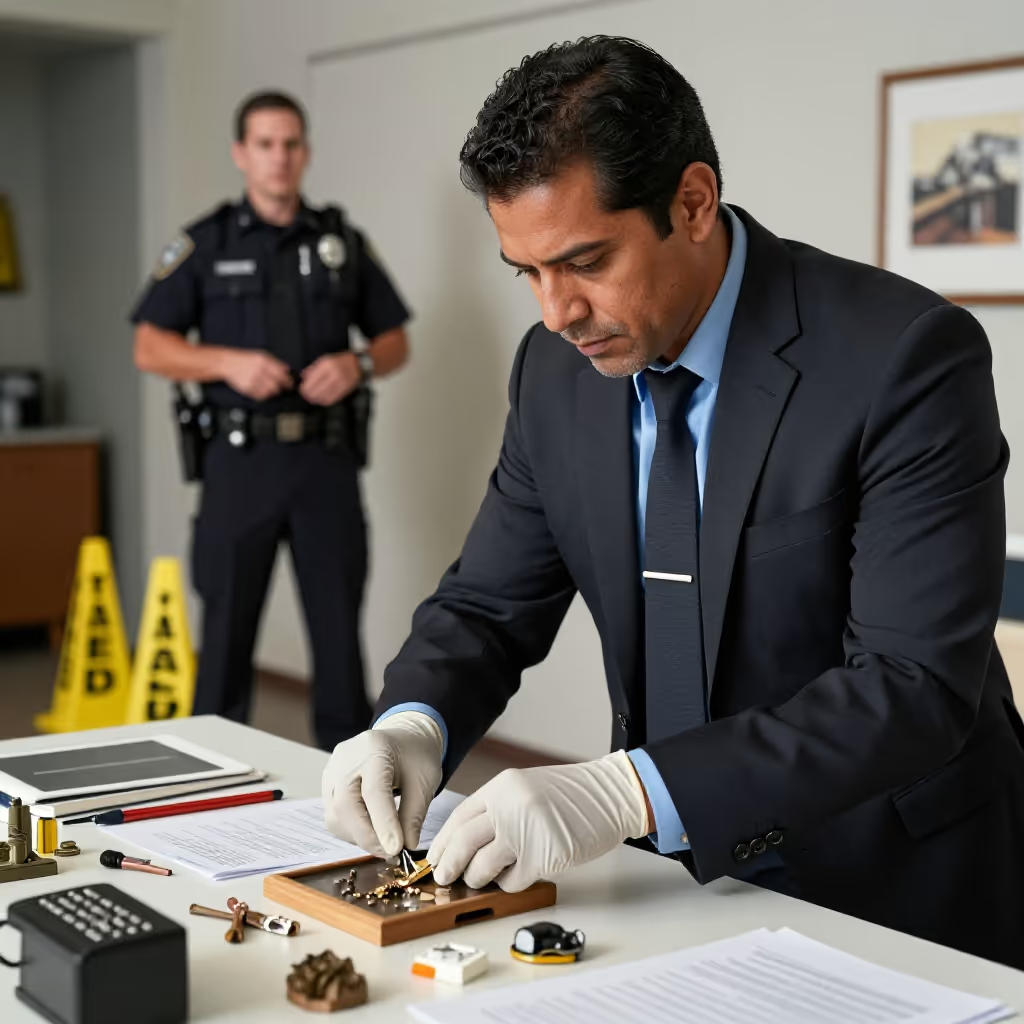
A police investigator or private detective whose job is to solve crimes. The word is borrowed from English.
example
Der Detective sammelte am Tatort Spuren, um den Fall zu lösen.
The detective collected evidence at the crime scene in order to solve the case.
Usage tips
Context and style
As an English loanword, 'Detective' (detective) is often used when talking about crime novels, films, or series from the English-speaking world. It gives what is said an international or American feel.
EXAMPLE
In dem Film löst ein cleverer Detective aus New York den Fall.
In the film, a clever detective from New York solves the case.
English pronunciation
Since 'Detective' (detective) was borrowed directly from English, it is also usually used with English pronunciation and stress on the second syllable.
EXAMPLE
Der Sprecher im Hörbuch hat das Wort „Detective“ englisch ausgesprochen.
The narrator in the audiobook pronounced the word 'Detective' in English.
Typical use
'Detective' (detective) is often used directly before a surname like a title, or to show affiliation with a particular police department.
EXAMPLE
Detective Miller übernahm die Ermittlungen.
Detective Miller took over the investigation.
Compare with
near_synonym · confusable
Detective vs Kommissar
commissioner / inspector
'der Kommissar' and 'der Detective' can both refer to a person who investigates crimes. 'Kommissar' is the normal German word for a senior criminal police officer. 'Detective' comes from English and, in German, sounds more like English-language crime stories or a private detective. The words can be confused because both solve cases. In a German police context, however, 'Kommissar' is more natural; 'Detective' fits better when talking about English or American characters.
Detective
In der Serie löst ein Detective aus New York einen alten Mordfall.
In the series, a detective from New York solves an old murder case.
Kommissar
Der Kommissar befragt den Zeugen noch am Tatort.
The detective inspector questions the witness right at the crime scene.