


die Acht
eight
The number 8 or the numeral representing it.
EXAMPLE
Die Acht ist eine gerade Zahl.
Eight is an even number.
eight
die Acht, die Achten
Loading your saved state.
eight
The number 8 or the numeral representing it.
Die Acht ist eine gerade Zahl.
Eight is an even number.

to pay attention
To be attentive and watch out for someone or something.
Gib bitte Acht, dass das Kind nicht auf die Straße läuft.
Please pay attention so that the child does not run into the street.

to disregard
To fail to take something into account or consider it in a decision.
Bei deiner Planung hast du die Kosten für die Reparaturen außer Acht gelassen.
In your planning, you disregarded the cost of the repairs.

to be careful
To be cautious in order to avoid danger or damage.
Vor diesem bissigen Hund musst du dich in Acht nehmen.
You need to be careful around this aggressive dog.

figure eight
A figure or shape with two connected loops that looks like the numeral 8.
Die Eiskunstläuferin fuhr eine Acht auf dem Eis.
The figure skater skated a figure eight on the ice.
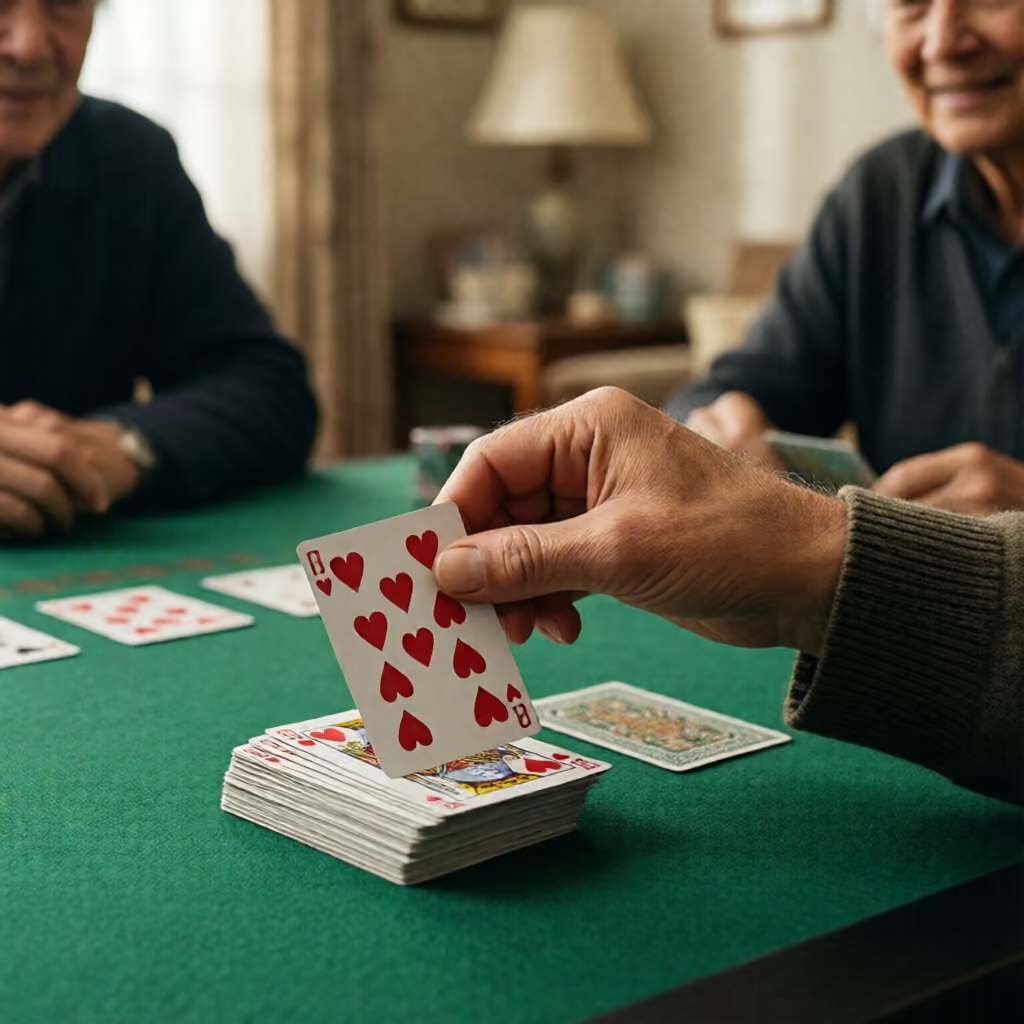
eight
A playing card with a value of eight.
Sie legte eine Acht auf den Kartenstapel.
She placed an eight on the pile of cards.

imperial ban
A historical punishment that excluded someone from the legal community and deprived them of legal protection.
Der Kaiser verhängte die Acht über den aufständischen Fürsten.
The emperor imposed the imperial ban on the rebellious prince.

warped wheel
A sideways deformation of a wheel, especially a bicycle wheel.
Mein Hinterrad hat eine Acht.
My rear wheel is warped.
| gender | feminine die |
|---|---|
| plural | die Achten |
| genitive | der Acht |
| singular | plural | |
|---|---|---|
| nominative | die Acht | die Achten |
| accusative | die Acht | die Achten |
| dative | der Acht | den Achten |
| genitive | der Acht | der Achten |
The article changes with the case; it is shown in colour.
| gender | feminine die |
|---|---|
| genitive | der Acht |
| singular | plural | |
|---|---|---|
| nominative | die Acht | – |
| accusative | die Acht | – |
| dative | der Acht | – |
| genitive | der Acht | – |
The article changes with the case; it is shown in colour.
| gender | feminine die |
|---|---|
| genitive | der Acht |
| singular | plural | |
|---|---|---|
| nominative | die Acht | – |
| accusative | die Acht | – |
| dative | der Acht | – |
| genitive | der Acht | – |
The article changes with the case; it is shown in colour.
The intended meaning can often be recognized from the surrounding context: with numbers and sequences, it refers to the numerical value; with verbs such as „fahren“ (to ride) or „zeichnen“ (to draw), it refers to a shape; and in card games, it refers to a card value. In fixed expressions, words such as „geben“ (to give), „lassen“ (to leave), or „nehmen“ (to take) indicate the figurative meaning.
Ihre Lieblingszahl ist die Acht.
Their favorite number is eight.
Der Läufer beschrieb eine große Acht auf dem Platz.
The runner traced a large figure eight on the field.
Beim Kartenspiel legte sie eine Acht ab.
In the card game, she played an eight.
The idiomatic expressions have fixed grammar: „Acht geben“ (to pay attention) is used without a reflexive pronoun, „etwas außer Acht lassen“ (to disregard something) takes an accusative object, and „sich in Acht nehmen“ (to be careful) requires a reflexive pronoun.
Beim Gemüseschneiden musst du gut Acht geben.
You have to pay close attention while cutting vegetables.
Diesen wichtigen Punkt hat er völlig außer Acht gelassen.
He completely disregarded this important point.
Nimm dich in Acht, das Eis ist noch dünn!
Be careful, the ice is still thin!
As a number noun, „Acht“ (eight) is capitalized and can be used with an article: „Die Acht ist eine gerade Zahl“ (Eight is an even number). In calculations, the lowercase number word is usually used: „acht durch zwei teilen“ (divide eight by two) or „mit acht multiplizieren“ (multiply by eight).
Auf seinem Trikot steht eine große Acht.
There is a large eight on his jersey.
„Acht geben“ (to pay attention) is often used with „auf“ (to) and an accusative object: you pay attention to a person or thing. The fixed imperative form is „Gib Acht!“ (Pay attention!).
Gib Acht auf die nasse Treppe!
Pay attention to the wet stairs!
„Außer Acht lassen“ (to disregard) is used with an accusative object. The object refers to the information or factor that is not taken into account.
Bei der Entscheidung dürfen wir die möglichen Folgen nicht außer Acht lassen.
In making the decision, we must not disregard the possible consequences.
„Sich in Acht nehmen“ (to be careful) is often used with „vor“ (from/about) and a dative object. It warns of a person, thing, or situation that may pose a danger.
Im Gedränge sollte man sich vor Taschendieben in Acht nehmen.
In crowded places, you should watch out for pickpockets.
Verbs such as „fahren“ (to ride), „laufen“ (to move), „zeichnen“ (to draw), or „beschreiben“ (to describe) are used for the shape. The expression „eine Acht fahren“ (to skate or ride a figure eight) refers to moving along this figure.
Die Kinder fuhren mit ihren Fahrrädern eine Acht um die Hütchen.
The children rode their bicycles in a figure eight around the cones.
In card games, „eine Acht“ (an eight) is usually used with verbs such as „legen“ (to place), „ziehen“ (to draw), „spielen“ (to play), or „ausspielen“ (to play). The article refers to a single card with a value of eight.
Er spielte eine Acht aus und gewann den Stich.
He played an eight and won the trick.
This meaning belongs to historical legal and political language and is now mainly found in accounts of the Middle Ages or the early modern period. Typical expressions include „die Acht verhängen“ (to impose the imperial ban), „mit der Acht belegen“ (to place someone under the imperial ban), and „in die Acht tun“ (to place someone under the imperial ban).
Der Herrscher belegte den Rebellen mit der Acht.
The ruler placed the rebel under the imperial ban.