

diebisch
thievish
Acting or appearing like a thief; secretive, furtive, and intent on stealing.
EXAMPLE
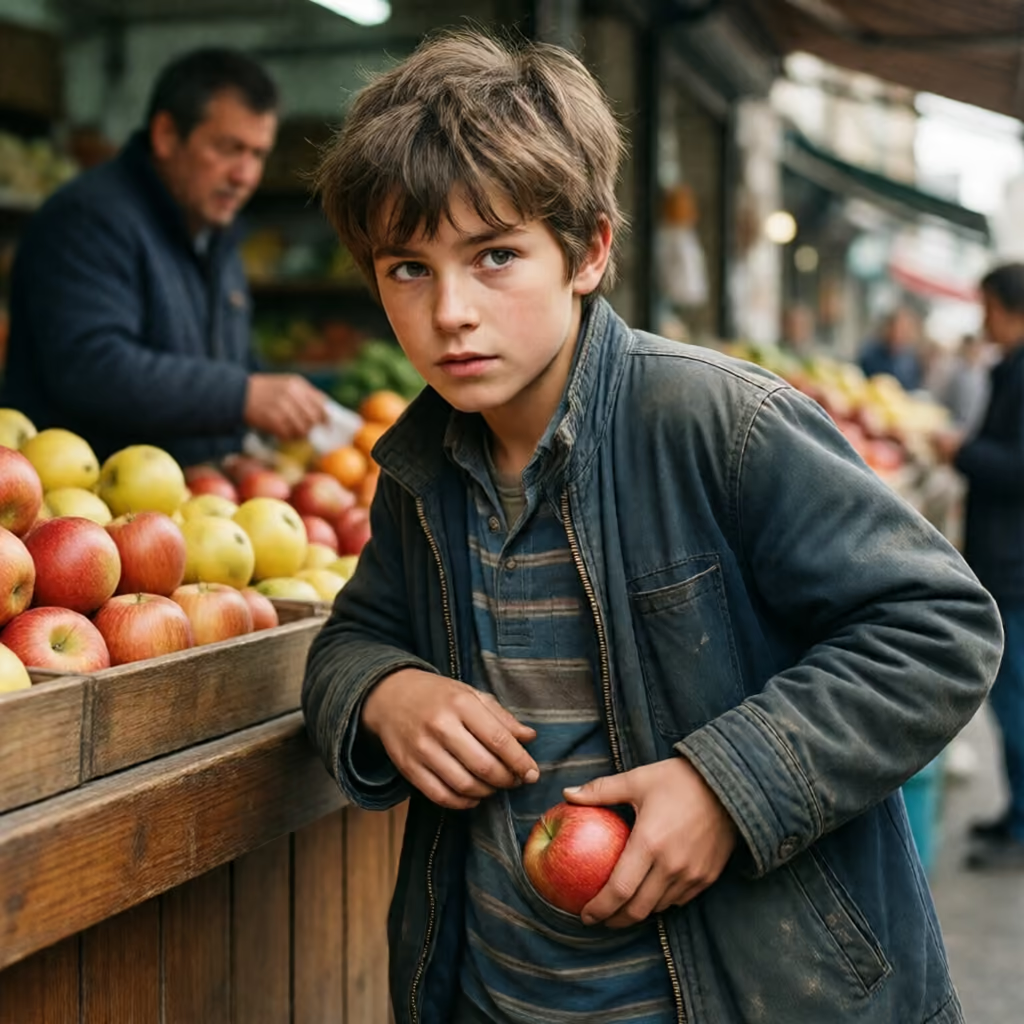
Der diebische Junge steckte den Apfel unbemerkt in seine Tasche.
The thievish boy slipped the apple into his pocket without anyone noticing.
thievish / mischievous
diebisch – diebischer – am diebischsten
Loading your saved state.
thievish
Acting or appearing like a thief; secretive, furtive, and intent on stealing.
Der diebische Junge steckte den Apfel unbemerkt in seine Tasche.
The thievish boy slipped the apple into his pocket without anyone noticing.

mischievous delight
Secretly and slyly pleased; especially in the expression „diebische Freude“ (mischievous delight): great pleasure, often schadenfreude, for example at a successful prank or someone else’s misfortune.
Sie empfand eine diebische Freude, als ihr Konkurrent den Wettbewerb verlor.
She felt a mischievous delight when her competitor lost the competition.
| basic form | diebisch |
|---|---|
| comparative | diebischer |
| superlative | am diebischsten |
| masc. | fem. | neut. | plural | |
|---|---|---|---|---|
| nom. | -e | -e | -e | -en |
| acc. | -en | -e | -e | -en |
| dat. | -en | -en | -en | -en |
| gen. | -en | -en | -en | -en |
Add the ending to diebisch.
| masc. | fem. | neut. | plural | |
|---|---|---|---|---|
| nom. | -er | -e | -es | -en |
| acc. | -en | -e | -es | -en |
| dat. | -en | -en | -en | -en |
| gen. | -en | -en | -en | -en |
Add the ending to diebisch.
| masc. | fem. | neut. | plural | |
|---|---|---|---|---|
| nom. | -er | -e | -es | -e |
| acc. | -en | -e | -es | -e |
| dat. | -em | -er | -em | -en |
| gen. | -en | -er | -en | -er |
Add the ending to diebisch.
„Diebisch“ consists of the root word „Dieb“ (thief) and the ending „-isch“. The ending turns it into an adjective and shows a connection to a thief or their behavior.
Sein diebisches Grinsen verriet, dass er etwas vorhatte.
His mischievous grin revealed that he was up to something.
„Diebisch“ most commonly occurs in the expression „diebische Freude“ (mischievous delight). Typical verbs used with it are „empfinden“ (to feel), „verspüren“ (to experience), and „haben“ (to have).
Er konnte seine diebische Freude über den Fehler des anderen kaum verbergen.
He could hardly hide his mischievous delight at the other person’s mistake.
When „diebisch“ is used with words such as „Freude“ (delight) or „Vergnügen“ (pleasure), it refers to an emotional reaction. When it describes people, looks, or a grin, it refers more to secretive, sly behavior.
Der diebische Blick des Kindes fiel der Mutter sofort auf.
The child’s mischievous look immediately caught the mother’s attention.
Nach dem kleinen Missgeschick zeigte er eine diebische Freude.
After the minor mishap, he showed a mischievous delight.