


dominieren
to dominate
To control a person, group, or thing, to be superior, or to have the greatest influence.
EXAMPLE
Die Heimmannschaft dominierte das Spiel von der ersten Minute an.
The home team dominated the game from the very first minute.
to dominate
Loading your saved state.
to dominate
To control a person, group, or thing, to be superior, or to have the greatest influence.
Die Heimmannschaft dominierte das Spiel von der ersten Minute an.
The home team dominated the game from the very first minute.
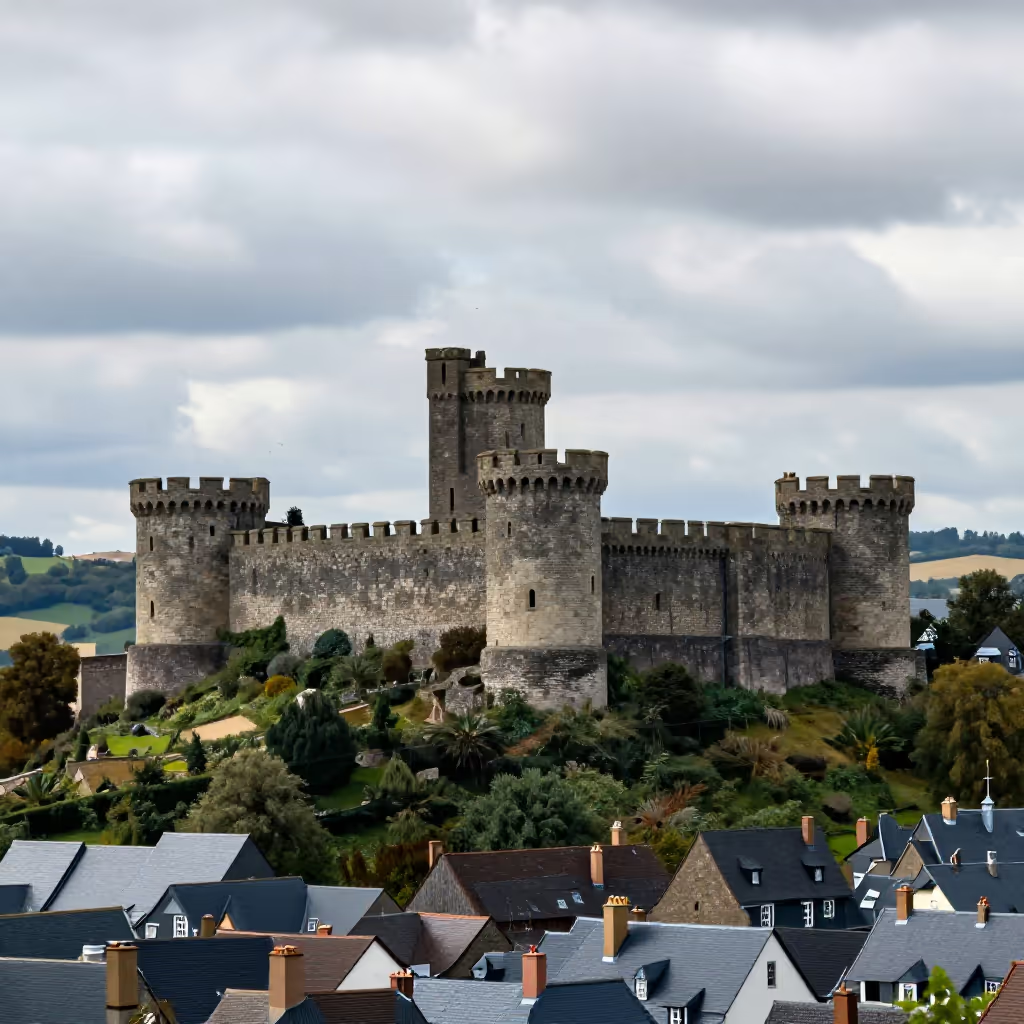
to dominate
To shape the appearance of a place or landscape; to be visible from far away.
Die alte Burgruine dominiert das gesamte Tal.
The old castle ruin dominates the entire valley.
The verb 'dominieren' (to dominate) belongs to a word family with the adjective 'dominant' (dominant/controlling) and the noun 'die Dominanz' (dominance/superiority). All the words share the basic meaning of control and influence.
Er versucht immer, in Gesprächen dominant zu sein.
He always tries to be dominant in conversations.
'Dominieren' (to dominate) is a transitive verb that requires an accusative object. You ask: Whom or what does someone/something dominate?
Die erfahrenen Spieler dominieren die jungen Talente.
The experienced players dominate the young talents.
In the meaning 'to be superior', 'dominieren' (to dominate) is often combined with abstract nouns or competitive situations: 'ein Spiel dominieren' (to dominate a game), 'eine Debatte dominieren' (to dominate a debate), or 'den Markt dominieren' (to dominate the market).
Eine große Firma dominiert den gesamten Markt für diese Produkte.
A large company dominates the entire market for these products.
You can recognize this meaning by the fact that the subject is a large, immovable object (e.g., a building, a mountain) and the object is a place or landscape.
Der hohe Kirchturm dominiert das Bild der kleinen Stadt.
The tall church tower dominates the image of the small town.
to shape / mint
Both words describe how an element strongly determines the impression of a place. „Prägen“ emphasizes the lasting character and design, while „dominieren“ emphasizes the striking presence or predominance of an element. Use „prägen“ for the distinctive character and „dominieren“ for what stands out clearly.

Der hohe Fernsehturm dominiert das Erscheinungsbild des kleinen Ortes.
The tall television tower dominates the appearance of the small town.
Die alten Fachwerkhäuser prägen den Charakter des kleinen Ortes.
The old half-timbered houses shape the character of the small town.