

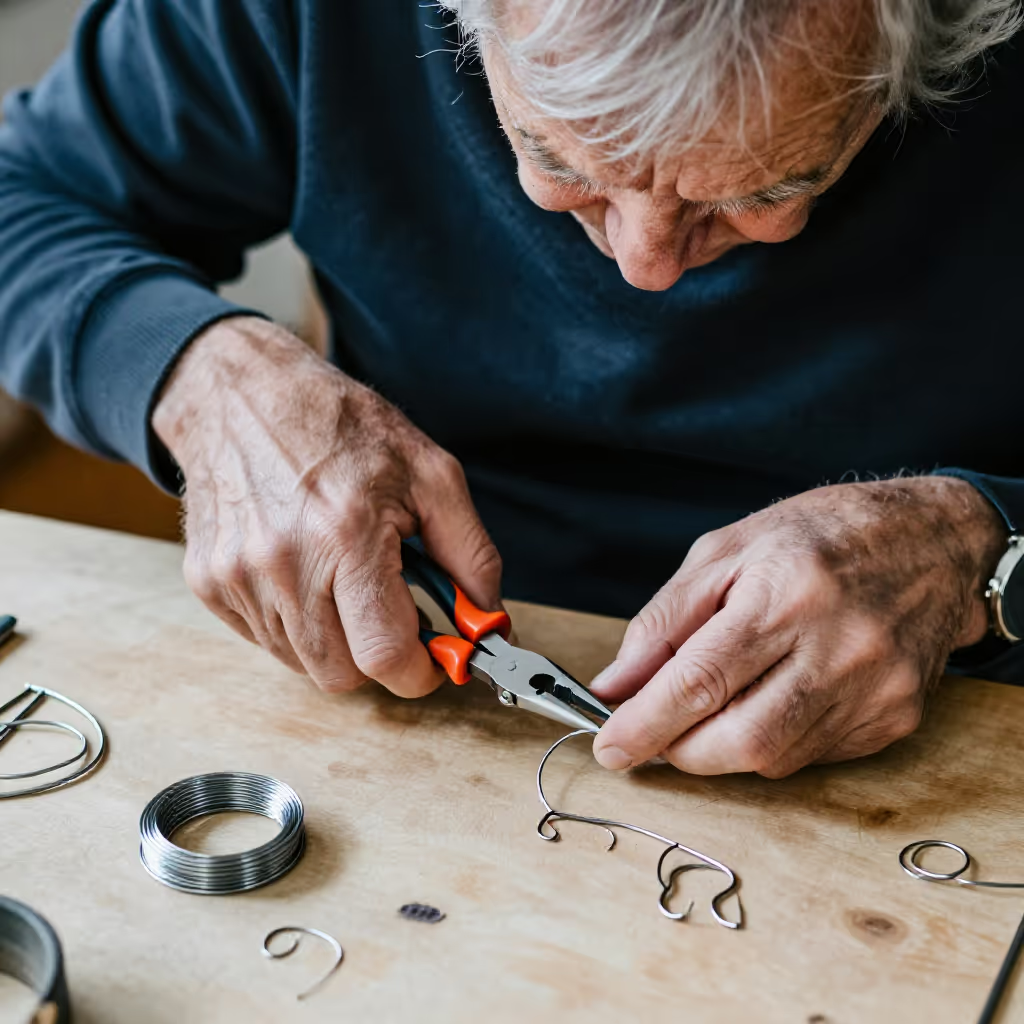
der Draht
wire
A thin, long, and bendable strand of metal. It is used, for example, for electrical cables, fences, or crafts.
EXAMPLE
Der Zaun wurde mit einem stabilen Draht repariert.
The fence was repaired with a sturdy wire.
wire
Loading your saved state.
wire
A thin, long, and bendable strand of metal. It is used, for example, for electrical cables, fences, or crafts.
Der Zaun wurde mit einem stabilen Draht repariert.
The fence was repaired with a sturdy wire.

to have a good connection
To have a good personal or professional relationship with someone, which is often useful.
Sie hat einen guten Draht zu ihrer Chefin und wird oft bei wichtigen Entscheidungen gefragt.
She has a good connection with her boss and is often asked about important decisions.

to be on the ball
Informal for being mentally alert, quick to react, and well informed.
Nach zwei Tassen Kaffee bin ich morgens wieder voll auf Draht.
After two cups of coffee, I'm fully on the ball again in the morning.

to pull the strings
To secretly exercise control over a situation or other people; to have the real power behind the scenes.
Offiziell ist er nur ein Berater, aber jeder weiß, dass er im Hintergrund die Drähte zieht.
Officially, he's only an advisor, but everyone knows that he's pulling the strings in the background.
In the idiom 'einen Draht zu jemandem haben' (to have a good connection with someone), the person with whom you have a good relationship is always in the dative. So the question is: 'Zu wem hast du einen guten Draht?' (Who do you have a good connection with?)
Er hat einen guten Draht zu seinen neuen Kollegen.
He has a good connection with his new colleagues.
The idiom 'die Drähte ziehen' (to pull the strings) is always used in the plural. If you hear 'Drähte' in connection with power or control, this figurative meaning is intended.
Man vermutet, dass einflussreiche Geschäftsleute im Hintergrund die Drähte ziehen.
People suspect that influential businesspeople are pulling the strings in the background.
The expression 'auf Draht sein' (to be on the ball) is colloquial. It is mostly used in informal conversations to express that someone is attentive and capable.
Ich brauche morgens erst einen Kaffee, um richtig auf Draht zu sein.
I need a coffee in the morning first to really be on the ball.
In the literal sense, 'Draht' (wire) is often combined with verbs like 'spannen' (to stretch), 'verlegen' (to lay/install), 'durchschneiden' (to cut through), or 'biegen' (to bend). Common compounds are 'Stacheldraht' (barbed wire) or 'Kupferdraht' (copper wire).
Der Elektriker hat einen neuen Draht für die Lampe verlegt.
The electrician installed a new wire for the lamp.
management / line
An electrical Leitung is an installed connection that carries electricity and may consist of a cable. Draht, by contrast, refers to a single thin, flexible strand of metal. Use Leitung for the entire installed connection and Draht for the specific piece of metal.
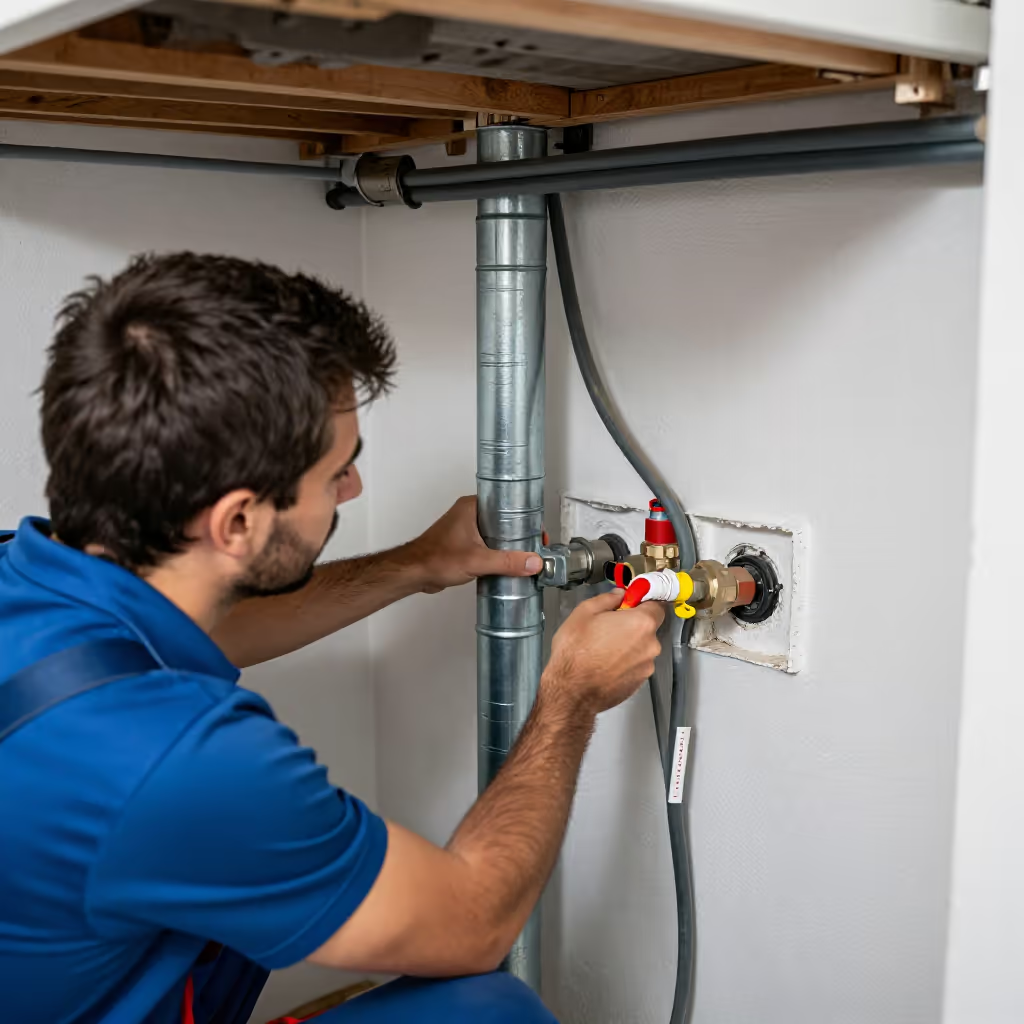
Für den Anschluss biegt der Elektriker einen dünnen Draht aus Kupfer.
For the connection, the electrician bends a thin copper wire.
Für die neue Steckdose verlegt der Elektriker eine Leitung durch die Wand.
For the new outlet, the electrician is running a line through the wall.