

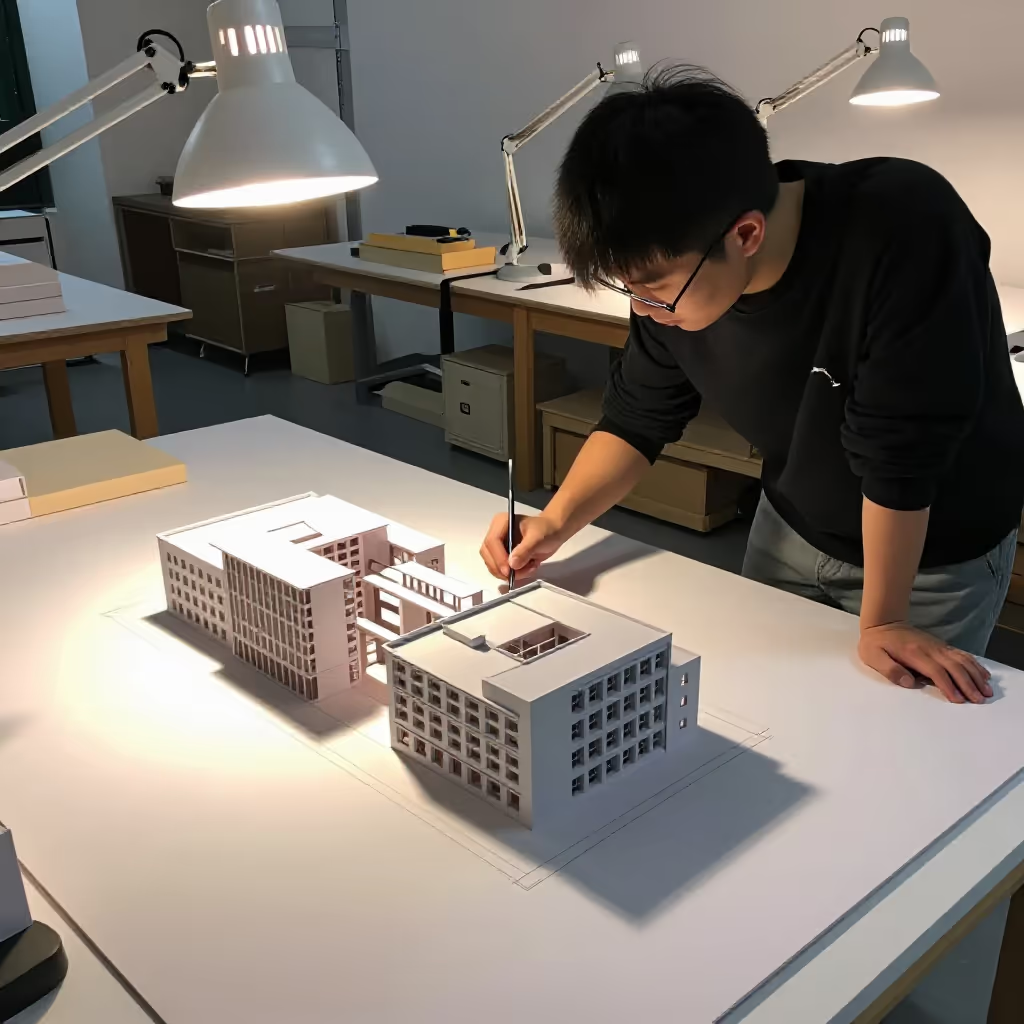
Having three dimensions (length, width, and height); spatial. The term describes objects or representations with perceivable depth.
example
Moderne Kinofilme werden oft in dreidimensionaler Technik gezeigt, was ein räumliches Seherlebnis erzeugt.
Modern cinema films are often shown using three-dimensional technology, which creates a spatial viewing experience.
Usage tips
Word composition
The word is clearly built from its parts: 'drei' (three), 'Dimension' (dimension), and the adjective ending '-al'. So it literally means 'with three dimensions'.
EXAMPLE
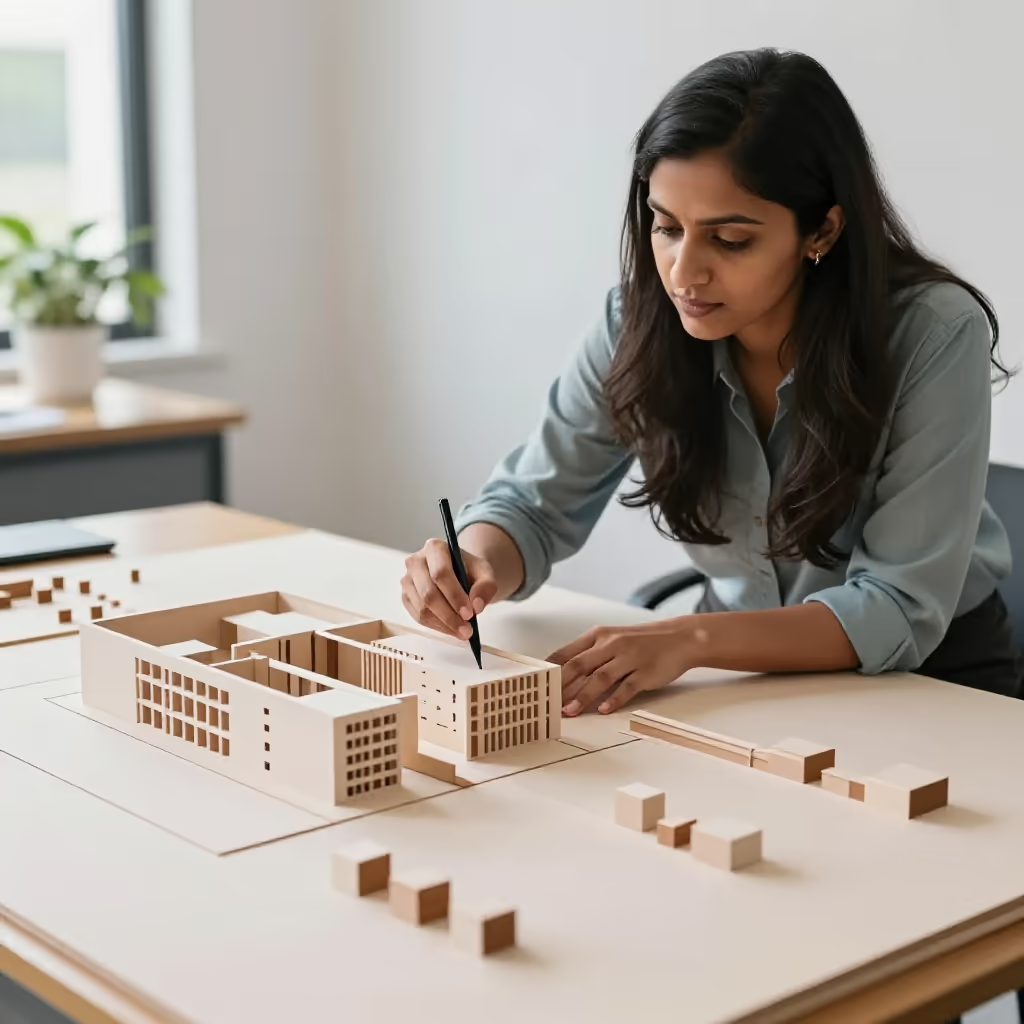
Für die Planung benötigen wir ein dreidimensionales Modell des Gebäudes.
For the planning, we need a three-dimensional model of the building.
Typical collocations
This adjective is often used in technical or artistic contexts. Common combinations are 'dreidimensionale Darstellung' (three-dimensional representation), 'dreidimensionaler Raum' (three-dimensional space), and 'dreidimensionaler Effekt' (three-dimensional effect).
EXAMPLE
Der 3D-Drucker erstellt eine dreidimensionale Darstellung des Objekts.
The 3D printer creates a three-dimensional representation of the object.
Abbreviation '3D'
In everyday language and in technology, the abbreviation '3D' is used very frequently. It has exactly the same meaning as 'dreidimensional' (three-dimensional).
EXAMPLE
Wir haben den Film in 3D gesehen.
We saw the film in 3D.
Compare with
antonym
dreidimensional vs flach
flat / shallow
'flach' and 'dreidimensional' are opposites when it comes to shape and space. 'flach' describes something with very little height or depth, for example an image on paper. 'dreidimensional' describes something spatial, with length, width, and height. A flat image looks like a plane. A three-dimensional model has depth and can be viewed from different sides.
dreidimensional
Im Museum betrachtet er ein dreidimensionales Modell der alten Stadt.
In the museum, he looks at a three-dimensional model of the old city.
flach
Auf dem Bildschirm sieht die Karte noch flach aus.