

drumherum
around it
Describes the immediate physical surroundings of something; all around something.
Das Haus ist schön, aber alles drumherum ist noch eine Baustelle.
The house is nice, but everything around it is still a construction site.

around it / around the subject
Loading your saved state.

around it
Describes the immediate physical surroundings of something; all around something.
Das Haus ist schön, aber alles drumherum ist noch eine Baustelle.
The house is nice, but everything around it is still a construction site.


to talk around it
In the fixed expression 'drumherum reden' (to talk around it), it means to avoid the real topic and not get straight to the point.
Sag doch endlich, was los ist, und rede nicht immer drumherum!
Just finally say what's going on, and stop always talking around it!
'Drumherum' is a common colloquial shortening of the pronominal adverb 'darum herum' (around that). It literally means 'around this thing' and refers to something that was mentioned earlier in the sentence.
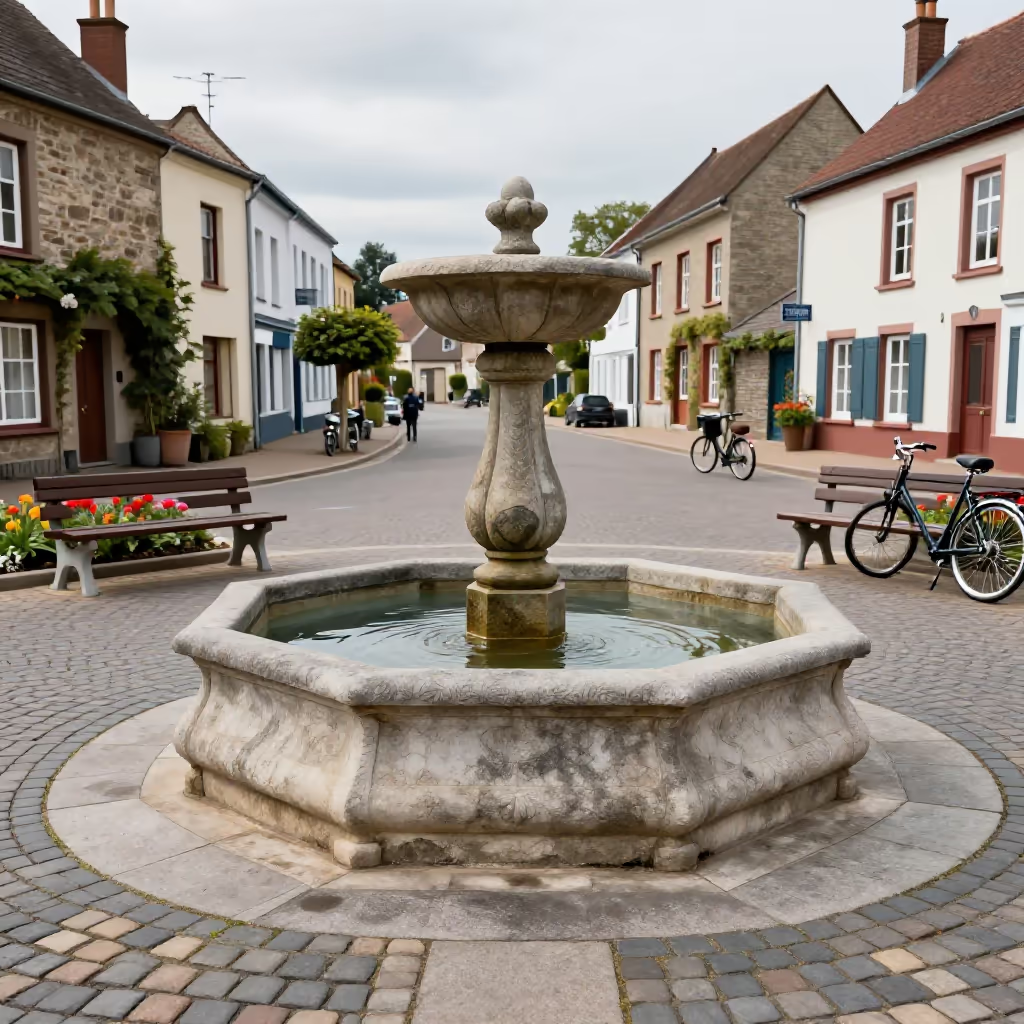
In der Mitte des Platzes steht ein Brunnen und drumherum sind viele Cafés.
There is a fountain in the middle of the square, and around it there are many cafés.
In the fixed expression 'drumherum reden' (to talk around it), the word means to avoid a topic or not get straight to the point. The verb 'reden' (to talk) is conjugated, while 'drumherum' stands at the end of the clause.
Er hat lange drumherum geredet, bevor er den Fehler zugegeben hat.
He talked around it for a long time before admitting the mistake.
In its spatial meaning, 'drumherum' (around it) refers to a previously mentioned place or object and describes its immediate surroundings. It usually comes after the noun it refers to.
Wir haben ein Haus mit einem großen Garten drumherum gekauft.
We bought a house with a large garden around it.
around / about
Both words can refer to the spatial surroundings of an object. „Herum“ is usually used in the construction „um etwas herum“, while „drumherum“ directly describes the immediate surroundings of an object that has already been mentioned. Use „herum“ with „um“ and the point of reference, and „drumherum“ for the surroundings themselves.

Die drumherum stehenden Bäume verdecken das Haus.
The trees standing all around the house obscure it.
Um das Haus herum wachsen viele alte Bäume.
Many old trees grow around the house.