

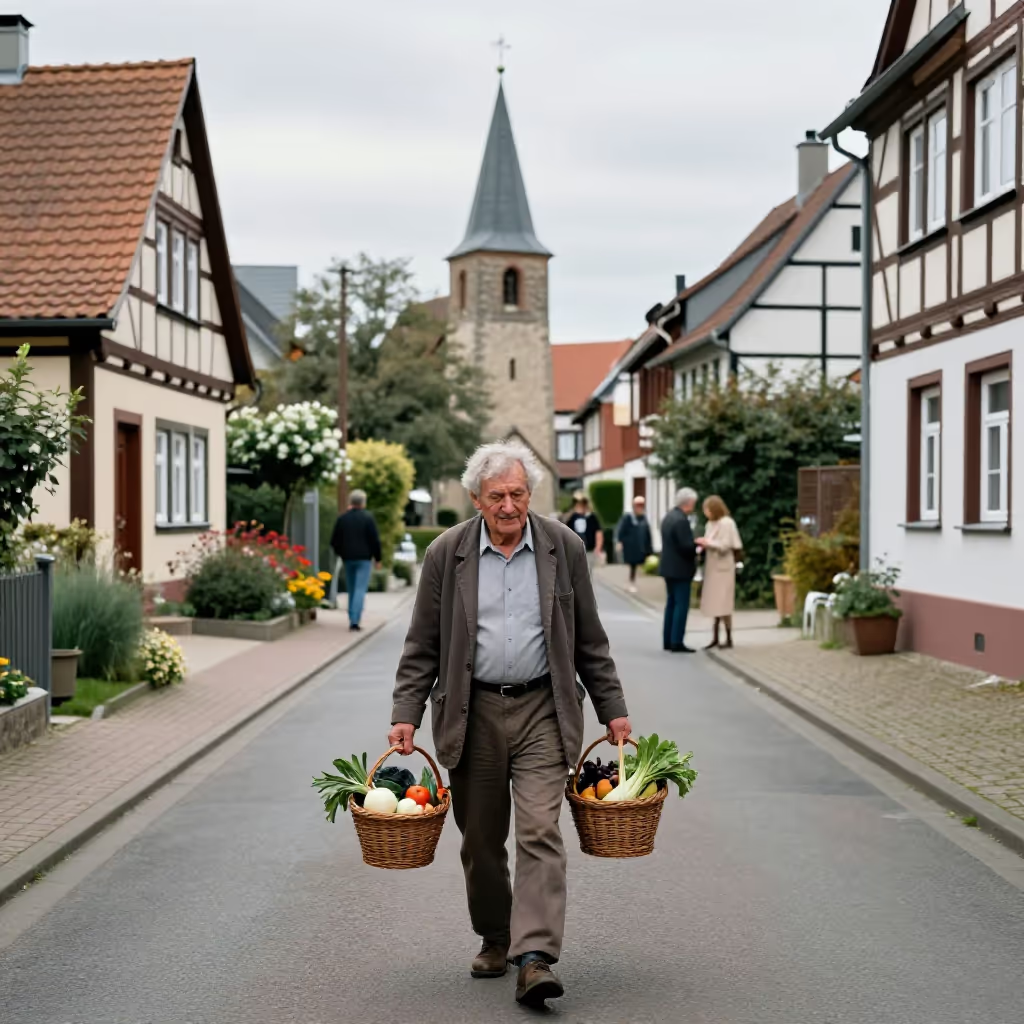
der Dorfbewohner
village resident
A person who lives in a village.
EXAMPLE
Die Dorfbewohner kennen sich meist alle persönlich.
The village residents usually all know each other personally.
village resident
Loading your saved state.
village resident
A person who lives in a village.
Die Dorfbewohner kennen sich meist alle persönlich.
The village residents usually all know each other personally.
The word is made up of three parts: 'Dorf' (village), the linking -s, and 'Bewohner' (inhabitant). A Dorfbewohner is therefore literally an inhabitant of a village.
Alle Dorfbewohner wurden zu dem Fest eingeladen.
All the village residents were invited to the festival.
The component '-bewohner' comes from the verb 'wohnen' (to live). You can use this pattern for many other places, for example 'Stadtbewohner' (city resident), 'Inselbewohner' (island resident), or 'Höhlenbewohner' (cave dweller).
Die Stadtbewohner beschwerten sich über den Lärm.
The city residents complained about the noise.
'Dorfbewohner' (village resident) is often combined with adjectives such as 'alteingesessen' (long-established) or 'neu' (new), or used in contexts that describe community.
Als neuer Dorfbewohner wurde er von allen freundlich begrüßt.
As a new village resident, he was greeted warmly by everyone.
resident
Bewohner and Dorfbewohner both refer to a person who lives in a place. Bewohner leaves the exact place of residence to be inferred from the context and is therefore more general; Dorfbewohner explicitly identifies a village as the place of residence. Dorfbewohner is appropriate when the information about the village is important; otherwise, Bewohner is often sufficient.
Die Dorfbewohner versammelten sich am Abend auf dem Dorfplatz.
The villagers gathered in the village square that evening.
Die Bewohner versammelten sich am Abend auf dem Dorfplatz.
The residents gathered in the village square that evening.