

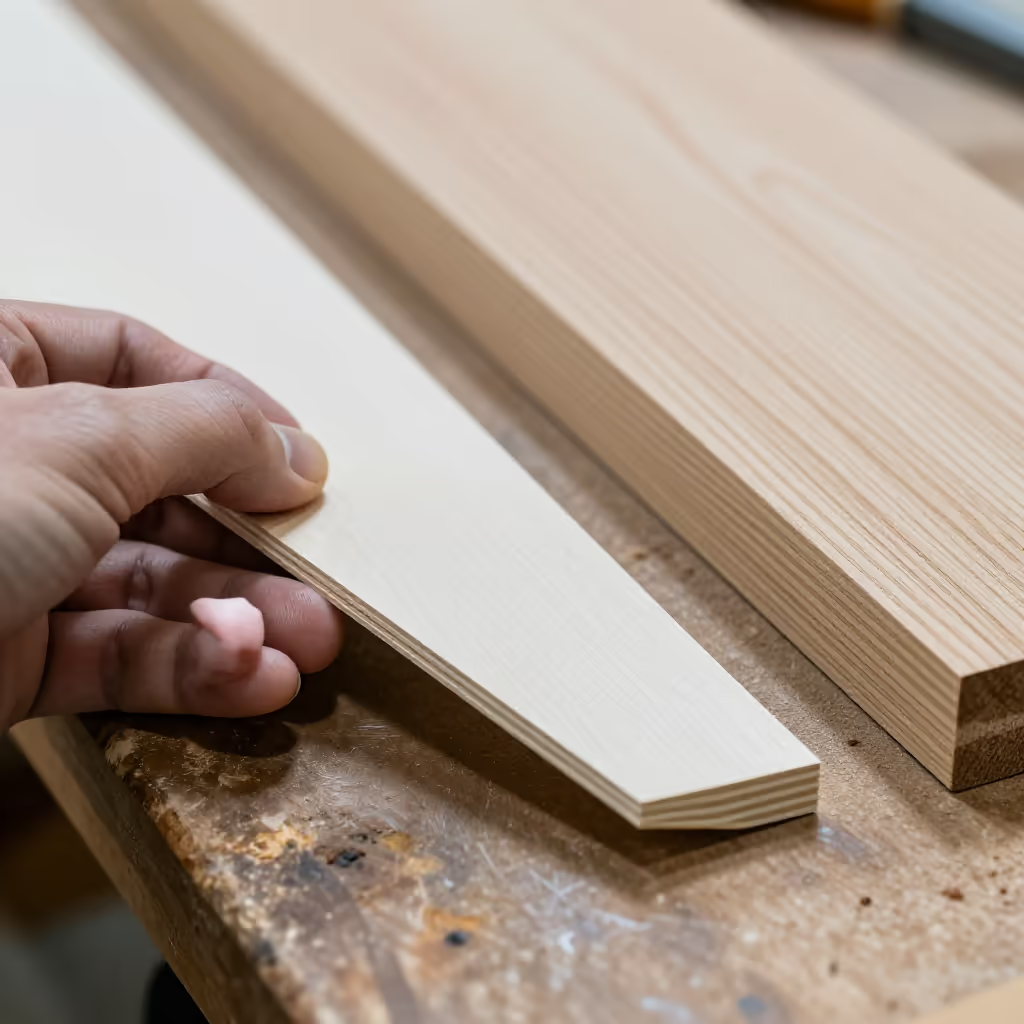
dünn
thin
Having little thickness or width; the opposite of thick.
EXAMPLE
Bitte schneide die Wurst in ganz dünne Scheiben.
Please cut the sausage into very thin slices.
thin
Loading your saved state.
thin
Having little thickness or width; the opposite of thick.
Bitte schneide die Wurst in ganz dünne Scheiben.
Please cut the sausage into very thin slices.
thin
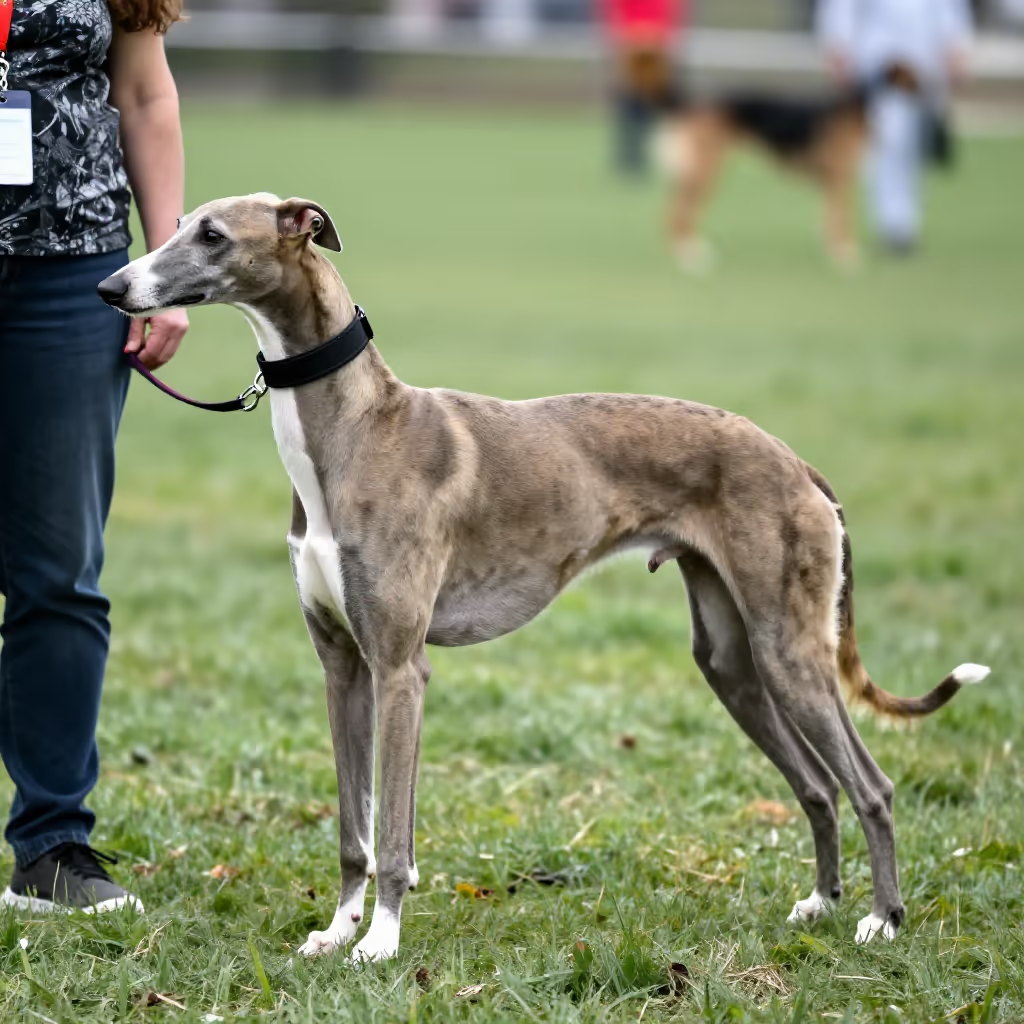
Referring to a person or animal: slim, skinny, and with little body fat.
Nach seiner Krankheit war er sehr dünn geworden.
After his illness, he had become very thin.
weak / watery
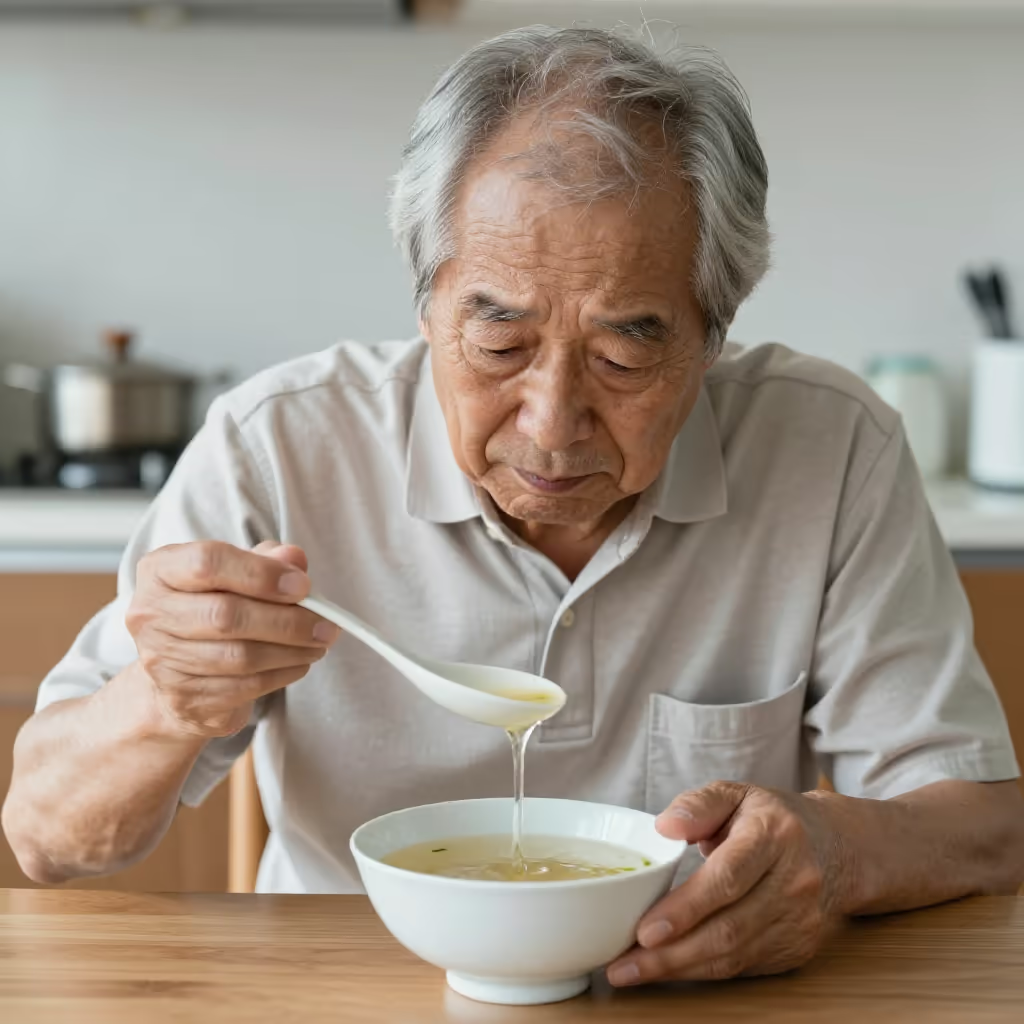
Referring to liquids such as soup or coffee: watery and not very concentrated or strong in taste.
Der Kaffee heute Morgen ist aber ziemlich dünn.
The coffee this morning is pretty weak.

weak
In a figurative sense, referring to an excuse, argument, or reason: weak, unconvincing, and easy to refute.
Seine Erklärung für die Verspätung war ziemlich dünn.
His explanation for being late was pretty weak.

thin
Referring to air or atmosphere: having low density, as for example at high altitude in the mountains.
In 3000 Metern Höhe wird die Luft merklich dünner.
At an altitude of 3,000 meters, the air becomes noticeably thinner.

thin
Referring to a voice or sound: high, quiet, and lacking volume.
Sie antwortete mit einer dünnen, zittrigen Stimme.
She answered in a thin, trembling voice.
To express that something is extremely thin, the word 'hauchdünn' (paper-thin / wafer-thin) is often used. It is made up of 'Hauch' (breath) and 'dünn' (thin) and literally means 'as thin as a breath.'
Der Schinken war hauchdünn geschnitten.
The ham was sliced wafer-thin.
In its basic meaning, 'dünn' (thin) describes objects with little thickness. Typical examples are 'eine dünne Scheibe' Brot (a thin slice of bread), 'ein dünnes Buch' (a thin book), or 'eine dünne Jacke' (a thin jacket).
Für den Winter ist diese Jacke viel zu dünn.
This jacket is far too thin for winter.
When 'dünn' (thin) describes a person, it means slim or skinny. Depending on the context, it can be neutral or can also suggest that someone is underweight.
Er isst sehr viel, bleibt aber immer dünn.
He eats a lot but always stays thin.
In connection with liquids such as coffee, tea, or soup, 'dünn' (weak / watery) means that they are watery and have little flavor.
Die Suppe ist so dünn, sie schmeckt nur nach Wasser.
The soup is so watery, it just tastes like water.
In the figurative sense, 'dünn' (weak) is used for arguments, excuses, or evidence that are not convincing or are easy to refute.
Die Beweislage gegen den Angeklagten war sehr dünn.
The evidence against the defendant was very weak.
The combination 'dünne Luft' (thin air) is a fixed expression. It describes oxygen-poor air at high altitudes, but it can also be used metaphorically for a difficult situation.
Für Bergsteiger wird die Luft über 4000 Metern gefährlich dünn.
For mountaineers, the air above 4,000 meters becomes dangerously thin.
A 'dünne Stimme' (thin voice) is a voice that sounds very quiet, high, and weak, often as a sign of fear or weakness.
Aus Angst konnte sie nur mit dünner Stimme antworten.
Out of fear, she could only answer in a thin voice.
weak
For an unconvincing justification, both schwach and dünn are possible. Schwach generally describes a lack of convincing power, while dünn particularly highlights a flimsy justification that is easy to refute. Use schwach as a neutral assessment and dünn for a clearly inadequate excuse or justification.

Seine Begründung war dünn, denn sie bestand nur aus einer leicht zu widerlegenden Behauptung.
His justification was flimsy because it consisted of only one easily refuted claim.
Seine Begründung war schwach, weil sie die wichtigste Frage nicht beantwortete.
His justification was weak because it did not answer the most important question.