
A formal fight with weapons between two people, carried out according to fixed rules in order to settle an insult to honor or a dispute. This practice was common especially in earlier centuries.
example
Früher wurden Ehrenstreitigkeiten oft durch ein Duell mit Pistolen entschieden.
In the past, disputes of honor were often settled through a duel with pistols.
Usage tips
Important prepositions
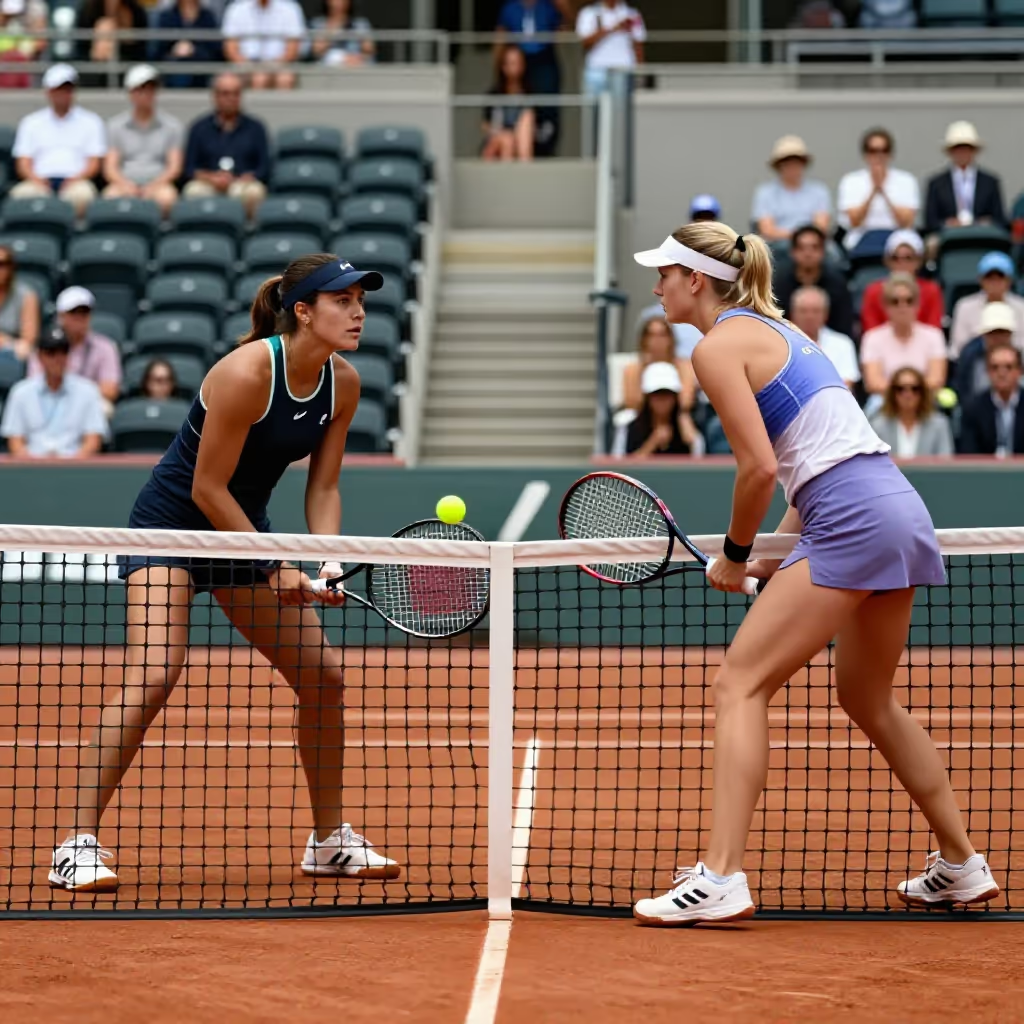
The word 'Duell' (duel) is often used with fixed prepositions. People speak of a 'Duell zwischen' (duel between) two parties, a 'Duell mit' (duel with) an opponent, or a 'Duell um' (duel for) victory.
EXAMPLE
Es war ein spannendes Duell zwischen den beiden besten Spielern der Liga.
It was an exciting duel between the two best players in the league.
Modern usage
In the modern, figurative meaning, 'Duell' (duel) is often combined with adjectives such as 'politisch' (political), 'verbal' (verbal), or 'sportlich' (sporting). The phrase 'sich ein Duell liefern' (to engage in a duel) is also very common.
EXAMPLE
Die beiden Kandidaten lieferten sich im Fernsehen ein scharfes verbales Duell.
The two candidates engaged in a sharp verbal duel on television.
Historical context
The original meaning of a fight with weapons can usually be recognized from the context. Words like 'Pistolen' (pistols), 'Säbel' (sabers), 'Ehre' (honor), or references to earlier centuries point to this meaning.
EXAMPLE
Im 19. Jahrhundert war es für Offiziere üblich, ihre Ehre in einem Duell zu verteidigen.
In the 19th century, it was common for officers to defend their honor in a duel.
Compare with
near_synonym · confusable
Duell vs Kampf
fight / struggle
'der Kampf' and 'das Duell' can both mean a direct confrontation. But 'der Kampf' is much more general: it can be physical, happen in a war, or also be a contest for a goal. 'das Duell' more specifically means a confrontation between exactly two sides. In the past, it often meant a formal fight with weapons. Today, 'Duell' is often used figuratively, for example in sports or politics, when two people or teams compete directly against each other. Learners may confuse the words because both express conflict or competition. A simple rule is: when there are two direct opponents, 'Duell' often fits; for a more general or tougher confrontation, 'Kampf' is usually better.
Duell
Morgen zeigt das Fernsehen das Duell der beiden besten Tennisspieler.
Tomorrow, television will show the duel between the two best tennis players.
Kampf
Nach mehreren Stunden endete der Kampf zwischen den beiden Gruppen.
After several hours, the fight between the two groups ended.