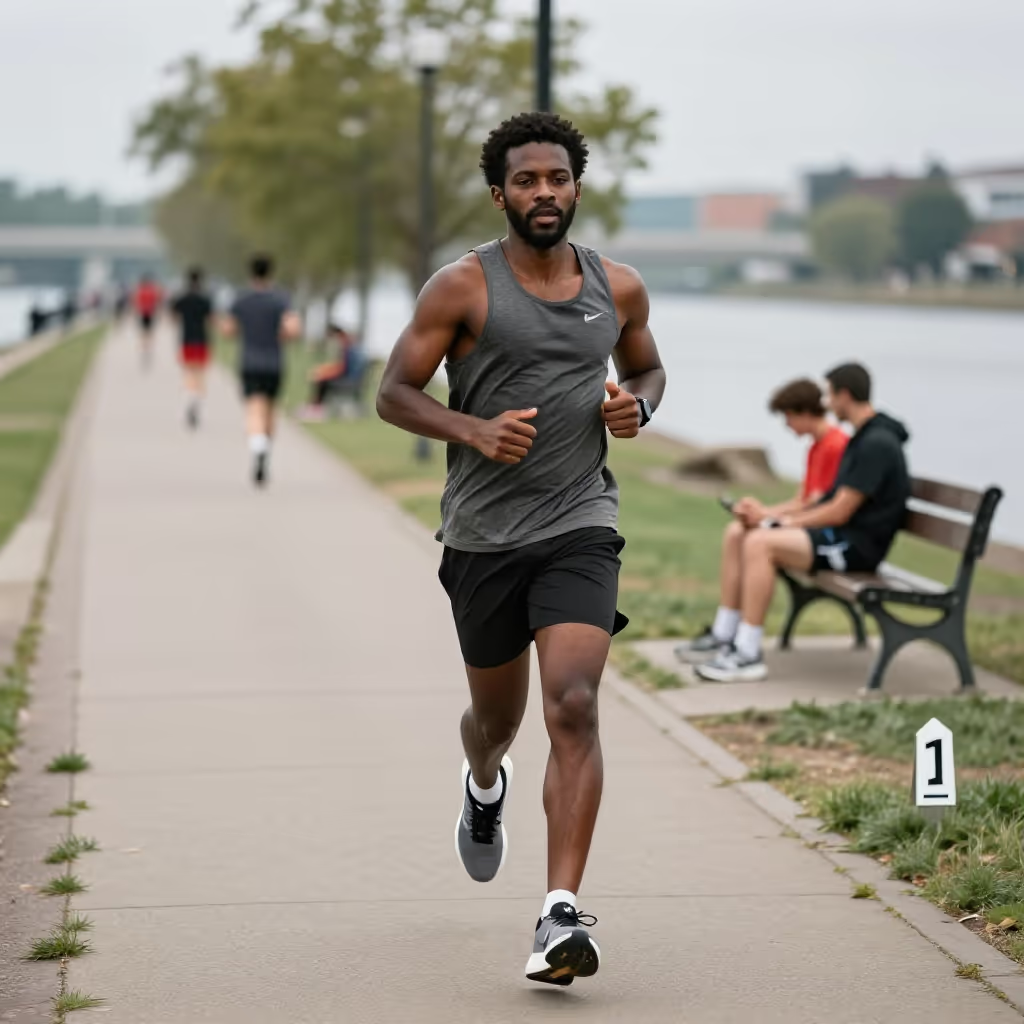
To complete or experience a process, development, or phase from beginning to end. This is an inseparable verb.
example
Jeder Bewerber muss ein mehrstufiges Auswahlverfahren durchlaufen.
Every applicant must go through a multi-stage selection process.
Usage tips
Separable vs. inseparable
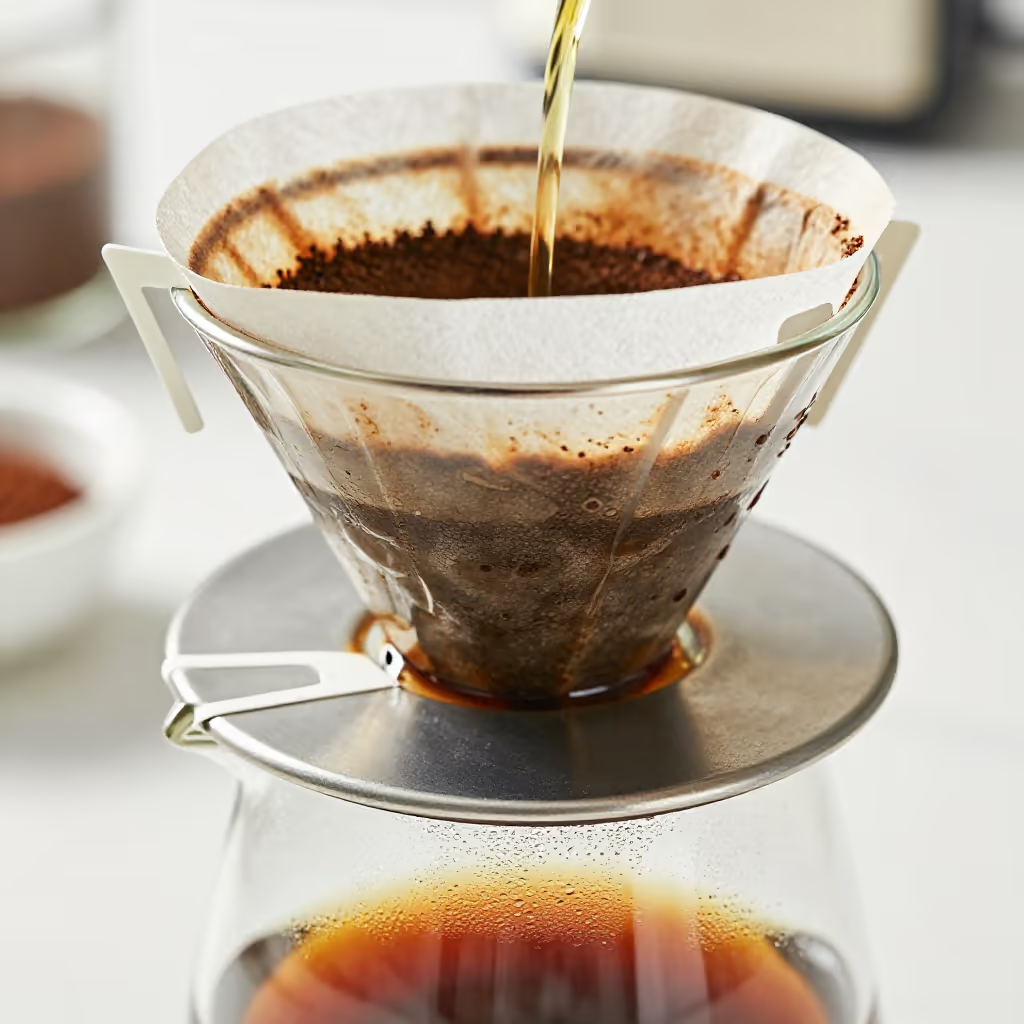
'Durchlaufen' (to go/run through) can be separable or inseparable. Inseparable (durchlaufen) is used with abstract, figurative meanings such as 'to experience a process'. Separable (durchlaufen) is used with concrete, literal meanings such as 'to filter coffee' or 'to run a route'.
EXAMPLE
Der Praktikant durchläuft verschiedene Abteilungen. (untrennbar)
The intern goes through different departments. (inseparable)
Stress as a clue
The stress shows whether the verb is separable. If the prefix is stressed (dúrch-laufen), it is separable. If the verb stem is stressed (durch-láufen), it is inseparable.
EXAMPLE
Er ist die ganze Nacht durchgelaufen. (Betonung auf „durch“)
He ran through the whole night. (stress on 'durch')
Typical collocations
The inseparable form is often combined with abstract processes. Typical objects are: training, a course of study, a process, a development, or a procedure.
EXAMPLE
Alle neuen Mitarbeiter durchlaufen ein intensives Training.
All new employees go through intensive training.
Perfect with 'sein'
When 'durchlaufen' (to run through) describes movement or a change of state (e.g., liquid that filters through), the perfect tense is formed with 'sein' (to be).
EXAMPLE
Warte, das Wasser ist noch nicht ganz durchgelaufen.
Wait, the water hasn't fully run through yet.
Dative construction
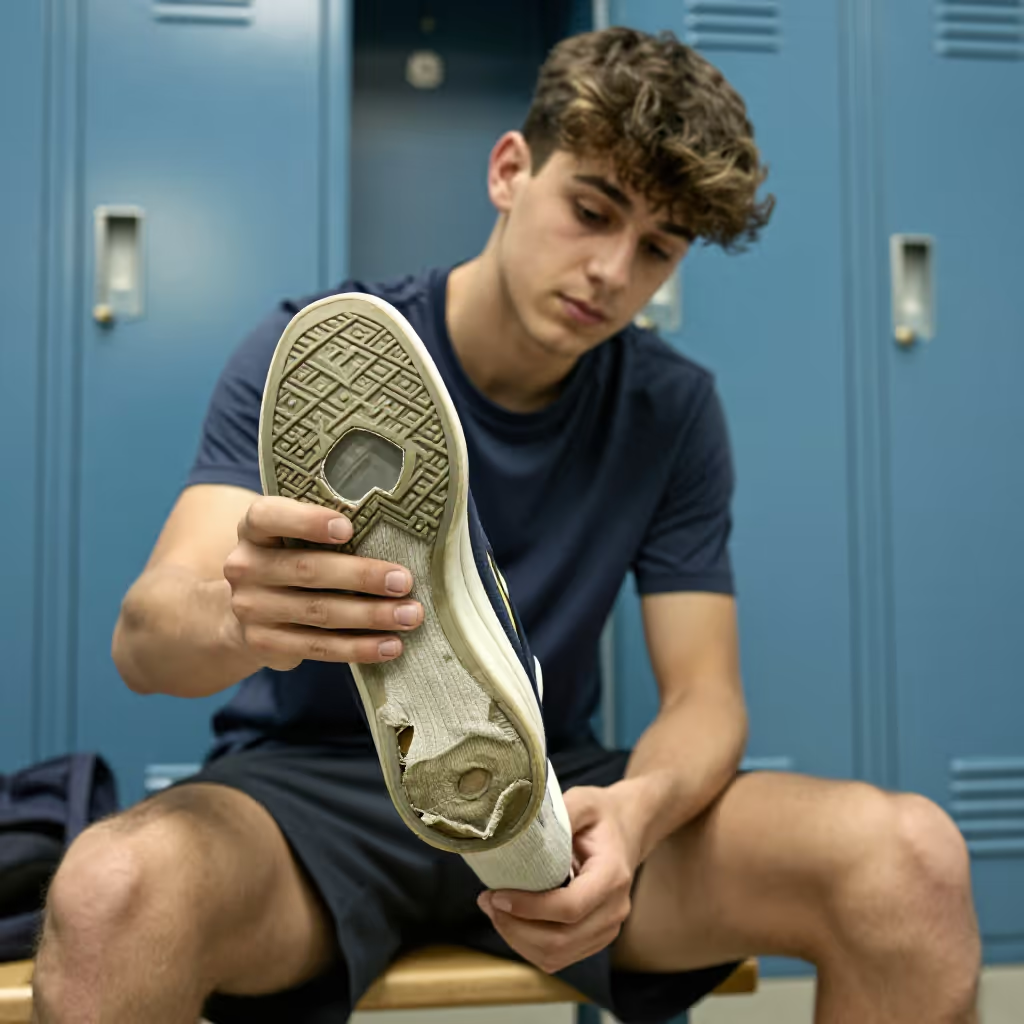
In the meaning 'to wear out', a dative construction is used: 'sich (Dative) etwas (Accusative) durchlaufen' (to wear something through). The person it happens to is in the dative.
EXAMPLE
Ich habe mir bei der Wanderung meine neuen Socken durchgelaufen.
I wore through my new socks during the hike.
Compare with
near_synonym · confusable
durchlaufen vs erleben
to experience
'erleben' and 'durchlaufen' can both mean that someone goes through a situation or development. 'erleben' is more general and more personal: you experience an event, a beautiful moment, or even a difficult time. 'durchlaufen' is more suitable when referring to a whole process with several steps or phases, for example training, a procedure, or a development. Learners may confuse the words because both have to do with experiences. As a guide: you 'erlebt' individual events and feelings; you 'durchläuft' a longer process.
durchlaufen
Vor dem neuen Job durchläuft Mehmet noch eine kurze Schulung.
Before starting the new job, Mehmet goes through a short training course.
erleben
Bei der Reise hat Lena viele schöne Momente erlebt.
During the trip, Lena experienced many beautiful moments.