


durchmachen
to go through
To experience and get through a difficult, exhausting, or unpleasant phase or situation.
EXAMPLE
Nach ihrer Krankheit hat sie eine schwere Zeit durchgemacht.
After her illness, she went through a difficult time.
to go through / stay up
Loading your saved state.
to go through
To experience and get through a difficult, exhausting, or unpleasant phase or situation.
Nach ihrer Krankheit hat sie eine schwere Zeit durchgemacht.
After her illness, she went through a difficult time.

to stay up
To stay awake all night and not go to sleep.
Wir haben die ganze Nacht durchgemacht, um für die Prüfung zu lernen.
We stayed up all night to study for the exam.
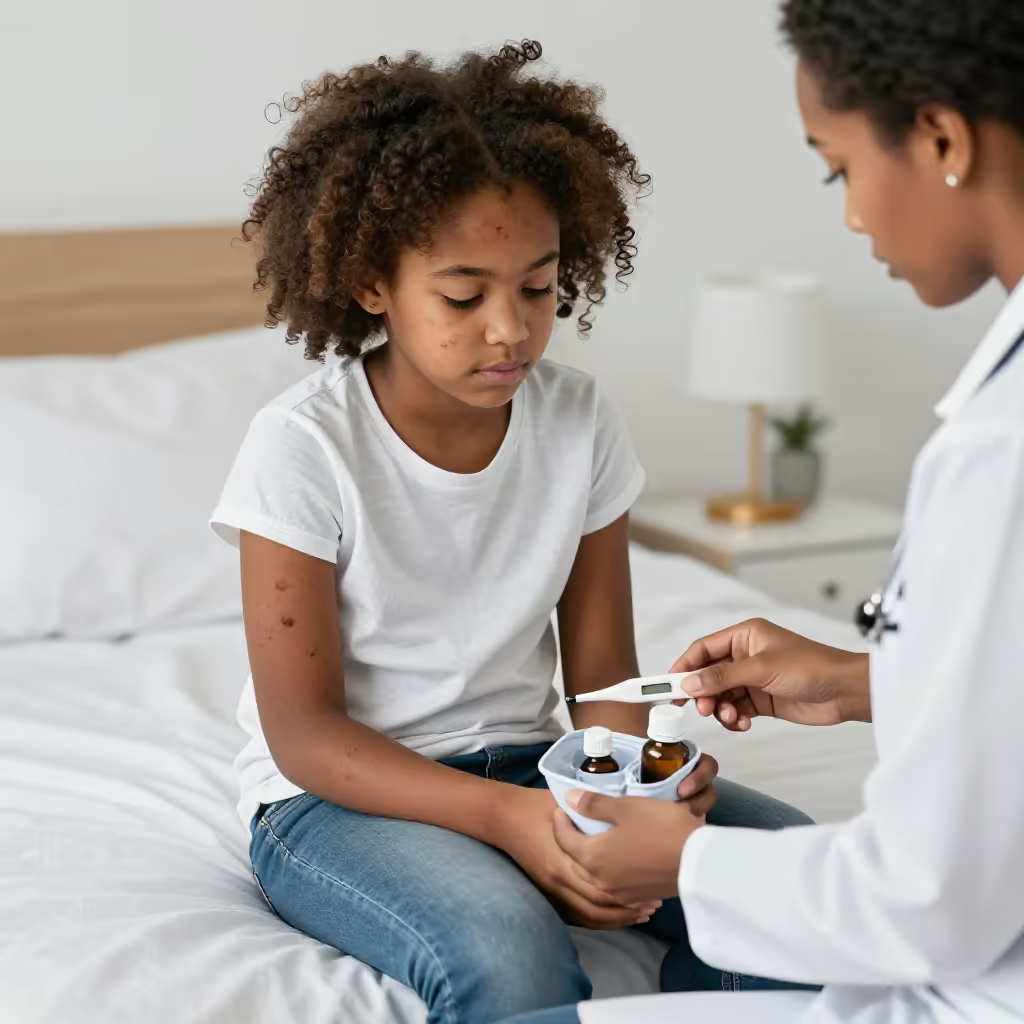
to go through
To experience an illness from beginning to end, usually a typical childhood illness.
Fast jedes Kind in der Gruppe hat schon die Windpocken durchgemacht.
Almost every child in the group has already gone through chickenpox.
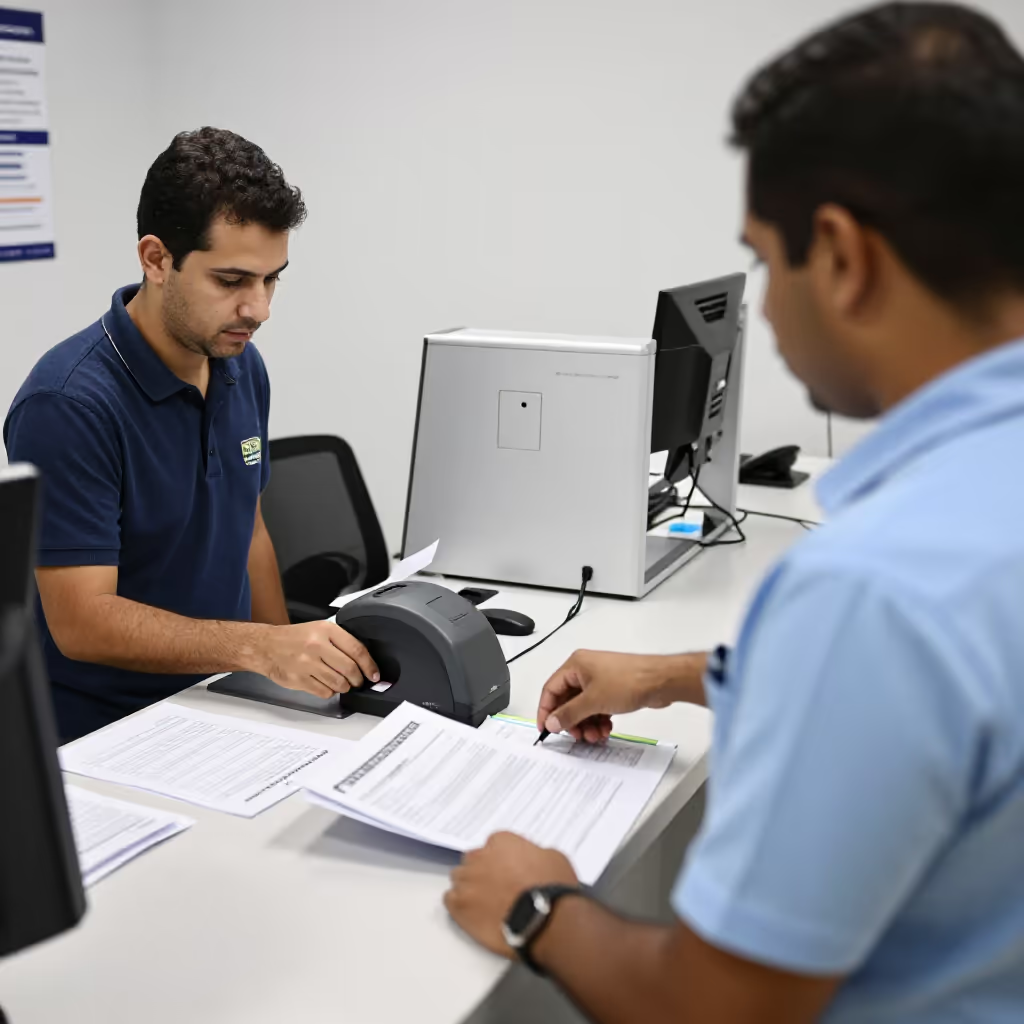
to undergo
To go through a formal process or development.
Der Gesetzesentwurf hat mehrere Änderungen durchgemacht, bevor er verabschiedet wurde.
The draft law underwent several changes before it was passed.
'Durchmachen' (to go through/stay up) is a separable verb. The prefix 'durch-' comes at the end in a main clause. In subordinate clauses and in the infinitive with 'zu', the verb stays together.
Er macht gerade eine schwere Phase durch.
He is going through a difficult phase right now.
The prefix 'durch-' emphasizes that you experience a process or period of time from beginning to end. This applies to all meanings: a difficult time, an entire night, or an illness.
Wir haben die Nacht durchgemacht und den Sonnenaufgang gesehen.
We stayed up through the night and saw the sunrise.
In this meaning, 'durchmachen' (to go through) is often combined with negative or difficult phases of life. Typical objects are 'eine schwere Zeit' (a difficult time), 'eine Krise' (a crisis), or 'eine Trennung' (a breakup/separation).
Meine Freundin hat letztes Jahr eine schlimme Trennung durchgemacht.
My friend went through a terrible breakup last year.
You can often recognize this meaning by the fact that a time expression like 'die Nacht' (the night) is used as the object. Sometimes the verb also appears without an object if it is clear from context that it is about staying awake.
Vor der wichtigen Präsentation habe ich die ganze Nacht durchgemacht.
Before the important presentation, I stayed up all night.
This meaning is used almost exclusively for typical childhood illnesses that one has once in life. Common examples are 'die Windpocken' (chickenpox), 'die Masern' (measles), or 'Mumps' (mumps).
Als Kind habe ich die Masern durchgemacht und war zwei Wochen im Bett.
As a child, I went through measles and was in bed for two weeks.
to learn / experience
Erfahren and durchmachen can both describe personally experiencing a crisis. Erfahren focuses generally on the experience and the feelings or states connected with it. Durchmachen places greater emphasis on the difficult course of events that the person experiences and gets through.

Sie machte die schwere Krise über viele Monate hinweg durch.
She went through the severe crisis over many months.
Während der schweren Krise erfuhr sie große Unsicherheit und Angst.
During the severe crisis, she experienced great uncertainty and fear.