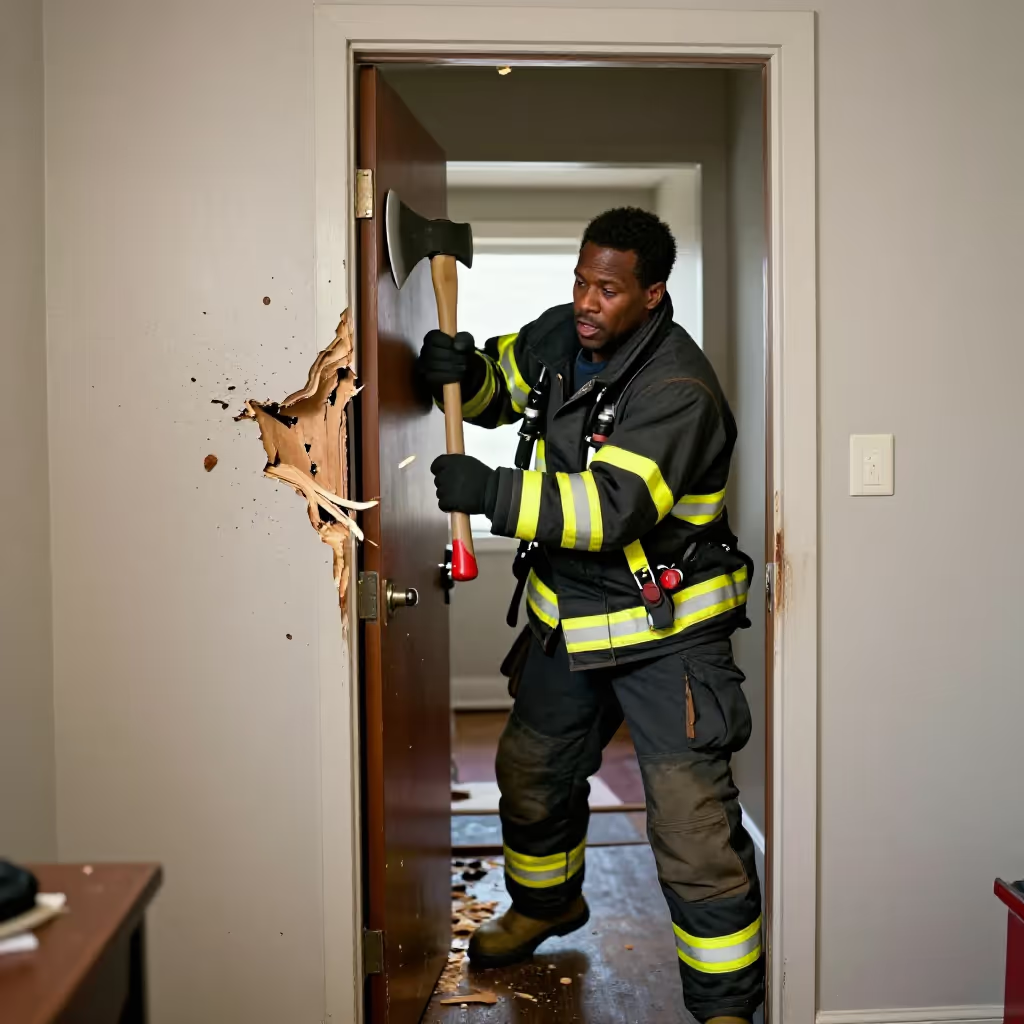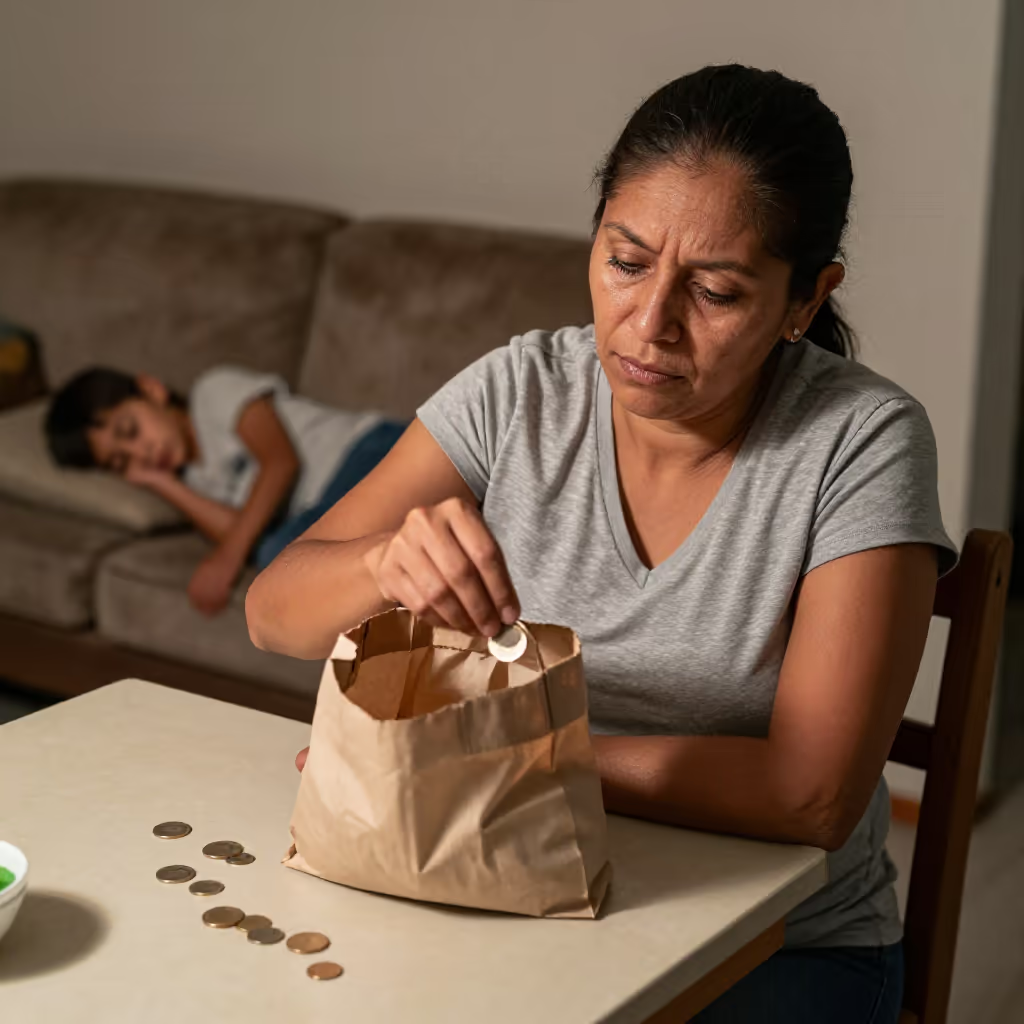
To struggle through life or a difficult situation with great effort; to just about manage.
example
Nachdem er seinen Job verloren hatte, musste er sich mit Gelegenheitsarbeiten durchschlagen.
After he lost his job, he had to get by with odd jobs.

Usage tips
Separable verb
'Durchschlagen' is a separable verb in these meanings. The prefix 'durch' goes at the end in a main clause, the verb stays together in a subordinate clause, and in the infinitive with 'zu', 'zu' goes in the middle.
EXAMPLE
Er schlug sich mit kleinen Jobs durch.
He got by with small jobs.
Reflexive use
In the meanings 'gerade so zurechtkommen' (to just about manage) and 'sich einen Weg kämpfen' (to fight one's way through), the verb is reflexive. You must always use 'sich durchschlagen'.
EXAMPLE
Als Studentin musste sie sich mit sehr wenig Geld durchschlagen.
As a student, she had to get by on very little money.
Word structure
The verb consists of 'durch' (through) and 'schlagen' (to hit/strike). The basic idea is to 'strike' a path through an obstacle. This image is used both literally (smashing through a board) and figuratively (struggling through life).
EXAMPLE
Er hat sich erfolgreich durch die Bürokratie durchgeschlagen.
He successfully fought his way through the bureaucracy.
Typical collocations
When it is about survival, 'sich durchschlagen' (to get by) is often combined with prepositions such as 'mit' or adverbs such as 'allein' or 'irgendwie': 'sich mit Gelegenheitsjobs durchschlagen' (to get by with odd jobs), 'sich allein durchschlagen' (to get by on one's own), 'sich irgendwie durchschlagen' (to get by somehow).
EXAMPLE
Nach dem Umzug in die neue Stadt musste er sich die erste Zeit allein durchschlagen.
After moving to the new city, he had to get by on his own at first.
Context clue
This meaning always refers to materials. The subject is usually a liquid or color such as 'Tinte' (ink), 'Farbe' (paint/color), or 'Wasser' (water), which penetrates through paper, fabric, or a wall.
EXAMPLE
Die Feuchtigkeit im Keller schlägt bereits durch die Wand durch.
The moisture in the basement is already bleeding through the wall.
Use in the negative
In the figurative meaning 'Wirkung zeigen' (to have an effect), the verb is very often used in a negative sense to express that an idea, a reform, or a product was not successful.
EXAMPLE
Die Kampagne ist bei den Wählern nicht wirklich durchgeschlagen.
The campaign did not really catch on with voters.
Compare with
near_synonym · confusable
durchschlagen vs durchbrechen
to break through / break in two
'durchbrechen' and 'durchschlagen' can both mean that something goes through an obstacle with force. 'durchbrechen' is often used when a barrier, a line, or even a pattern is overcome. 'durchschlagen' sounds more like hitting or penetrating through a material; it can also mean that an effect becomes visible or takes hold. In dangerous situations, 'sich durchschlagen' can mean fighting one's way through with difficulty. The words can be confused when talking about obstacles. 'durchbrechen' tends to emphasize overcoming the boundary, while 'durchschlagen' emphasizes the path through something or the visible effect.
durchschlagen
Nach dem Regen schlug die Feuchtigkeit durch die dünne Wand durch.
After the rain, the moisture seeped through the thin wall.
durchbrechen
Mit der neuen Idee wollte das Team die alten Arbeitsmuster durchbrechen.
With the new idea, the team wanted to break the old work patterns.