


durchkommen
to get through
To make one's way through an obstacle, a crowd, or a narrow space.
EXAMPLE
Bei dem Konzert war es so voll, dass wir kaum durchkamen.
It was so crowded at the concert that we could hardly get through.
to get through
Loading your saved state.
to get through
To make one's way through an obstacle, a crowd, or a narrow space.
Bei dem Konzert war es so voll, dass wir kaum durchkamen.
It was so crowded at the concert that we could hardly get through.

to pass
To successfully pass an exam, test, or difficult task.
Ich hoffe, ich komme bei der Fahrprüfung durch.
I hope I pass my driving test.
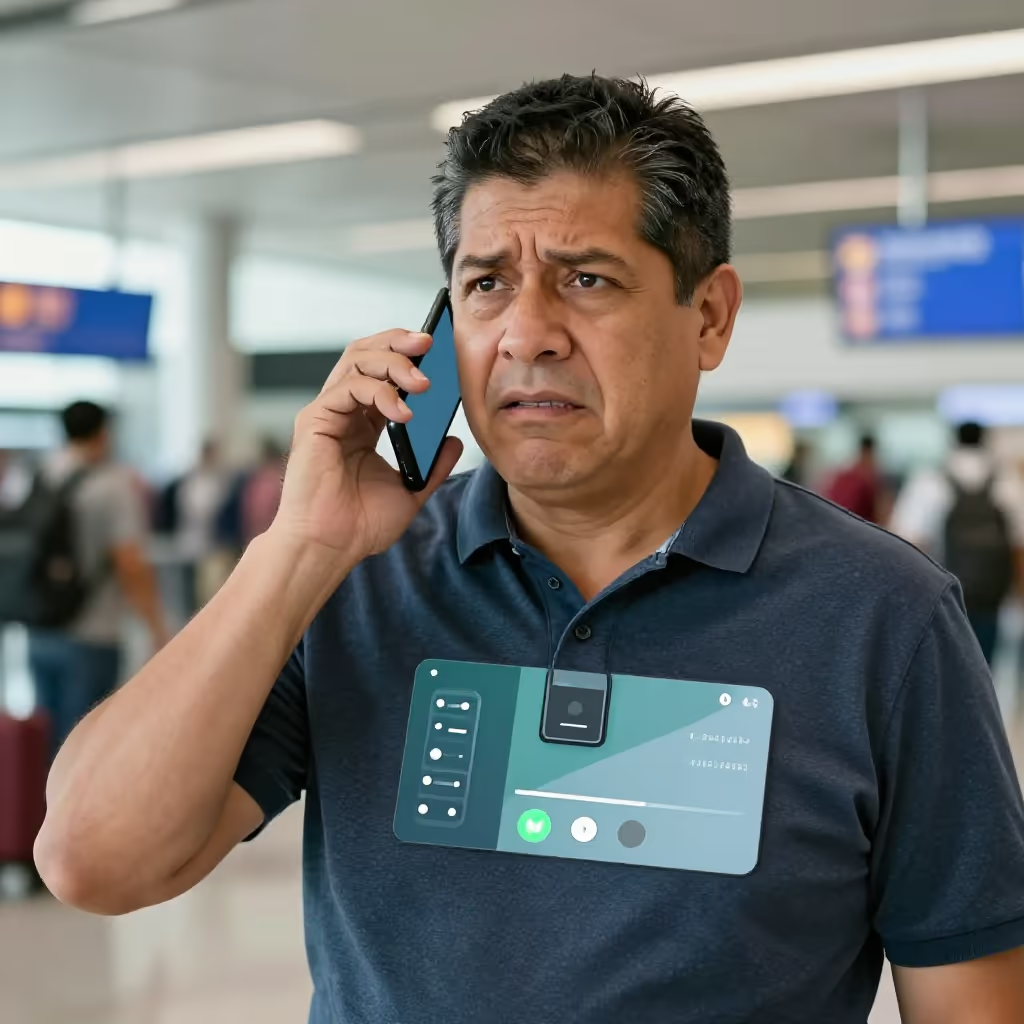
to get through
To successfully establish a telephone connection with someone, after the line may have been busy.
Ich habe es eine Stunde lang versucht, aber bei der Hotline bin ich einfach nicht durchgekommen.
I tried for an hour, but I simply couldn't get through to the hotline.

to pull through
To survive a serious illness or injury.
Die Ärzte waren nicht sicher, ob er durchkommen würde, aber er hat es geschafft.
The doctors weren't sure whether he would pull through, but he made it.

to come through
The successful arrival of a message or information at the recipient.
Ist meine E-Mail bei dir durchgekommen?
Did my email come through to you?
'Durchkommen' (to get through) is a separable verb. The prefix 'durch' comes at the end in a main clause, while in a subordinate clause it remains attached to the verb.
Wegen des Staus kam ich heute Morgen kaum durch.
Because of the traffic jam, I could hardly get through this morning.
The perfect tense of 'durchkommen' (to get through) is always formed with 'sein' (to be), because it describes movement or a change of state. So it is 'ich bin durchgekommen' (I got through / I have got through).
Bist du bei der Service-Hotline endlich durchgekommen?
Did you finally get through to the service hotline?
The prefix 'durch' here means successfully overcoming an obstacle. This obstacle can be a crowd, an exam, an illness, or a busy phone line.
Trotz des starken Schneefalls sind alle Züge pünktlich durchgekommen.
Despite the heavy snowfall, all the trains got through on time.
When it is about exams or also phone calls, 'durchkommen' (to pass / to get through) is often used with the preposition 'bei' and the dative to describe the situation.
Sie ist beim ersten Versuch bei der Fahrprüfung durchgekommen.
She passed the driving test on her first attempt.
In connection with a serious illness, an accident, or an operation, 'durchkommen' (to pull through) means that someone survives.
Nach dem schweren Unfall war lange unklar, ob der Patient durchkommen würde.
After the serious accident, it was unclear for a long time whether the patient would pull through.
When it is about a message, the message or the information itself is the subject of the sentence, not the person.
Meine Kündigung per E-Mail ist anscheinend nicht durchgekommen.
My notice of resignation by email apparently didn't come through.
to reach
When talking on the phone, erreichen and durchkommen can both describe successfully making contact. Erreichen focuses on the person you manage to contact; durchkommen emphasizes that the phone connection is established despite possible difficulties.

Nach mehreren Versuchen komme ich endlich bei der Ärztin durch.
After several attempts, I finally get through to the doctor.
Nach mehreren Versuchen erreiche ich endlich die Ärztin.
After several attempts, I finally reach the doctor.