

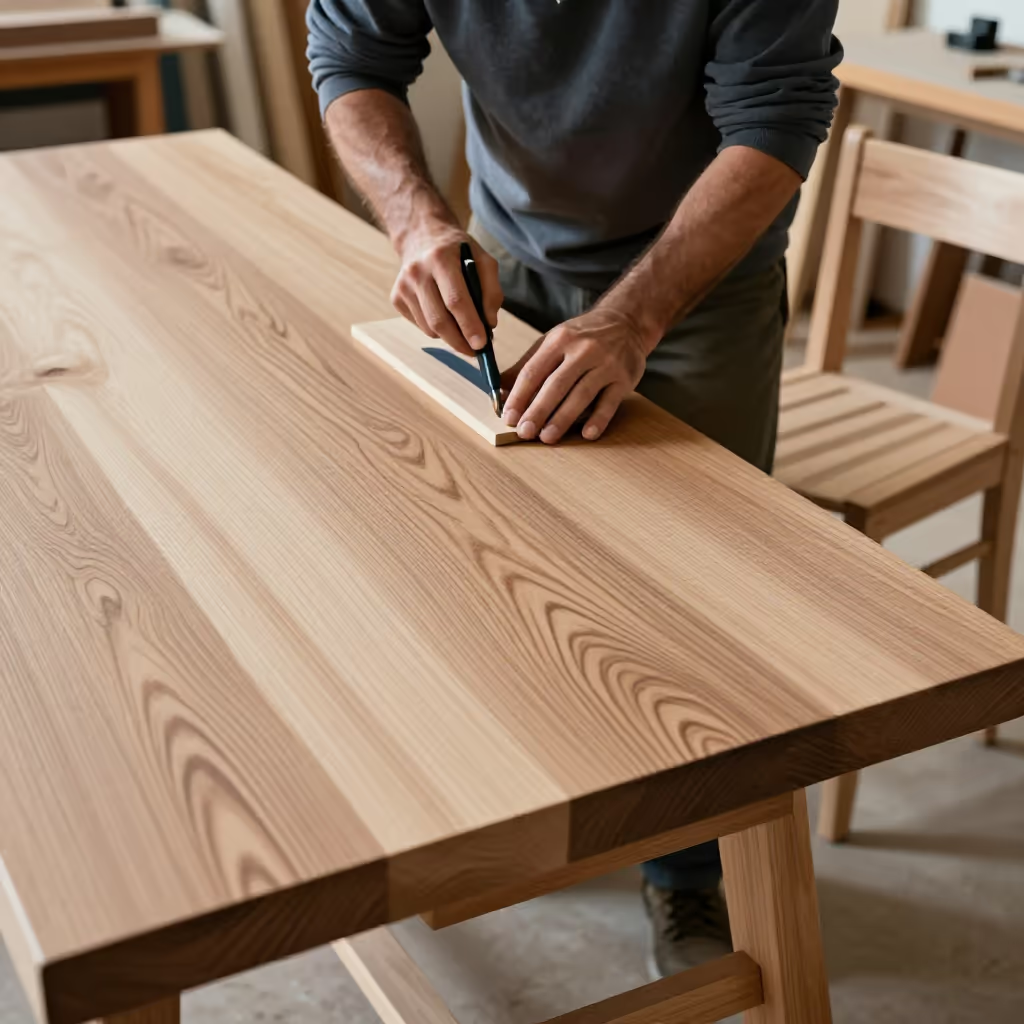
The wood of the oak tree. It is known for its hardness, strength, and durability and is therefore often used for furniture, floors, barrels, and in construction.
example
Der massive Esstisch ist aus hellem Eichenholz gefertigt.
The solid dining table is made of light oak wood.
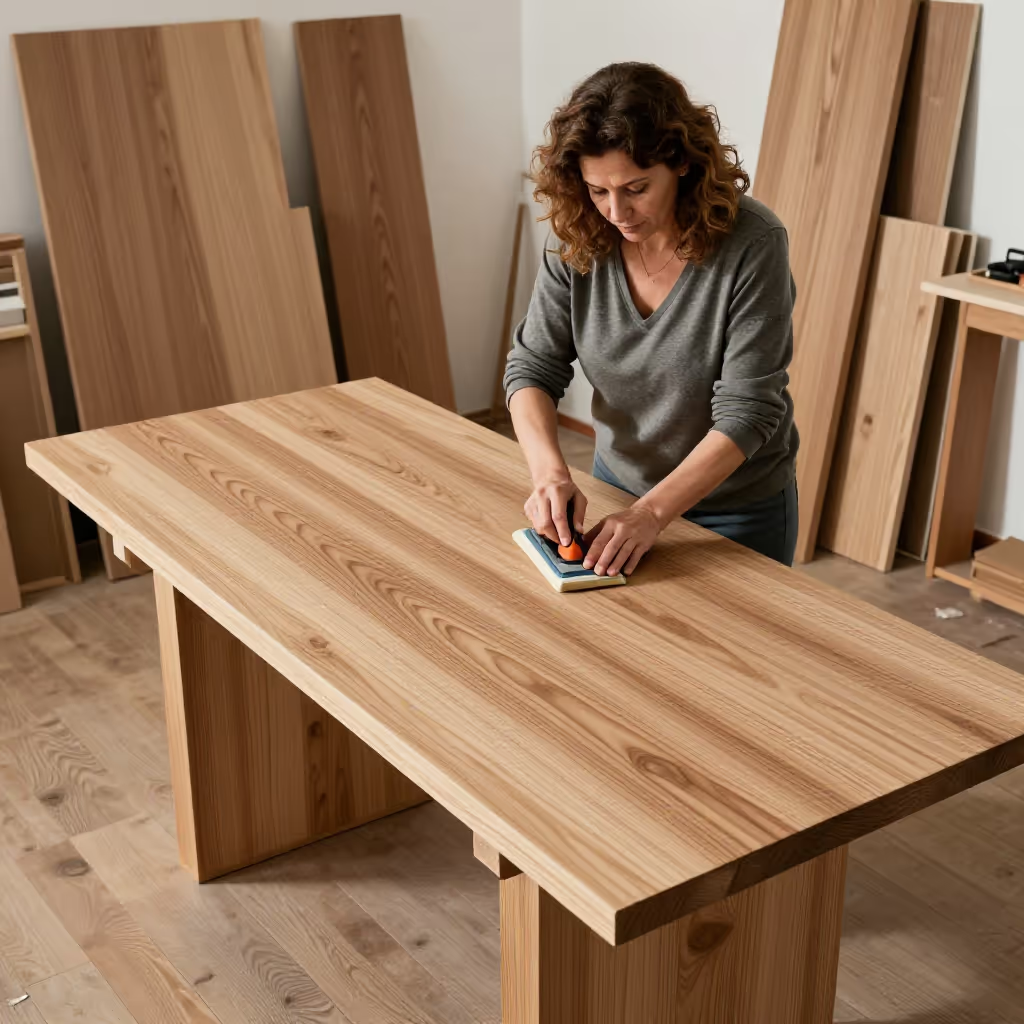
Usage tips
Compound word
'Eichenholz' (oak wood) is a compound noun made from 'die Eiche' (the oak tree) and 'das Holz' (wood). The '-n-' is a linking element that connects the two words. Literally, it means 'wood from the oak tree.'
EXAMPLE
Für den Kamin verwenden wir am liebsten Eichenholz.
For the fireplace, we prefer to use oak wood.
Correct preposition
When you want to describe what something is made of, you use the preposition 'aus' (from/of). So a piece of furniture is 'aus Eichenholz' (made of oak wood).
EXAMPLE
Unser neuer Fußboden ist aus massivem Eichenholz.
Our new floor is made of solid oak wood.
Typical collocations
'Eichenholz' (oak wood) is often described with the adjectives 'massiv' (solid), 'hell' (light), or 'dunkel' (dark). Typical products made from it are 'Möbel' (furniture), 'Fässer' (barrels, e.g. for wine or whisky), and 'Parkett' (parquet flooring).
EXAMPLE
Der Wein reifte mehrere Jahre in Fässern aus Eichenholz.
The wine aged for several years in oak wood barrels.
Compare with
synonym · confusable
Eichenholz vs Eiche
oak
'die Eiche' and 'das Eichenholz' can both mean the wood of the oak tree. In this sense, they are very close: a table made of Eiche is a table made of Eichenholz. The important difference is: 'die Eiche' can also mean the tree itself. 'Eichenholz' only means the material. Learners may confuse the words because people often say simply 'Eiche' when talking about furniture. If you definitely mean the material, 'Eichenholz' is more precise.
Eichenholz
Für den neuen Esstisch wählen wir am Wochenende Eichenholz.
This weekend, we are choosing oak wood for the new dining table.