

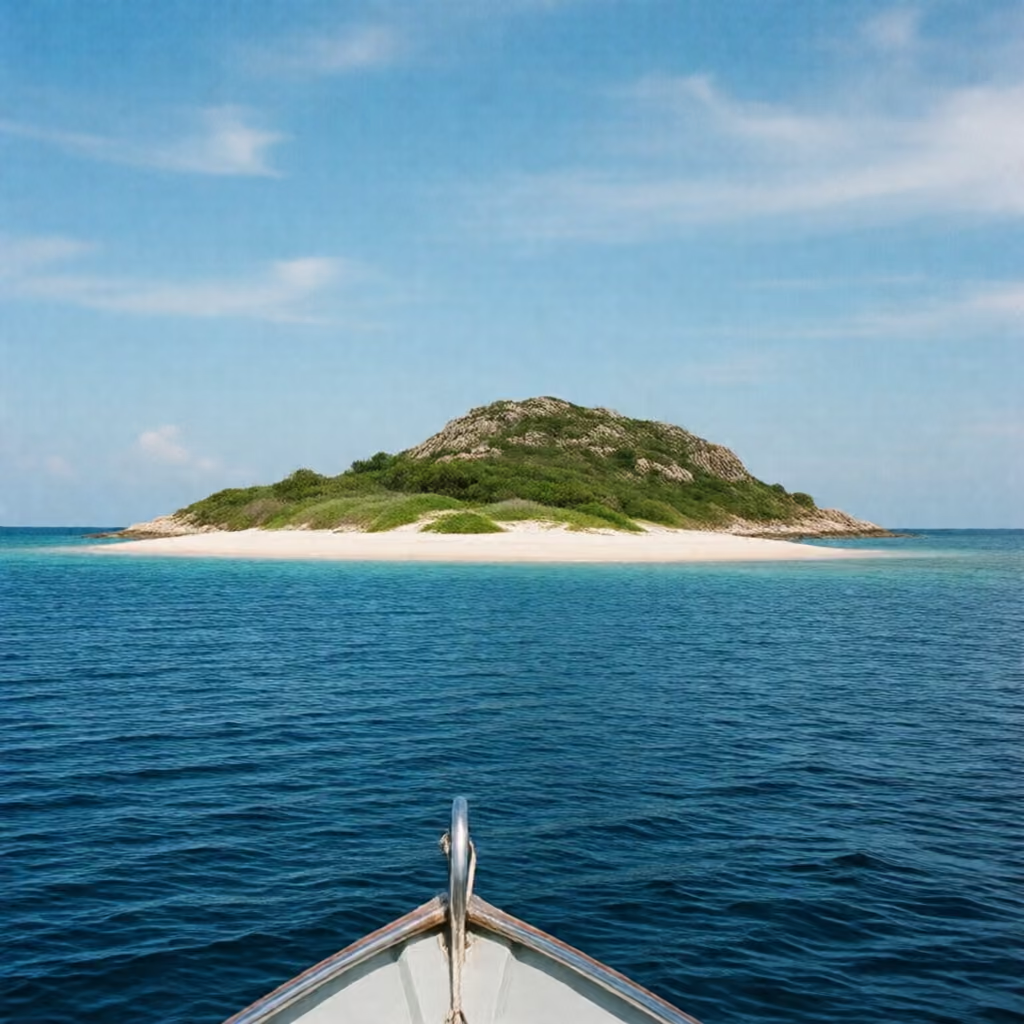
das Eiland
island
An island, especially a small or remote one; the word is often used in elevated or literary language.
EXAMPLE
Nach langer Fahrt erreichten sie ein unbewohntes Eiland.
After a long journey, they reached an uninhabited island.
island
das Eiland, die Eilande
Loading your saved state.
island
An island, especially a small or remote one; the word is often used in elevated or literary language.
Nach langer Fahrt erreichten sie ein unbewohntes Eiland.
After a long journey, they reached an uninhabited island.
| gender | neuter das |
|---|---|
| plural | die Eilande |
| genitive | des Eilandes |
| singular | plural | |
|---|---|---|
| nominative | das Eiland | die Eilande |
| accusative | das Eiland | die Eilande |
| dative | dem Eiland | den Eilanden |
| genitive | des Eilandes des Eilands | der Eilande |
The article changes with the case; it is shown in colour.
Descriptive adjectives that emphasize remoteness or nature are often used with „Eiland“ (island), such as „einsam“ (lonely), „fern“ (distant), „unbewohnt“ (uninhabited), or „tropisch“ (tropical).
Die Reisenden suchten ein fernes Eiland im Pazifik.
The travelers were looking for a distant island in the Pacific.
For staying somewhere, „auf dem Eiland“ (on the island) is usually used; movement there is expressed with „auf ein Eiland“ (to an island) or „auf das Eiland“ (to the island).
Die Forscher lebten mehrere Wochen auf dem Eiland.
The researchers lived on the island for several weeks.
Am Abend setzten sie mit dem Boot auf das Eiland über.
In the evening, they crossed over to the island by boat.
„Eiland“ (island) is especially common in travel writing, descriptions of nature, and narrative texts when an island is presented as a remote or atmospheric place.
Vom Schiff aus wirkte das kleine Eiland wie ein grüner Punkt im weiten Meer.
From the ship, the small island looked like a green dot in the vast sea.