

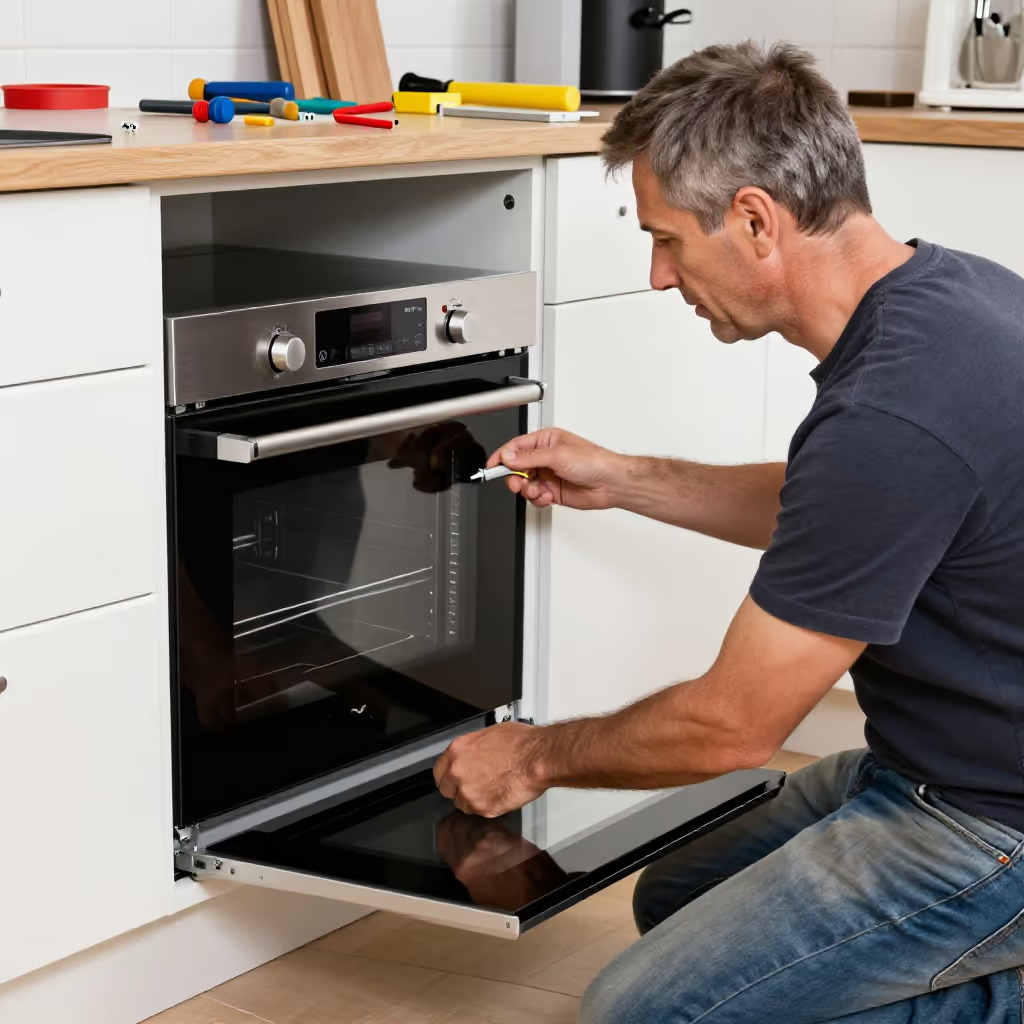
einbauen
to install
To firmly integrate or fit something into a larger whole, such as a device, piece of furniture, or building.
EXAMPLE
Wir lassen eine neue Küche in unsere Wohnung einbauen.
We are having a new kitchen installed in our apartment.
to install / incorporate
Loading your saved state.
to install
To firmly integrate or fit something into a larger whole, such as a device, piece of furniture, or building.
Wir lassen eine neue Küche in unsere Wohnung einbauen.
We are having a new kitchen installed in our apartment.

to incorporate
To integrate or insert something, such as an idea, a scene, or a joke, into a larger context, such as a text, plan, or performance.
Der Autor hat geschickt eine Anspielung auf die aktuelle Politik in seinen Roman eingebaut.
The author skillfully incorporated an allusion to current politics into his novel.
'Einbauen' (to install/incorporate) is a separable verb. The prefix 'ein-' comes at the end in a main clause. In subordinate clauses and in the infinitive with 'zu', the verb stays together.
Der Techniker baut die neue Festplatte ein.
The technician installs the new hard drive.
The verb is made up of the prefix 'ein-' (in/into) and the verb 'bauen' (to build). So the meaning is literally to 'build' something into a larger structure.
Wir wollen ein neues Fenster in die Wand einbauen.
We want to install a new window in the wall.
When indicating the place where something is installed, you use the preposition 'in' followed by the accusative. The structure is: etwas (Akkusativ) in etwas (Akkusativ) einbauen (to install something into something).
Der Handwerker hat einen neuen Schrank in die Küche eingebaut.
The craftsman installed a new cabinet in the kitchen.
You can recognize the figurative meaning from the fact that the object is abstract. When you incorporate a 'Witz' (joke), an 'Idee' (idea), a 'Pause' (break), or a 'Funktion' (function), this meaning is always intended.
Der Redner hat ein paar persönliche Anekdoten in seinen Vortrag eingebaut.
The speaker incorporated a few personal anecdotes into his talk.
to integrate
Integrieren and einbauen can both mean taking something into a larger context. Integrieren emphasizes more strongly that it forms a coherent whole with the other parts. Einbauen focuses more on inserting it at a specific place.
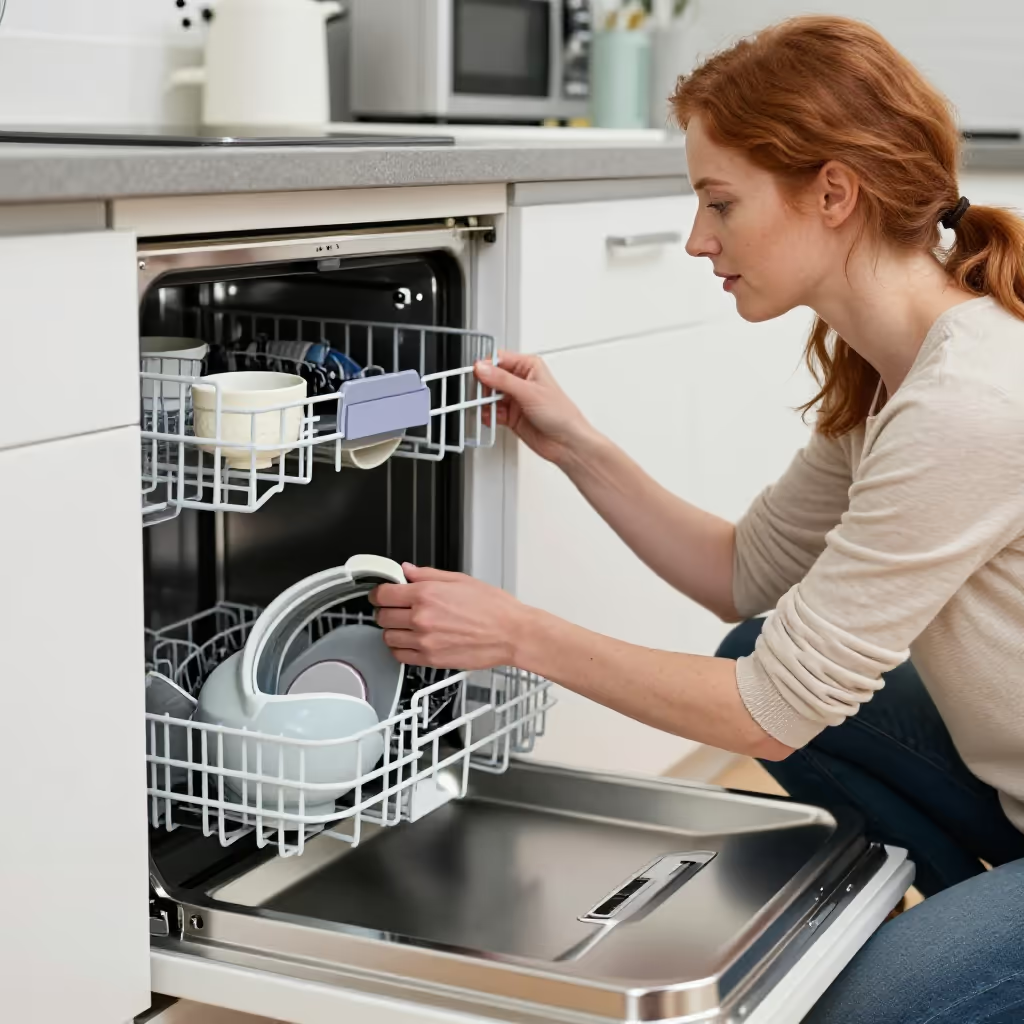
Wir bauen die neue Szene direkt vor dem letzten Gespräch in das Stück ein.
We are inserting the new scene into the play directly before the final conversation.
Wir integrieren die neue Szene so in das Stück, dass sie gut zur Handlung passt.
We are integrating the new scene into the play so that it fits well with the plot.