

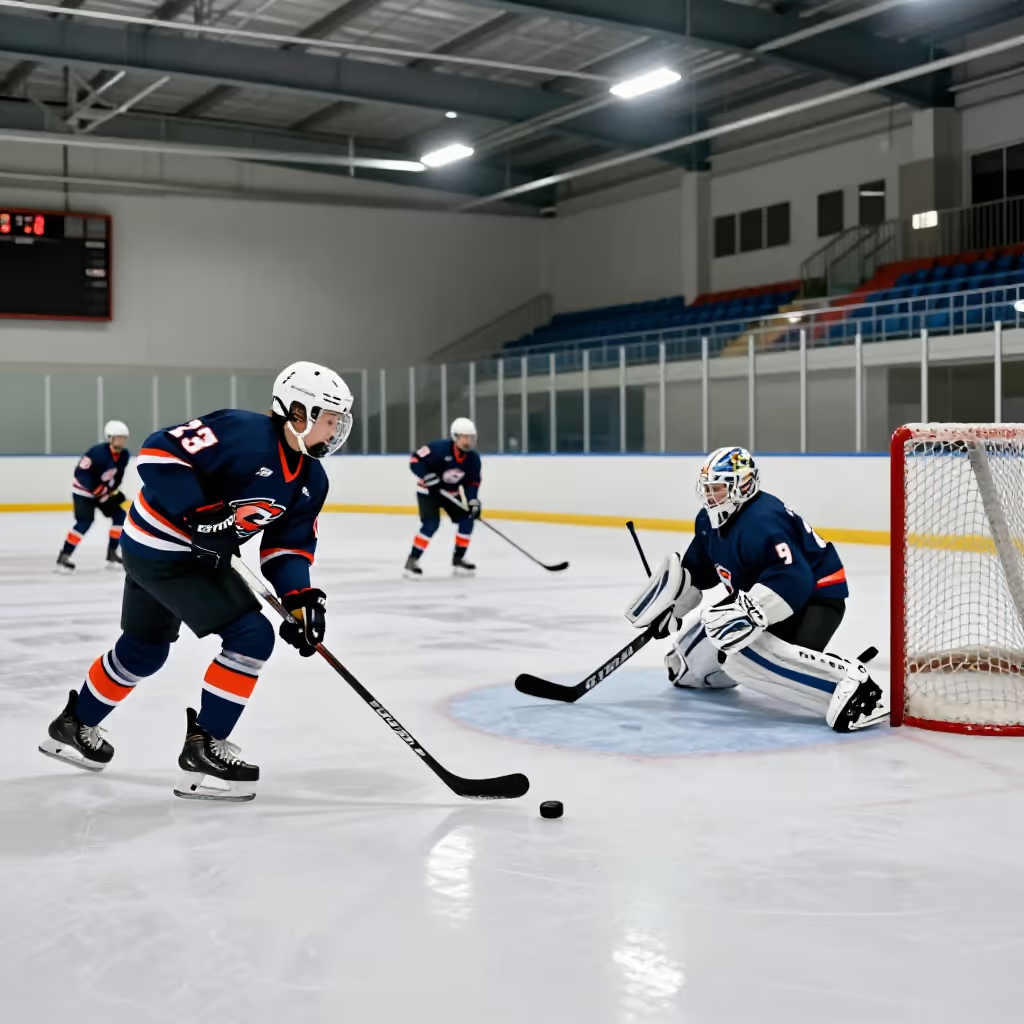
A team sport played on an ice rink with skates and sticks, in which players try to shoot a small hard rubber disk, the puck, into the opposing goal.
example
Im Winter schauen wir uns oft Eishockey im Stadion an.
In winter, we often watch ice hockey at the stadium.

Usage tips
Compound word
'Eishockey' (ice hockey) is a compound word made up of 'Eis' (ice) and 'Hockey' (hockey). So it logically describes the version of hockey that is played on ice.
EXAMPLE
Eishockey ist in Kanada ein Nationalsport.
Ice hockey is a national sport in Canada.
Typical verbs
By far the most common verb used with 'Eishockey' (ice hockey) is 'spielen' (to play). If you are a spectator, you use 'schauen' (to watch) or 'sich ansehen' (to watch).
EXAMPLE
Mein Bruder spielt seit seiner Kindheit Eishockey.
My brother has played ice hockey since he was a child.
Use with 'beim'
When talking about the activity in general, the preposition 'beim' is often used. The structure is then 'beim Eishockey' (in/while playing ice hockey).
EXAMPLE
Beim Eishockey braucht man eine gute Ausrüstung.
In ice hockey, you need good equipment.
Compare with
near_synonym · confusable
Eishockey vs Hockey
hockey
'das Eishockey' and 'das Hockey' are related sports with sticks and goals. 'das Eishockey' is played on ice with skates and a puck. In Germany, 'das Hockey' usually means field hockey on grass with a ball. In some international or winter-sports contexts, however, 'Hockey' can also mean ice hockey. That is why the words can be confusing. If you want to talk clearly about the sport on ice, 'Eishockey' is more precise. If you simply say 'Hockey' in Germany, many people will first think of field hockey.
Eishockey
Nach der Arbeit schaut Paul mit einem Freund ein Eishockeyspiel im Fernsehen.
After work, Paul watches an ice hockey game on TV with a friend.
Hockey
Sofia spielt Hockey im Verein und trainiert zweimal pro Woche auf dem Rasenplatz.
Sofia plays hockey at a club and trains twice a week on the grass pitch.