

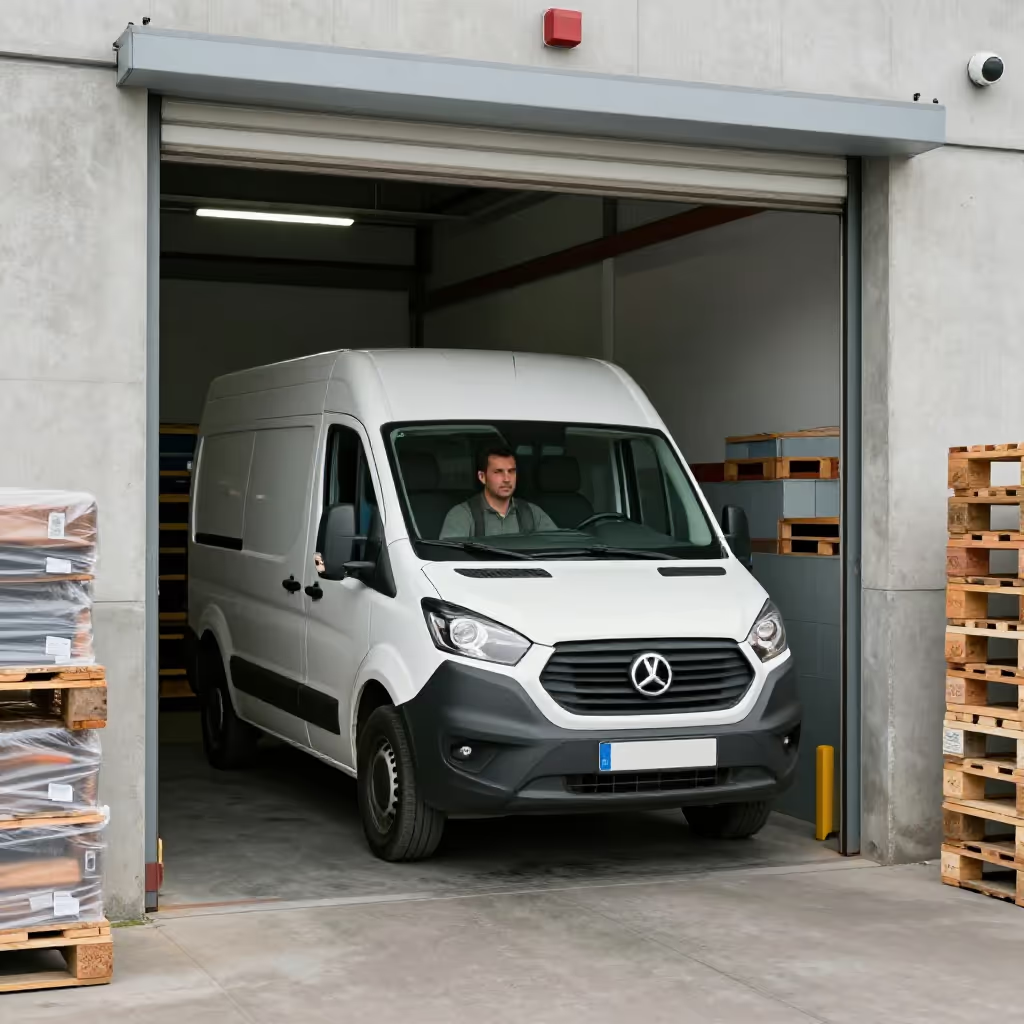
einfahren
to enter
To drive or move into a specific, often enclosed area with a vehicle.
EXAMPLE
Der Zug fährt pünktlich in den Bahnhof ein.
The train enters the station on time.
to enter / bring in / retract
Loading your saved state.
to enter
To drive or move into a specific, often enclosed area with a vehicle.
Der Zug fährt pünktlich in den Bahnhof ein.
The train enters the station on time.
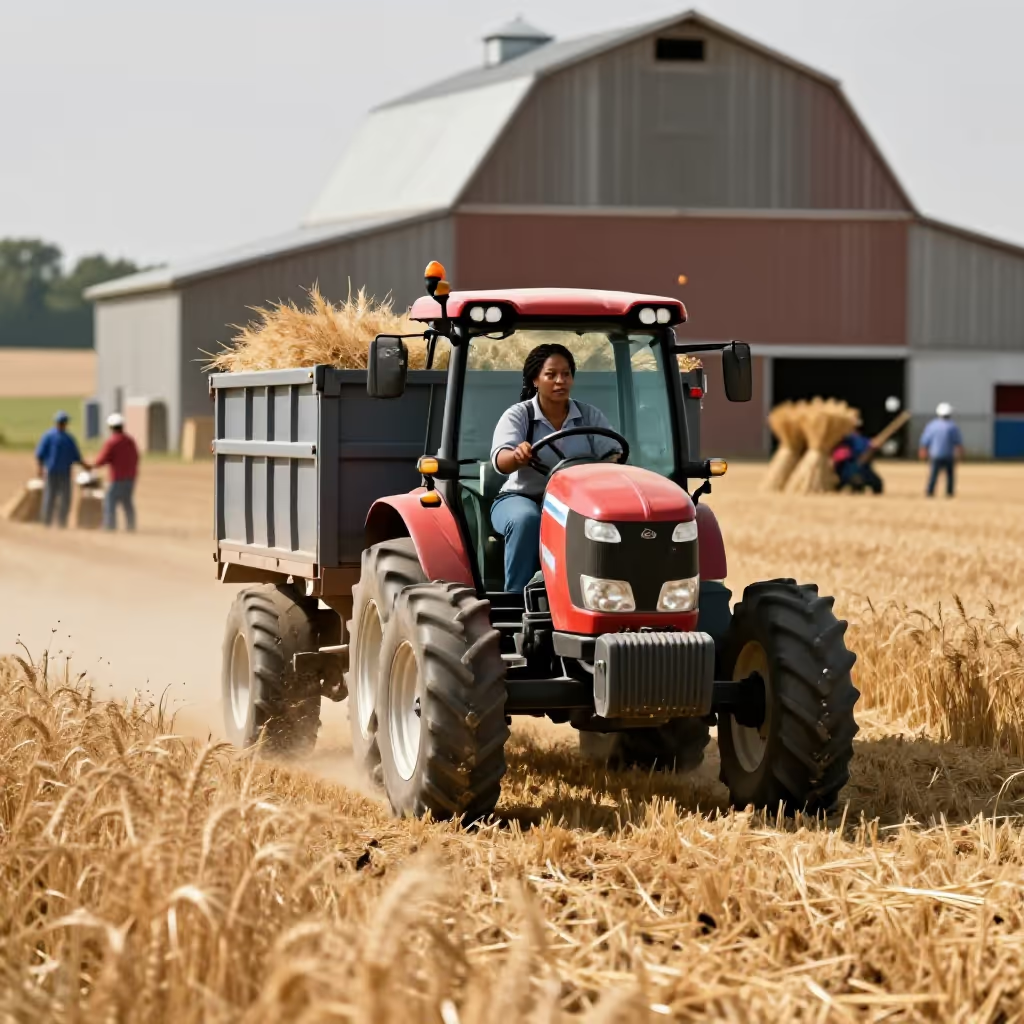
to bring in
To gather the harvest from the field and bring it to a storage place.
Die Bauern hoffen, das Heu noch vor dem Regen einzufahren.
The farmers hope to bring in the hay before the rain.

to bring in
To achieve a particular result, especially a profit or loss in a competition or economic activity.
Das Unternehmen konnte im letzten Quartal einen hohen Gewinn einfahren.
The company was able to bring in a high profit last quarter.
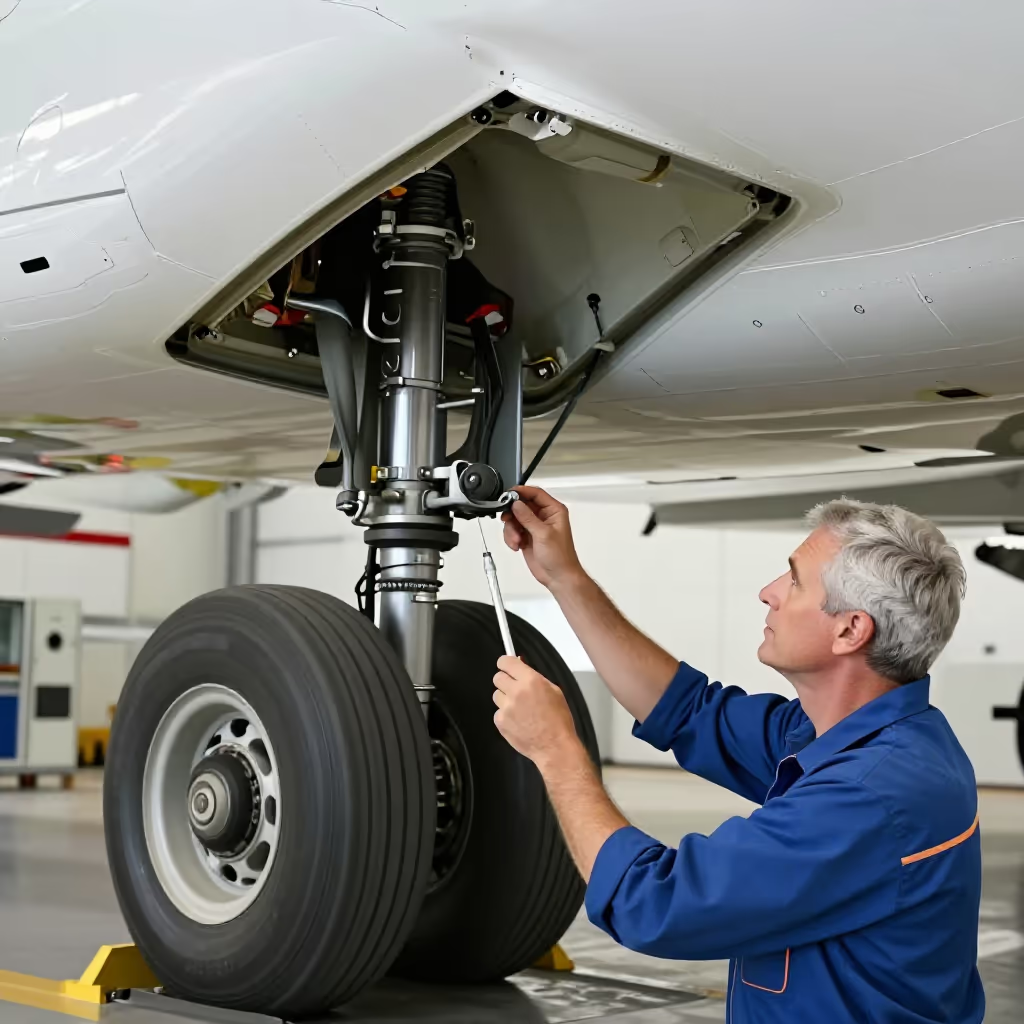
to retract
To move a movable part back into its starting position or pull it into a housing.
Der Pilot hat das Fahrwerk des Flugzeugs eingefahren.
The pilot retracted the airplane's landing gear.

to break in
To use a new vehicle or machine carefully at first so that the moving parts can settle in together.
Du musst den neuen Motor die ersten tausend Kilometer langsam einfahren.
You have to break in the new engine slowly for the first thousand kilometers.
'Einfahren' (to enter / bring in / retract) is a separable verb with the prefix 'ein-'. In a main clause, 'ein' stands at the end, while in a subordinate clause and in the infinitive it remains attached to the verb.
Der Busfahrer fährt vorsichtig in die Haltestelle ein.
The bus driver carefully pulls into the bus stop.
You can recognize the meaning of 'einfahren' (to enter / bring in / retract) from the object: with places (station, harbor), it is about entering or driving in. With agricultural products (harvest, hay), it is about harvesting. With abstract results (profit, loss), it is about achieving or bringing in something.
Das Schiff fährt in den Hafen ein.
The ship enters the harbor.
In this meaning, 'einfahren' (to enter) is almost always used with the preposition 'in' and an accusative object that describes an enclosed or limited place.
Ich habe gesehen, wie das Auto in die Garage eingefahren ist.
I saw the car enter the garage.
In an economic or sports context, 'einfahren' (to bring in) is often combined with abstract nouns. Typical phrases are: 'einen Gewinn einfahren' (to bring in a profit), 'einen Verlust einfahren' (to incur a loss), or 'einen Sieg einfahren' (to bring in a victory).
Die Mannschaft konnte am Wochenende einen wichtigen Sieg einfahren.
The team was able to bring in an important victory over the weekend.
This meaning is specific to new vehicles or machines. It describes the initial, gentle phase of use so that the mechanical parts can get used to each other.
Der Verkäufer hat mir geraten, das neue Auto die ersten 1000 Kilometer vorsichtig einzufahren.
The salesperson advised me to break in the new car carefully for the first 1,000 kilometers.
to take / earn / occupy
Einnehmen refers to the actual receipt of money through sales or services. Einfahren presents the economic success achieved more strongly as a result and often sounds more colloquial. Einnehmen fits when referring to the amount taken at the cash register; when an emphasized profit or result is meant, einfahren fits.

Das Unternehmen fuhr mit dem neuen Produkt einen hohen Gewinn ein.
The company brought in a high profit with the new product.
Das Unternehmen nahm mit dem neuen Produkt eine Million Euro ein.
The company took in one million euros with the new product.